 WEWE Kitchen Faucets
What Makes a Bar Spout Pour Clean, Quiet, and Splash-Free in 2026?
Views:44 classificationProduct
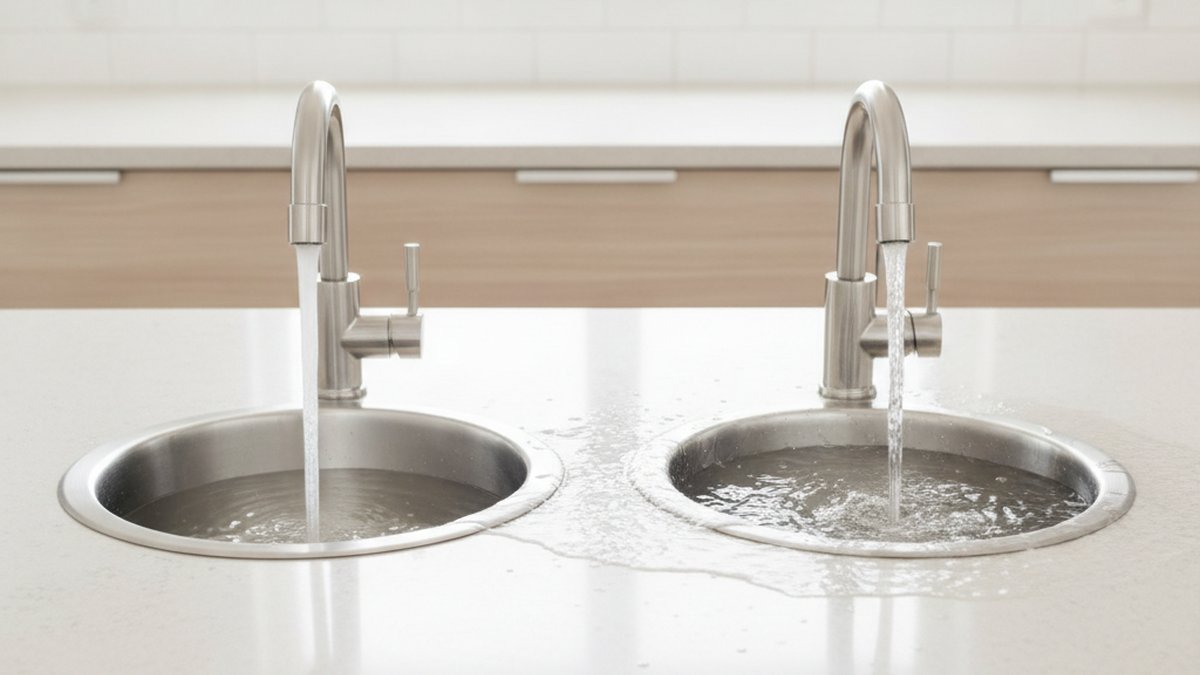
If you’ve ever stood at a small prep sink watching water ricochet off the bottom and soak your shirt, you already know that the bar spout pour is the single most important thing a bar faucet does — and the thing most buyers never think about until it’s installed. A bar faucet isn’t just a shrunken kitchen faucet. It lives over a smaller, shallower basin, it’s used for quick tasks like rinsing glasses and filling pitchers, and the shape and flow of its spout decide whether that basin stays tidy or turns into a splash zone. This guide breaks down exactly what makes a bar spout pour well, how to spec it, and how to choose one that pours cleanly for years.
What Actually Determines How a Bar Spout Pours?
Three things determine how a bar spout pours: flow rate (GPM), the type of stream the aerator produces, and the geometry of the spout — how high it sits and how far it reaches over the bowl. Get those three right for your specific sink and the pour is quiet and clean. Get any one wrong and you get splash, noise, or a weak dribble.
Flow rate is measured in gallons per minute. Most modern bar faucets sold in the U.S. run between 1.0 and 1.5 GPM, and many are capped at 1.5 GPM to meet federal and state efficiency rules (California and Colorado, for example, enforce a 1.8 GPM ceiling on kitchen-class faucets, and bar faucets usually sit well under that). A higher number isn’t “better” here — over a shallow bar basin, a 2.2 GPM torrent just splashes. For a bar or prep sink, 1.0–1.5 GPM is the sweet spot.
The aerator is the little screw-on tip at the end of the spout, and it decides the character of the stream. An aerated stream mixes air into the water, producing a soft, forgiving, slightly cloudy column that resists splashing — ideal for a bar sink. A laminar stream is a clear, solid, glass-like rod of water with no air; it looks beautiful and splashes less than a spray but can be louder on a metal basin. A spray/needle pattern is the worst choice for a small bowl because it flings droplets everywhere.
How High and How Far Should a Bar Faucet Spout Reach?
For a standard bar or prep sink, aim for a spout that reaches 4–6 inches horizontally so the water lands in the center of the bowl, and a spout height that clears your tallest glass or pitcher — usually 8–12 inches from deck to the highest point of the arc. The reach matters more than the height for a clean pour: if the water stream lands too close to the back wall or the front rim, it hits the slope of the basin and bounces out.
Bar sinks are typically smaller and shallower than main kitchen sinks — often 9 to 15 inches wide and only 5 to 7 inches deep. That shallow depth is exactly why the pour matters so much. In a deep 9-inch kitchen bowl, a sloppy stream has room to settle. In a 5-inch bar bowl, the same stream has almost no vertical distance to lose energy before it hits the bottom and sprays back up. So a well-designed bar faucet uses a gentler flow and aims the stream squarely at the deepest point.
- Spout reach: 4–6 inches for most bar sinks; measure from the faucet base to where the water exits.
- Spout height: 8–12 inches of clearance so you can slide a tall pint glass or a pitcher underneath.
- Aim point: the stream should hit the center-to-back-center of the bowl, not the front lip.
- Swivel: a 360° swivel spout lets you push the pour to one side while you scrub on the other.
Before you buy anything, it helps to confirm your basin dimensions and your plumbing. If you’re replacing an existing bar faucet, our guide on how to measure faucet supply line size the right way will save you a return trip to the hardware store — bar faucets often use 3/8-inch compression connections, and getting the fitting wrong is the most common install headache.
Aerated vs. Laminar vs. Spray: Which Pour Is Best for a Bar Sink?
For most home bar and prep sinks, an aerated pour is the best all-around choice because it’s soft, quiet, and splash-resistant. Choose laminar only if you want a striking clear stream and your basin is deep enough to absorb the noise; avoid a fixed spray head on a bar faucet entirely. Here’s how the three stack up.
| Stream Type | Look & Feel | Splash Behavior | Noise | Best For |
|---|---|---|---|---|
| Aerated | Soft, cloudy, full column | Very low — air cushions the impact | Quiet | Shallow bar/prep sinks, everyday use |
| Laminar | Clear, solid glass-like rod | Low, but only if aimed dead center | Louder on metal basins | Deep basins, design-forward bars |
| Spray/Needle | Fanned droplets | High — flings water outward | Hissy | Rinsing produce in a big kitchen sink, not a bar |
| Pull-down toggle | Switches aerated ↔ spray | Depends on mode | Varies | Prep sinks doing double duty |
One practical note: aerators clog. Hard water leaves mineral scale on the little screen, and a clogged aerator is the number-one reason a good pour turns weak or crooked over time. The fix is a two-minute unscrew-and-soak in vinegar, not a new faucet. If your stream has gone splashy or sideways, clean the aerator before you blame the faucet.
Why Does My Bar Faucet Splash So Much, and How Do I Fix It?
A bar faucet splashes for one of four reasons: the flow rate is too high for the shallow bowl, the aerator is clogged or missing, the spout reach aims the water at the sloped front of the basin instead of the center, or the water pressure in your home is above about 60 psi. Work through them in that order and you’ll usually solve it without replacing anything.
- Check the aerator. Unscrew it, rinse the screen, soak it in white vinegar for 20 minutes to dissolve scale, and reinstall. A clean aerator restores the soft, even stream the faucet was designed to make.
- Confirm your flow rate. If you swapped in a high-flow aerator, drop back to a 1.0–1.5 GPM insert. Aerators are cheap and standard-threaded, so you can tune the pour for a couple of dollars.
- Adjust the aim. Swivel the spout so the stream lands in the deepest center part of the bowl, away from the front rim.
- Check house pressure. If your home runs above 60–70 psi, a pressure-reducing valve or a lower flow aerator tames the splash across every fixture, not just the bar.
Splash isn’t the only pour problem people run into. If your bar faucet suddenly gives you weird temperature behavior — like only hot or only cold — that’s a valve or cartridge issue rather than a spout issue, and our walkthrough on why a kitchen faucet only has hot water applies directly to bar faucets too, since they share the same single-handle cartridge design.
What Should I Look for When Buying a Bar Faucet in 2026?
When buying a bar faucet, prioritize a solid-brass body, a ceramic-disc cartridge, a flow rate around 1.2–1.5 GPM, a finish that matches your kitchen hardware, and a spout height and reach that fit your basin. Those five things predict how well it pours and how long it lasts far better than the price tag or the brand’s marketing photos.
Here’s what each one buys you:
- Solid brass body: resists corrosion and holds threads better than zinc-alloy (pot metal) bodies, which crack over time. If a spec sheet won’t say “brass,” assume the worst.
- Ceramic-disc cartridge: the valve that turns the water on and off. Ceramic discs last for hundreds of thousands of cycles and are the difference between a drip-free faucet and a leak in year two.
- PVD finish: physical vapor deposition finishes (brushed nickel, matte black, brushed gold, chrome) resist scratching and won’t flake. This matters at a bar where glasses and bottle openers clink against the spout.
- Right-sized geometry: the reach and height numbers from the section above.
- Standard 1-hole or 2-hole mount: most bar faucets are single-hole deck mounts; confirm your countertop cutout before ordering.
Finish choice is more than looks — it changes how the pour reads visually and how easy the faucet is to keep clean. A high-gloss chrome bar faucet shows water spots the fastest but wipes clean instantly; matte black hides spots but shows dried mineral scale. If you want a low-maintenance shine that lasts, it’s worth reading how to source a durable finish in our piece on finding a chrome faucet near you that actually lasts. And if your bar sits on a vanity-style single cutout, the sizing logic in our single-hole faucet guide transfers almost one-to-one.
How Does a Bar Spout Pour Compare to a Full-Size Kitchen Faucet?
A bar spout pours a lower, gentler stream over a smaller footprint than a full-size kitchen faucet, and that’s by design. Kitchen faucets are built to fill stockpots and rinse sheet pans, so they run higher flow and taller arcs; a bar faucet is tuned for glasses, ice, and quick rinses over a compact bowl. Using a full kitchen faucet over a tiny bar sink almost guarantees splash — the pour is simply too much water for the space.
That said, the engineering underneath is the same family. A quality pull-down kitchen faucet and a quality bar faucet share the same cartridge technology, the same aerator threading, and the same finish processes. If you like how a particular kitchen line pours, its matching bar faucet will usually pour the same way at a smaller scale. For a sense of how the better pull-out kitchen designs handle their stream and spray modes, our review of the Grohe Eurosmart pull-out kitchen faucet is a useful reference point — the same flow-control principles scale down to bar duty.
The practical takeaway: don’t buy a bar faucet based on how impressive a kitchen faucet looks. Buy it based on your basin size, your flow needs, and the pour character (aerated for calm, laminar for looks). A $90 bar faucet with the right geometry will out-perform a $300 kitchen faucet crammed over a bar sink every single time.
Where a wewefaucet Bar Faucet Fits
At wewefaucet we build bar and prep faucets around the pour first — solid-brass bodies, ceramic-disc cartridges rated for high-cycle bar use, and aerators tuned to 1.2–1.5 GPM so the stream lands soft and quiet in a shallow bowl. Every finish is a PVD coating tested against standard abrasion and salt-spray cycles, and our faucets are engineered to meet the low-lead requirements of the U.S. Safe Drinking Water Act (NSF/ANSI 372) and the flow standards enforced in California and Colorado. Our bar faucets ship with a limited lifetime warranty on the finish and cartridge, because a faucet that leaks or fades in two years was never worth the counter space.
Author note: This guide was written by the wewefaucet product team, who spec, bench-test, and install bar and kitchen faucets year-round. We test pour behavior on real bar basins of varying depth — not just on a spec sheet — and everything above reflects what we see hold up in actual kitchens and home bars.
FAQ
What is a good GPM for a bar faucet pour?
Between 1.0 and 1.5 GPM is ideal for a bar faucet. That’s enough to fill a glass or pitcher quickly without splashing over the small, shallow basin. Higher flow rates that make sense on a big kitchen sink just bounce off a bar bowl and wet your counter.
Why does my bar faucet pour crooked or split into two streams?
A crooked or split stream almost always means a clogged or partially blocked aerator. Mineral scale from hard water builds up on the aerator screen and disrupts the flow. Unscrew the aerator, soak it in white vinegar for about 20 minutes, rinse it, and screw it back on — that usually restores a straight, even pour.
Should a bar faucet stream be aerated or laminar?
For most home bar sinks, choose an aerated stream. It mixes air into the water for a soft, quiet, splash-resistant pour that suits a shallow basin. A laminar stream — a clear, solid rod of water — looks striking and works well in deeper bowls, but it can be noisier when it hits a metal bar sink.
How tall should a bar faucet be so it doesn’t splash?
Aim for 8–12 inches of clearance from the deck to the top of the arc so you can fit a tall glass or pitcher underneath, and pair that with a 4–6 inch spout reach so the water lands in the center of the bowl. Height alone doesn’t cause splash — a stream aimed at the front rim does. Center the aim and keep the flow around 1.2–1.5 GPM.
Can I use a regular kitchen faucet over a bar sink?
You can, but you usually shouldn’t. Full-size kitchen faucets run higher flow and taller arcs designed for deep basins, so over a small, shallow bar sink they tend to splash and overwhelm the space. A purpose-built bar faucet pours a gentler, better-aimed stream that keeps the counter dry.
How do I stop hard water from ruining my bar faucet’s pour?
Clean the aerator monthly if you have hard water — a quick vinegar soak dissolves the scale that weakens and skews the stream. Wipe the finish dry after use to prevent spotting, and consider a whole-home or under-counter filter if buildup is severe. Keeping the aerator clear is the single most effective habit for a consistent pour.
您好!please sign in