 WEWE Kitchen Faucets
Is a Single Hole Faucet the Right Choice for Your Bathroom Vanity in 2026?
Views:147 classificationProduct
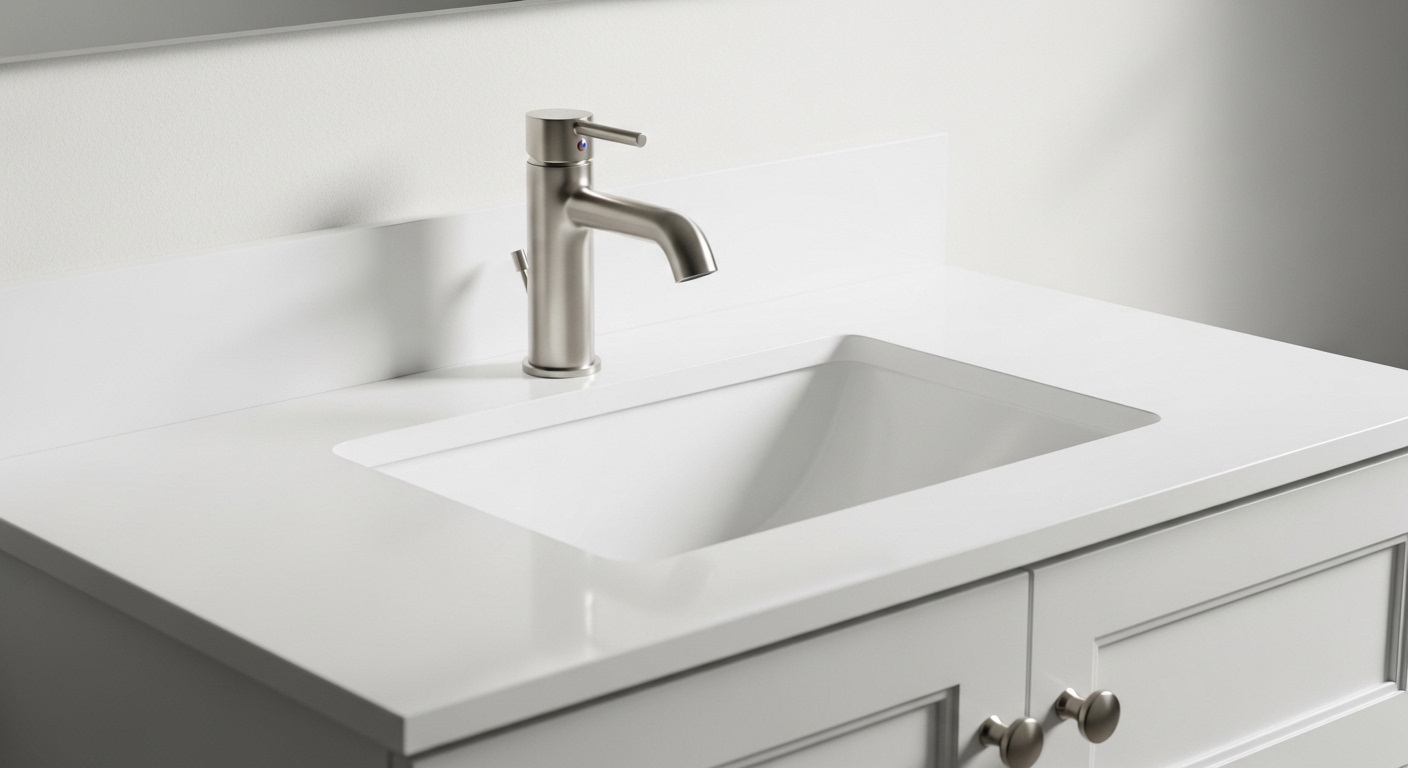
If you’re staring at your vanity wondering whether a single hole faucet vanity setup will actually work with your sink — or whether you’ll end up with awkward gaps and a plumbing headache — you’re asking exactly the right question before you buy. A single hole faucet combines the spout and a single mixing handle into one body that drops through one hole in your countertop or sink. It’s the most common configuration on new bathroom vanities today, and for good reason: it looks clean, installs fast, and works with the vast majority of drop-in and vessel sinks sold in the last decade.
But “most common” doesn’t mean “right for everyone.” Below, I’ll walk you through exactly when a single hole faucet is the smart choice, how to check your vanity fits, how it compares to centerset and widespread faucets, and the real specs that separate a faucet you’ll love from one you’ll return.
What exactly is a single hole faucet, and how is it different from other types?
A single hole faucet is a faucet where the spout and the handle share one body and mount through a single hole in the sink or countertop. You turn one lever left/right for temperature and up/down for flow. That’s it — no separate hot and cold handles spread across the deck.
This matters because bathroom faucets come in three main mounting styles, and they are not interchangeable without modifying your sink or countertop. Here’s how they stack up:
| Faucet type | Holes needed | Hole spacing | Best for | Handles |
|---|---|---|---|---|
| Single hole | 1 | ~1-3/8″ (35mm) single hole | Modern/minimalist vanities, small sinks, vessel sinks | 1 lever |
| Centerset | 1 or 3 | 4″ between outer holes | Standard drop-in sinks, budget builds, rentals | 1 or 2, on a single base plate |
| Widespread | 3 | 8″–16″ spread | Larger vanities, traditional/luxury looks | 2 separate handles + spout |
| Wall-mounted | 0 in deck (wall rough-in) | Varies by valve | Vessel sinks, custom stone counters | 1 or 2 |
The key takeaway: a single hole faucet needs exactly one hole. If your vanity top or sink is pre-drilled with three holes (very common on older drop-in sinks), you can still use a single hole faucet — you just add a deck plate (also called an escutcheon) to cover the two extra holes. Most single hole faucets sell an optional matching deck plate for a few dollars, so this is a non-issue as long as you buy the right one.
How do I know if a single hole faucet will fit my vanity?
Check two things: the number of holes in your sink/countertop and the diameter of that hole. A standard single faucet hole is 1-3/8 inches (about 35 mm), and nearly every single hole faucet on the market is built to that spec. If your sink has one hole at that size, you’re good to go.
Here’s the quick pre-purchase checklist I give every customer:
- Count the holes. Look at your existing sink or vanity top. One hole = perfect for single hole. Three holes = you’ll want a deck plate.
- Measure the hole diameter. It should be roughly 1-3/8″. If it’s larger (some vessel sinks and stone tops are drilled bigger), check the faucet’s mounting hardware range before buying.
- Check the counter/sink thickness. Most single hole faucets accommodate decks up to ~2″ thick. Thick stone or concrete counters may need an extended mounting kit.
- Confirm supply line reach. Single hole faucets usually have pre-attached flexible supply hoses. Make sure they reach your shutoff valves, or plan for extensions.
- Measure clearance behind the sink. If your faucet sits close to a backsplash or window, check the spout height and handle swing.
If you’re not sure about the supply connection, our guide on how to measure faucet supply line size the right way walks through the exact measurements so your new faucet actually connects on the first try. And if you’re doing a full rough-in on a new vanity, the bathroom sink supply line height guide covers where those valves should sit so everything lines up cleanly.
Single hole vs. centerset faucet — which is better for a small bathroom vanity?
For a small vanity, a single hole faucet is almost always the better choice because it takes up the least deck space, leaves more usable countertop, and gives a cleaner look that makes a compact bathroom feel bigger. A centerset only wins when your sink is already drilled for 4″ spacing and you want a two-handle look on a budget.
The difference comes down to your sink and your priorities:
- Choose single hole if: you have (or are buying) a modern sink with one hole, you want a minimalist look, you value easy one-handed temperature control, or your vanity is narrow and every inch of counter counts.
- Choose centerset if: your existing sink already has three holes drilled at 4″ apart and you don’t want to add a deck plate, or you specifically want the classic two-handle (separate hot/cold) style in a compact footprint.
Centerset faucets are extremely popular in rentals and builder-grade bathrooms because they match the pre-drilled 4″ sinks that dominated the last few decades. If you want the full breakdown of that style, we cover it in what is a centerset faucet and is it the right choice for your bathroom sink. For a brand-new modern vanity where you’re choosing the sink too, though, single hole is the cleaner, more current pick.
Does a single hole faucet work with a vessel sink?
Yes — but you need a tall single hole faucet designed for vessel sinks, because the sink sits on top of the counter and a standard-height faucet won’t clear the bowl rim. Look for a “vessel faucet” with an overall height of roughly 11″–13″ and a spout that reaches over the basin.
Vessel sinks are a common reason people go single hole. Because the bowl sits above the counter, a single tall faucet looks intentional and elegant, and it keeps the counter around the bowl free. The two things to get right:
- Height: Measure your vessel bowl height, then add the distance from the counter to where water should hit. A faucet that’s too short splashes; too tall and water sprays out. Aim for the spout outlet to sit a few inches above the bowl rim.
- Reach: The spout should extend over the drain, not the rim, so water lands in the bowl center.
If you prefer a side-mounted handle for a vessel setup — a look that’s trending in 2026 — compare your options in our guide on whether a vessel sink faucet with a side handle is right for your bathroom. The mounting logic is the same single-hole install; only the handle placement changes.
How hard is it to install a single hole faucet myself?
Installing a single hole faucet is one of the easiest DIY plumbing jobs — most people finish in 30–60 minutes with basic tools, and it’s genuinely simpler than a widespread faucet because there’s only one connection point through the deck. If you can turn a wrench and follow directions, you can do this.
Here’s the general process (always follow your specific faucet’s instructions):
- Shut off the water at the two supply valves under the sink and open the old faucet to relieve pressure.
- Disconnect and remove the old faucet — supply lines first, then the mounting nut underneath.
- Clean the deck so the new gasket seals against a smooth surface.
- Drop the new faucet through the single hole (add the deck plate first if covering extra holes), then tighten the mounting nut from below.
- Connect the supply lines to your shutoff valves — hot to left, cold to right.
- Turn the water back on slowly, remove the aerator, and run water for 15–20 seconds to flush debris before checking for leaks.
The single most common install mistake is over-tightening the plastic mounting nut and cracking it, or under-tightening so the faucet wobbles. Hand-tight plus a quarter turn with a basin wrench is usually right. Because a single hole faucet has one body and often pre-attached hoses, there’s far less to connect than a three-piece widespread.
What should I look for when buying a single hole faucet for a vanity?
Prioritize the valve cartridge, the finish, and the flow rate — those three determine how long the faucet lasts, how it looks over time, and whether it feels good to use. Everything else is secondary.
Here’s what actually matters, in plain terms:
- Ceramic disc cartridge: This is the heart of the faucet. Ceramic disc valves resist wear and hard-water buildup far better than rubber-washer or ball valves, which means no drips for years. If a listing doesn’t mention the cartridge, ask.
- Solid brass body: Brass resists corrosion and holds finishes better than zinc alloy or plastic. It costs a little more and it’s worth it — especially in humid bathrooms.
- Finish: Brushed nickel and matte black hide water spots and fingerprints best; chrome is easiest to find and clean but shows spots; brushed gold/champagne bronze is the 2026 style favorite. Look for a PVD finish, which is far more scratch- and tarnish-resistant than electroplating.
- Flow rate: A 1.2 GPM aerator is the sweet spot for a bathroom vanity — plenty of flow, meets WaterSense efficiency standards, and lowers your water bill. Some regions (like California) require ≤1.2 GPM.
- Reach and height: Match spout height to your sink type — standard for drop-in/undermount, tall for vessel.
Watch for finish mismatches too: if you’re pairing your new faucet with existing brass fittings or an adapter, our explainer on what a brass faucet with thread is and how to choose the right one helps you avoid buying parts that won’t thread together.
Why choose a wewefaucet single hole vanity faucet?
Because we build them around the three things above — ceramic disc cartridges, solid brass bodies, and durable PVD finishes — and back them with a limited lifetime warranty on the finish and cartridge. Our single hole faucet vanity models are tested to industry cycle standards (the valve is cycled hundreds of thousands of times to simulate years of daily use) and meet ANSI/NSF and WaterSense requirements for safe, efficient flow. Every model ships with an optional matching deck plate so it works whether your sink has one hole or three.
We’re a specialist faucet and bathroom fixtures brand — faucets are all we do, which means our product team obsesses over the details generalist retailers skip, like cartridge sourcing and finish durability.
FAQ
Can I put a single hole faucet on a sink that has three holes?
Yes. Buy a single hole faucet that offers a matching deck plate (escutcheon), which covers the two outer holes and mounts the faucet through the center hole. This is a very common and completely reliable setup — most single hole vanity faucets are sold with this option specifically so they fit both one-hole and three-hole sinks.
What size hole does a single hole faucet need?
The standard is 1-3/8 inches (about 35 mm) in diameter. Nearly all single hole faucets are built to this size. Some vessel sinks and stone countertops are drilled larger, so if your hole is bigger than 1-3/8″, check that the faucet’s mounting hardware and gasket can span the opening before ordering.
Is a single hole faucet good for a small bathroom?
It’s ideal. A single hole faucet uses the least deck space of any style, leaves more usable counter around the sink, and its clean single-lever look keeps a small vanity from feeling cluttered. For compact powder rooms and narrow vanities, it’s the top recommendation.
How do I control temperature with only one handle?
A single lever handle mixes hot and cold in one motion. Move it side to side for temperature (usually left for hot, right for cold) and up or down for water volume. Many people find one-handed control more convenient than reaching for two separate handles, especially with wet or soapy hands.
Do single hole faucets leak more than two-handle faucets?
No — leaking has almost nothing to do with the number of holes and almost everything to do with the valve cartridge inside. A single hole faucet with a quality ceramic disc cartridge will outlast a two-handle faucet with cheap rubber washers. Choose based on cartridge quality, not handle count.
What’s the best finish for a single hole vanity faucet in 2026?
Brushed nickel and matte black remain the most practical because they hide water spots and fingerprints, while brushed gold and champagne bronze are the trending style picks. Whatever you choose, look for a PVD-coated finish — it resists scratching and tarnishing far better than standard electroplating and keeps its look for years.
Can one person install a single hole faucet, or do I need a plumber?
One person can absolutely handle it. A single hole faucet has just one deck connection and usually pre-attached supply hoses, so most DIYers finish in 30–60 minutes with a basin wrench and an adjustable wrench. Only call a plumber if your shutoff valves are corroded or your supply lines don’t reach.
Author note: This guide was written by the wewefaucet product content team, drawing on hands-on faucet installation and testing experience across kitchen and bath fixtures. We test cartridges, finishes, and flow rates on the products we sell so our buying advice reflects how these faucets actually perform, not just spec sheets. Standards referenced include ANSI/NSF 61, ASME A112.18.1, and the EPA WaterSense program.
您好!please sign in