 WEWE Kitchen Faucets
Why Does My Kitchen Faucet Only Have Hot Water, and How Do I Get Cold Back?
Views:181 classificationProduct
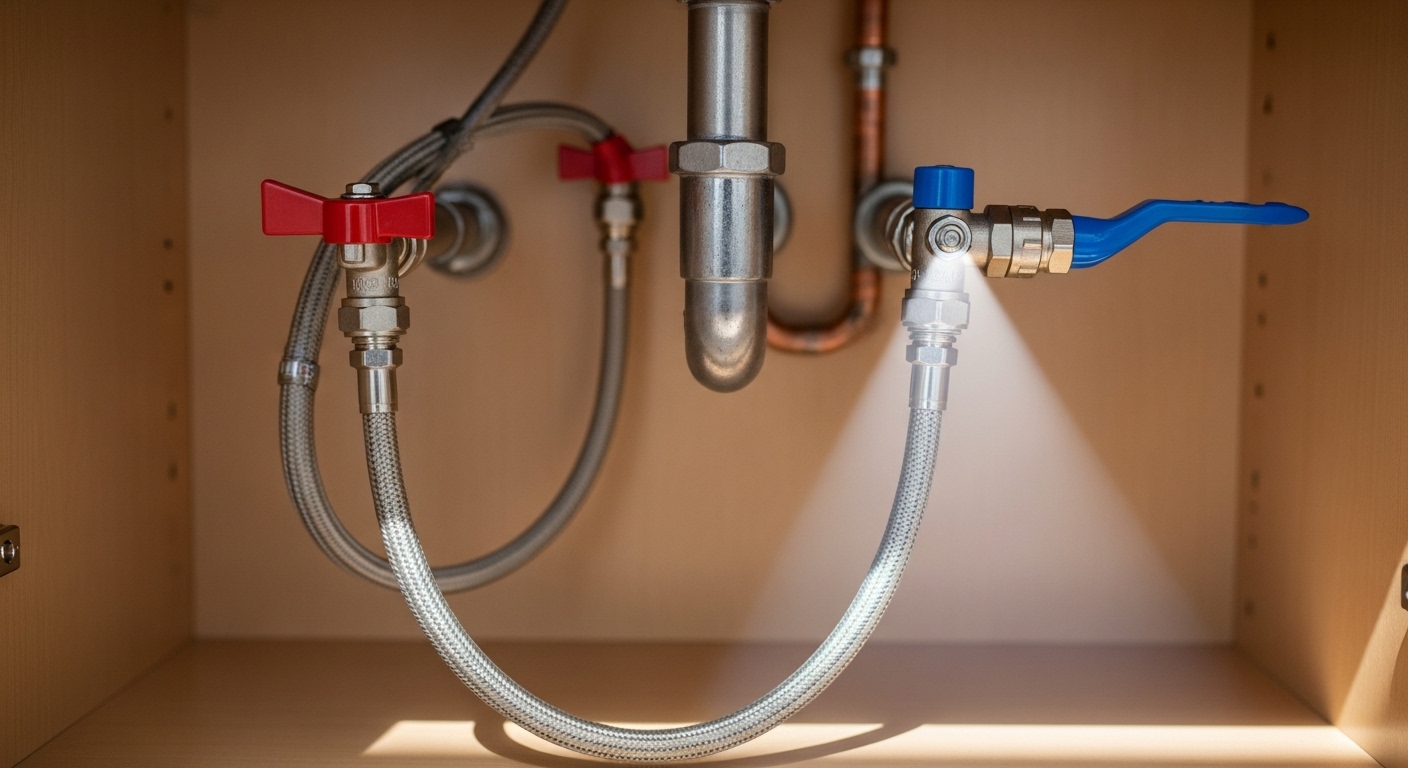
A kitchen faucet only hot water problem is one of the most common calls we hear about, and the good news is that it rarely means the faucet is ruined. Cold water reaches your spout through its own dedicated path — a cold shut-off valve, a cold supply line, and a cold port inside the mixing cartridge. When only hot comes out, one link in that cold chain is choked or closed. This guide walks you through diagnosing it in the right order (cheapest and easiest first), tells you exactly which part to buy if you need one, and helps you decide when a 15-year-old faucet is better replaced than repaired.
We install, test, and warranty faucets for a living, so everything below is the same checklist our support team uses — plain talk, real specs, no guesswork.
Why does my kitchen faucet suddenly only have hot water?
A sudden switch to hot-only almost always means the cold side lost pressure or flow — not that the faucet “broke.” The four usual suspects, in order of how often we see them: a partially closed cold shut-off valve, a clogged aerator, sediment or debris jamming the cold port of the cartridge, and a kinked or collapsed cold supply line.
Here’s the logic. Your faucet mixes two independent streams. Hot water still works, which proves the faucet body, the spout, and the aerator are physically capable of flowing water. So the fault is isolated to whatever is unique to the cold path. That’s a huge head start — you can ignore the hot side entirely and hunt for the one thing choking the cold line.
Timing is a clue, too:
- Right after plumbing work or a water shut-off: someone likely left the cold angle stop only partly open, or debris got knocked loose into the line when pressure came back.
- Gradually over weeks or months: think mineral scale and sediment — a clogging aerator or a cartridge slowly silting up, especially on hard water.
- In freezing weather: a partially frozen cold supply line can cut cold flow while the hot line (often routed through warmer interior walls) keeps running.
How do I fix a kitchen faucet with only hot water, step by step?
Work from easiest to hardest and stop as soon as cold returns — most people never get past step 2 or 3. You’ll need a flashlight, an adjustable wrench, a small bucket or towel, and maybe a replacement cartridge. Turn off the faucet before you start.
- Fully open the cold shut-off valve. Look under the sink for two football-shaped angle stops. The cold one is usually on the right as you face the cabinet. Turn it counter-clockwise until it stops. A valve that’s 80% closed can starve the cold side while hot flows fine.
- Clean the aerator. Unscrew the little screen at the tip of the spout (righty-tighty, so lefty-loosey by hand or with tape-wrapped pliers). Rinse out the grit, soak it in white vinegar for 20–30 minutes to dissolve scale, and reinstall. A one-sided clog here can skew the mix.
- Flush the lines. Disconnect the cold supply line at the faucet shank, aim it into a bucket, and briefly open the cold stop. Strong, clear flow means the wall side is fine and the problem is downstream in the faucet. Weak or no flow means the valve or line is the culprit.
- Inspect and replace the cartridge. If lines flow well but the faucet still runs hot-only, the mixing cartridge is jammed with sediment or worn. Shut off both stops, pull the handle and cartridge (brand-specific — see below), clear or swap it, and reassemble.
- Check the supply line for kinks. A braided line bent too sharply behind the faucet can collapse internally. If it looks pinched, replace it; they’re a few dollars.
If you’re not sure your replacement line will thread on correctly, our guide on how to measure faucet supply line size the right way shows you how to match the connector so it actually seals instead of dribbling.
Is it the cartridge or the supply line causing hot-only water?
Do the bucket test: disconnect the cold supply line at the faucet and open the cold stop into a bucket. Strong clear flow points to the cartridge; weak or no flow points to the valve or line. This single test splits the problem cleanly in half so you’re not buying parts you don’t need.
The cartridge is the plastic-and-brass mixing valve inside the faucet body that blends hot and cold and controls temperature. When its cold inlet clogs with grit or its internal seals wear out, you get hot-dominant or hot-only water even with the handle swung all the way to cold. Supply lines and valves, by contrast, fail upstream — before water ever reaches the faucet — so they cut flow before mixing even happens.
| Symptom | Likely cause | Typical fix | Rough cost |
|---|---|---|---|
| Cold stop feels loose/half-turned | Partly closed shut-off valve | Open valve fully | $0 |
| Weak flow from disconnected cold line | Bad valve or kinked/frozen line | Replace line or valve | $5–$25 |
| Strong cold flow at line, still hot-only at spout | Clogged or worn cartridge | Clean or replace cartridge | $15–$40 |
| Uneven spray, mineral crust on tip | Clogged aerator | Soak in vinegar / replace | $3–$10 |
| Hot-only in cold snaps only | Partially frozen cold line | Thaw and insulate line | $0–$15 |
One more tell: if along with the temperature issue you’re also seeing discolored water, that’s usually a separate corrosion problem worth ruling out — our article on why rust is coming out of your faucet covers when sediment is the real villain behind both clogs and staining.
Where is the cold cartridge on a Delta, Moen, or Kohler kitchen faucet?
On nearly all single-handle kitchen faucets there’s one combined cartridge that mixes both hot and cold — you don’t have a separate “cold cartridge.” You reach it by removing the handle: pop the decorative cap, loosen the set screw (usually a 7/64″ or 3/32″ hex/Allen), lift the handle off, unthread the retaining nut or clip, and pull the cartridge straight up.
The mechanics differ a little by brand, and matching the exact replacement matters:
- Delta: Single-handle models use a ball-and-seat or a ceramic cartridge depending on age. Springs and rubber seats under the ball are cheap and a frequent cause of bad mixing. Delta’s lifetime residential warranty often covers the part free.
- Moen: Uses the well-known 1225/1255-style cartridge. A Moen cartridge puller tool makes removal far easier because the cartridge can seize in the body. Align the notch/flats correctly on reinstall or hot and cold will be reversed.
- Kohler: Ceramic-disc cartridges that are durable but can crack or scale up on hard water. Match the exact model number stamped on the faucet.
Whatever the brand, take the old cartridge to the store or match the faucet’s model number online — a cartridge that’s “close” will leak or won’t seat. And if your faucet is a pull-down and you’re wrestling with a spray head that won’t behave after the repair, our fix for a pull-down kitchen faucet that won’t retract covers the hose and weight adjustments that trip people up during reassembly.
Can hard water cause a kitchen faucet to run only hot?
Yes — hard water is a leading cause of gradual hot-only problems because dissolved calcium and magnesium precipitate out and build scale exactly where cold flow is narrowest: the aerator screen and the cartridge’s cold inlet. Over months, that scale can choke the cold path enough to leave you with hot-dominant or hot-only water.
If your area has hard water (over about 7 grains per gallon), you’ll usually see the warning signs first: white crust on the spout tip, spotty glassware, and a spray pattern that goes uneven before flow drops off. Regular aerator cleaning every few months and an occasional vinegar flush of the cartridge dramatically slow this down. On very hard water, a whole-house softener or a point-of-use filter protects not just this faucet but every fixture and appliance in the house. When scale has already fused a cartridge solid, replacement is faster and more reliable than trying to descale it in place.
When should I just replace the whole kitchen faucet instead of fixing it?
Replace the whole faucet when the body is corroded, parts are discontinued, or the repair cost approaches half the price of a new mid-range faucet — and always if the faucet is 12–15+ years old and giving you repeated problems. A one-time cartridge swap on a good faucet is worth it; chasing a third repair on a corroded builder-grade unit is not.
Here’s how we tell customers to decide:
- Fix it if the faucet is under ~10 years old, the finish is still good, and the cartridge or supply line is the only issue. Parts are cheap and the repair is quick.
- Replace it if you see green/white corrosion on the body, the model is discontinued (no cartridge available), the base is already leaking, or you’ve fixed the same faucet more than twice.
- Upgrade it if you were unhappy with the faucet anyway — a hot-only failure is a natural moment to move to a better cartridge system, a pull-down spray, or a touchless model with a ceramic-disc valve rated for tens of thousands of cycles.
If you’re shopping for a replacement, size matters as much as style — a spout that’s too tall or too short for your sink is a daily annoyance. Our buyer’s guide on what size faucet you actually need for a kitchen sink walks through spout height, reach, and deck-hole count so the new faucet fits the first time.
How do I make sure hot and cold aren’t reversed after the repair?
Before you fully reassemble, do a quick orientation check: with the cartridge installed, turn the handle fully one way and feel the water — the “cold” direction should give cold, the “hot” direction hot. If they’re swapped, the cartridge is rotated 180° or the hot and cold supply lines are crossed under the sink.
Two things cause reversed water after a cartridge job. First, the cartridge went in with its alignment notch facing the wrong way — most cartridges have a flat, tab, or keyway that must point a specific direction (often toward the back or a stamped mark on the faucet body). Second, someone reconnected the supply lines to the wrong inlets. By plumbing convention, cold connects to the right side of the faucet and hot to the left as you face the fixture from the front. Get both right and your mixing behaves normally across the whole handle sweep.
What does this repair typically cost, DIY vs. plumber?
Expect $0–$40 in parts if you do it yourself, versus roughly $125–$300 for a plumber’s visit that includes labor and a cartridge. Because the hot-only fix is usually a valve adjustment, aerator cleaning, or a single cartridge swap, it’s one of the most DIY-friendly faucet repairs there is.
| Repair path | What’s included | Typical total | Time |
|---|---|---|---|
| DIY valve/aerator fix | No parts, just adjustment/cleaning | $0 | 10–20 min |
| DIY cartridge replacement | New cartridge + basic tools | $15–$45 | 30–45 min |
| DIY supply line/valve swap | New braided line or angle stop | $5–$30 | 20–40 min |
| Plumber service call | Diagnosis + labor + part | $125–$300 | 1 hr visit |
If your faucet is a Delta and you’re also chasing a drip on top of the temperature issue, the same cartridge-and-seat knowledge applies — our walkthrough on fixing a dripping Delta faucet at home pairs well with this repair since both come down to the mixing valve internals.
FAQ
Why does my kitchen faucet only get hot water but the bathroom is fine?
Because each fixture has its own shut-off valves, supply lines, and cartridge. A hot-only kitchen faucet while the bathroom mixes normally almost always means the kitchen’s cold stop is partly closed or the kitchen faucet’s cold path (aerator, cartridge, or line) is clogged — the problem is local to that one faucet, not your home’s water supply.
Can a clogged aerator really cause hot-only water?
It can contribute, especially on hard water. If scale builds unevenly and restricts the aerator screen, it can skew the mix toward hot and cut overall flow. Unscrew the aerator, soak it in white vinegar for 20–30 minutes to dissolve mineral deposits, rinse, and reinstall. It’s the cheapest thing to rule out first.
Is a hot-only faucet dangerous or just annoying?
It’s mostly an inconvenience, but scalding is a real risk if the water heater is set high — kitchen hot water can exceed 120°F. Until it’s fixed, warn everyone in the house, and consider lowering your water heater to 120°F, which is the standard safe setting recommended to prevent scald injuries.
How long does a kitchen faucet cartridge last?
A quality ceramic-disc cartridge typically lasts 10–15 years or longer, while cheaper rubber-seat designs may need service every 5–7 years. Hard water shortens that lifespan. When you buy a new faucet, a ceramic-disc valve rated for a high cycle count is the single best predictor of how long you’ll go between repairs.
Do I need to shut off the main water to fix this?
Usually no. Most kitchen faucets have their own under-sink shut-off valves, so you can close just the hot and cold stops for that faucet and leave the rest of the house with water. Only shut off the main if the individual angle stops are seized, leaking, or missing.
My cartridge is fine but I still only get hot water — what now?
If the cartridge tests good and lines flow strongly, check for a crossed connection at the water heater or a failed mixing valve elsewhere, and inspect for a partially frozen cold line in cold weather. If cold works at every other fixture but not this faucet even after a cartridge swap, the replacement cartridge may be the wrong model or installed 180° out of alignment — recheck orientation against the faucet’s keyway.
A note from the wewefaucet team
This guide was written and reviewed by the product and support specialists at wewefaucet, where we design, pressure-test, and warranty kitchen and bathroom fixtures every day. Every faucet we ship uses ceramic-disc cartridges tested to industry cycle standards and is backed by our warranty, so if a mixing issue ever shows up, we can usually get you the exact replacement part fast. We wrote this because the hot-only problem sounds scary and gets oversold as a “call a plumber” emergency — in reality, most people fix it themselves in under 20 minutes with the checklist above. When you do need a new faucet, choose one with a proven cartridge system and correct spout sizing for your sink, and you’ll rarely think about this again.
您好!please sign in