 WEWE Kitchen Faucets
What Is a Bathroom Faucet in Spanish, and How Do You Shop for the Right One?
Views:9 classificationProduct
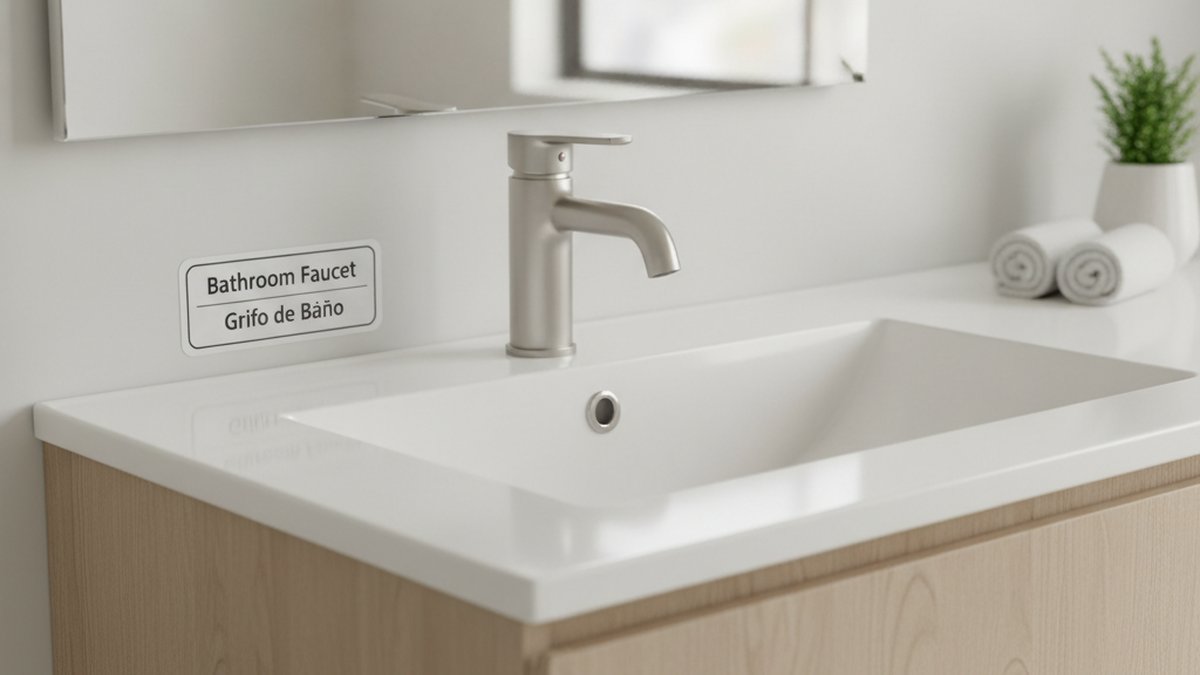
If you’ve searched for a bathroom faucet in Spanish, you’re usually in one of two situations: you’re a Spanish speaker buying fixtures in the U.S., or you’re an English speaker sourcing a faucet from a Spanish-language store, catalog, or contractor. Either way, the vocabulary matters more than people think — a “grifo,” a “llave,” a “monomando,” and a “mezcladora” are not always the same product, and buying the wrong one means a mismatched sink, wrong hole count, or a return you didn’t need. This guide gives you the exact translations, the regional differences, and a practical buying checklist so you order the right fixture the first time.
What is the exact translation of “bathroom faucet” in Spanish?
The most widely understood translation is “grifo de baño.” “Grifo” is the standard word for faucet or tap in Spain and much of Latin America, and “de baño” specifies it’s for the bathroom. That said, the word for “faucet” changes noticeably by country, and using the local term will get you better results when you shop or talk to a plumber.
Here’s the important nuance: some of these words describe the faucet in general, while others describe the valve mechanism. “Monomando” literally means “single-lever” and refers to a single-handle mixer faucet — so a “monomando de baño” is specifically a single-handle bathroom faucet, not just any faucet. “Mezcladora” means “mixer” and usually implies a faucet that blends hot and cold. Knowing which is which keeps you from ordering a two-handle widespread set when you wanted a single-handle model.
| Spanish term | Literal / usage | Where it’s common | English equivalent |
|---|---|---|---|
| Grifo de baño | Faucet / tap | Spain, general Latin America | Bathroom faucet (general) |
| Llave de baño | “Key” / tap | Mexico, Central America, Colombia | Bathroom faucet / tap |
| Canilla de baño | Tap / spigot | Argentina, Uruguay | Bathroom faucet / tap |
| Monomando de baño | Single-lever mixer | Spain, Mexico | Single-handle bathroom faucet |
| Mezcladora de baño | Mixer | Mexico, much of Latin America | Mixer / two-handle faucet |
| Grifería de baño | Faucet fittings (collective) | Spain, South America | Bathroom faucet set / fittings |
One practical takeaway: if you type “llave de baño” into a search bar in Mexico you’ll get faucets, but the same words can sometimes surface shut-off valves (“llave de paso”). When shopping online, adding the faucet body type — “monomando,” “mezcladora,” or “grifo lavabo” (basin faucet) — narrows results fast.
Why do the words for faucet change so much between Spanish-speaking countries?
Because Spanish is spoken across more than 20 countries, and plumbing vocabulary evolved locally rather than from one central standard. There’s no single “correct” word — “grifo,” “llave,” and “canilla” are all right, just in different places. This is exactly like American “faucet” versus British “tap”: same object, different word.
- Spain: “grifo” is default; “monomando” for single-handle; “grifería” for the whole category.
- Mexico: “llave” and “mezcladora” dominate in stores; “monomando” is understood.
- Argentina & Uruguay: “canilla” is the everyday word — say “grifo” and you’ll be understood, but “canilla” sounds native.
- Colombia, Peru, Chile: “grifo” and “llave” both appear; “mezcladora” for mixers.
If you’re a U.S. retailer writing bilingual signage or a homeowner talking to a Spanish-speaking installer, “grifo de baño” is the safest neutral choice — it’s understood everywhere even where it isn’t the local favorite.
I’m a Spanish speaker buying in the U.S. — how do I match the Spanish term to what’s on the box?
Match the Spanish faucet type to the English spec on the U.S. product page, because American listings sort faucets by hole count and handle count, not by the Spanish word. The translation gets you in the door; the specs get you the right fit. Here’s the crosswalk that actually matters at checkout.
A “monomando de baño” is an American single-handle bathroom faucet, which in the U.S. almost always means a single-hole installation. A “mezcladora” with two handles maps to a centerset (4-inch) or widespread (8-inch) faucet, depending on how far apart the handles sit. This is the step where mistakes happen, so measure your sink’s holes before ordering. If you’re not sure whether your vanity is drilled for one hole or three, our guide on whether a single hole faucet is the right choice for your bathroom vanity walks through exactly how to check.
| Spanish faucet type | U.S. English spec | Sink holes needed | Typical spacing |
|---|---|---|---|
| Monomando de baño | Single-handle faucet | 1 hole | Single hole |
| Mezcladora de 4″ | Centerset faucet | 3 holes (or 1 with deck plate) | 4 inches |
| Mezcladora de 8″ | Widespread faucet | 3 holes | 8 inches |
| Grifo de pared | Wall-mount faucet | Wall rough-in | Varies |
| Grifo para vessel / alto | Vessel sink faucet (tall) | 1 hole | Single hole |
How do you say the faucet finishes and parts in Spanish so you order the right look?
Finish and material vocabulary is where a lot of buyers get tripped up, because the finish drives both the price and how the faucet ages. Get these words right and you can read any Spanish spec sheet with confidence. Here are the terms you’ll see most:
- Cromo — chrome (the most common, budget-friendly, easy to clean)
- Níquel cepillado — brushed nickel (warm, hides water spots)
- Negro mate — matte black (modern, shows dust/limescale more)
- Oro / dorado — gold / brass-gold tone
- Bronce aceitado — oil-rubbed bronze
- Acero inoxidable — stainless steel
- Latón — brass (the base metal in quality faucet bodies)
- Cartucho cerámico — ceramic cartridge (the valve that controls flow)
- Aireador / perlizador — aerator (the screw-on tip that mixes air into the stream)
Two of these are worth extra attention because they decide how long your faucet lasts. “Latón” (brass) is the material you want in the body — a solid brass faucet resists corrosion far better than zinc alloy (“zamak”). And “cartucho cerámico” (ceramic cartridge) is the drip-proof valve standard; it’s why we generally recommend it over rubber-washer designs. If you’re weighing valve types, our breakdown of whether a brass faucet valve cartridge is really worth it versus ceramic gets into the durability trade-offs in plain terms.
Which bathroom faucet should you actually buy — and does the Spanish name change the quality?
The Spanish name doesn’t change quality at all — a “grifo,” “llave,” or “monomando” of the same build spec is the same faucet. What actually determines quality is the body material, the cartridge, the finish process, and the warranty, regardless of which language the label is in. So focus on the specs, not the vocabulary, once you’ve translated the type.
For a reliable everyday bathroom faucet, look for a solid brass (“latón”) body, a ceramic disc cartridge (“cartucho cerámico”), and a finish that carries a written warranty. In the U.S. market you also want to see a WaterSense label (indicating a flow rate at or below 1.5 gallons per minute for bathroom faucets) and compliance with NSF/ANSI and the low-lead requirements of the Safe Drinking Water Act — these are the same certifications whether the box is printed in English or Spanish. If you’re shopping a specific budget, our roundup of the best bathroom faucets under $100 that actually last shows what those specs look like at a real price point.
A quick decision framework, whatever the term on the label:
- Count your sink holes first. One hole → monomando / single-handle. Three holes → mezcladora / widespread or centerset.
- Choose the body material. “Latón” (brass) over “zamak” (zinc) for longevity.
- Confirm the cartridge. “Cartucho cerámico” for drip resistance.
- Pick a finish you’ll maintain. “Cromo” and “níquel cepillado” hide water spots; “negro mate” and “oro” show them more in hard-water areas.
- Check the warranty. A lifetime finish-and-function warranty is a strong quality signal.
How do you install and maintain your “grifo de baño” once it arrives?
Installation is the same regardless of language: shut off the supply lines (“llaves de paso”), connect the hot and cold hoses, secure the faucet to the deck, and seal the base. Most single-handle bathroom faucets install in under an hour with a basin wrench and plumber’s tape. The Spanish terms just help if your instructions or fittings came from a Latin American supplier.
Maintenance is where the finish vocabulary pays off. Matte black (“negro mate”) and gold (“oro”) show limescale in hard-water regions, so you’ll clean them more often. Chrome (“cromo”) is the most forgiving. Whatever you choose, avoid abrasive pads and acidic cleaners that strip the finish — if you’re dealing with mineral buildup, our guide to the best bathroom faucet cleaner for hard water, chrome, and brushed finishes covers what’s safe. And if your new faucet ever develops a drip, it’s almost always the cartridge, not the whole unit — our walkthrough on why a bathroom faucet leaks and how to fix it yourself shows the repair step by step.
What are the most common mistakes when buying a bathroom faucet across languages?
The biggest mistake is buying by word instead of by spec — assuming “llave de baño” and “grifo de baño” are different products when they’re just regional synonyms, or ordering a “mezcladora” (two-handle) when your vanity is drilled for a single-hole “monomando.” Translation errors turn into returns. Here’s what to watch for:
- Confusing “llave de baño” (faucet) with “llave de paso” (shut-off valve). Both use “llave,” but they’re completely different parts.
- Assuming “monomando” means any faucet. It specifically means single-handle — check before ordering a widespread.
- Ignoring metric vs. imperial threads. A faucet sourced from a Spanish or Latin American supplier may use metric (G1/2″) connections; U.S. supply lines are typically 3/8″ compression or 1/2″ — confirm the adapter.
- Skipping the finish translation. “Bronce aceitado” is oil-rubbed bronze, not literal bronze; buyers sometimes expect a different color.
FAQ
What is “bathroom faucet” in Spanish?
The most common and widely understood translation is “grifo de baño.” In Mexico and Central America you’ll often hear “llave de baño” or “mezcladora de baño,” and in Argentina and Uruguay it’s “canilla de baño.” A single-handle model is a “monomando de baño.” All refer to the same fixture — the differences are regional.
Is “grifo” or “llave” the correct word for faucet?
Both are correct — it depends on the country. “Grifo” is standard in Spain and understood everywhere, while “llave” is the everyday word in Mexico and much of Central America. Neither is wrong. If you want a neutral term that works across all Spanish-speaking regions, “grifo de baño” is the safest choice.
What does “monomando” mean when buying a faucet?
“Monomando” means single-lever, so a “monomando de baño” is a single-handle bathroom faucet that controls both temperature and flow with one lever. It almost always installs in a single sink hole. If your vanity has three holes, you’d want a “mezcladora” (mixer) instead, or a single-hole faucet with a deck plate to cover the extra holes.
Does the Spanish name affect the faucet’s quality or price?
No. The language on the label has no bearing on quality. What determines quality and price is the body material (solid brass/”latón” beats zinc/”zamak”), the cartridge (ceramic/”cartucho cerámico” resists drips), the finish, and the warranty. Compare those specs, not the vocabulary.
How do I say faucet finishes like chrome and matte black in Spanish?
Chrome is “cromo,” brushed nickel is “níquel cepillado,” matte black is “negro mate,” gold is “oro” or “dorado,” oil-rubbed bronze is “bronce aceitado,” and stainless steel is “acero inoxidable.” These are the finish terms you’ll see on Spanish-language spec sheets and product pages.
Will a faucet bought from a Spanish or Latin American supplier fit U.S. plumbing?
Often, but check the thread standard first. Many faucets sold in Spain and Latin America use metric G1/2″ connections, while U.S. supply lines are typically 3/8″ compression. An inexpensive adapter usually solves it, but confirm the connection type before you buy to avoid a leak or a return.
Author note: This guide was written by the wewefaucet product team, who source, test, and sell bathroom and kitchen faucets across chrome, brushed nickel, matte black, and gold finishes. We bench-test cartridges for drip resistance and verify finishes against everyday cleaning, and we back our fixtures with a written warranty. Our translations reflect real-world usage across Spain, Mexico, Argentina, and Colombia — not just dictionary equivalents — so you can shop and install with confidence in either language.
您好!please sign in