 WEWE Kitchen Faucets
What Is a Bidet Faucet Extension, and How Do You Pick the Right One in 2026?
Views:162 classificationProduct
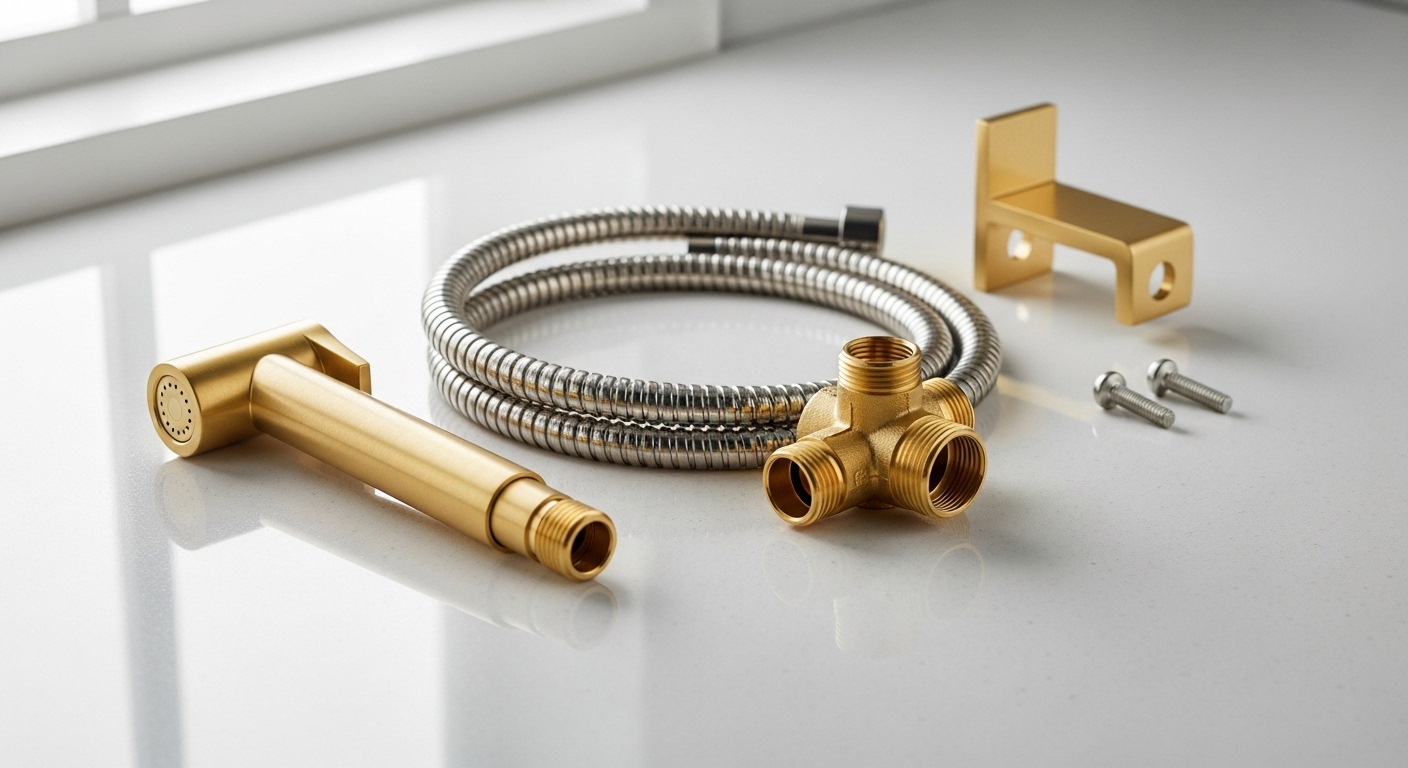
If you’ve been searching for a bidet faucet extension, you’re usually trying to solve one of two problems: your bidet or basin faucet doesn’t reach where you need it, or you want warm-water cleansing without ripping out fixtures and paying a plumber. The good news is that an extension solves both cheaply — as long as you match the connection type, thread size, and water source to what you already have under the sink. Get one of those three wrong and you’ll be chasing drips for a week.
I’ve installed and tested dozens of these on standard 1/2-inch supply lines, dedicated bidet taps, and pull-out basin faucets. Below is exactly how to choose, in plain language, with the specs and numbers that actually matter — not vague marketing.
What exactly is a bidet faucet extension, and what does it connect to?
A bidet faucet extension is any component that lengthens, redirects, or adds spray function to a faucet used for cleansing. In practice it comes in three shapes: a handheld sprayer (the most common), an extended spout or gooseneck that swings farther over the basin, and a flexible hose extension that adds length between the valve and the sprayer head.
What it connects to is the whole game. Most extensions tap into one of these three points:
- The 1/2-inch cold (or hot) supply line under your sink, using a T-valve — this is how handheld bidet sprayers get their water.
- The faucet body directly, via a threaded aerator port (typically 15/16-inch or 55/64-inch male, or 22mm) — common on dual-temperature warm-water bidet attachments.
- An existing bidet tap’s outlet, if you already have a dedicated bidet fixture and just need more reach.
Before you buy anything, look under your sink and note two things: the supply-line size and the shutoff-valve connection. If you’re unsure how to read those numbers, our guide on how to measure faucet supply line size the right way walks through it in five minutes and will save you a return trip to the hardware store.
Which bidet faucet extension is best for warm water on a $50–$100 budget?
For warm water on that budget, go with a handheld bidet sprayer that uses a dual T-valve tapping both hot and cold lines, feeding a thermostatic or mixing handle. That’s the only sub-$100 route that gives real temperature control instead of ice-cold-only spray.
Here’s the honest tradeoff. Single-valve sprayers ($20–$35) are cheap and reliable, but they pull only from one supply line — usually cold. That’s fine in a warm climate or if you don’t mind it. A dual-inlet warm-water extension ($55–$95) mixes hot and cold so you set a comfortable temperature, but it needs both a hot and cold shutoff within reach. Battery- or electric-heated attachments exist too, but under $100 they heat slowly and I don’t recommend them over a simple hot-line tap.
| Extension type | Typical price | Warm water? | Best for |
|---|---|---|---|
| Single-inlet handheld sprayer | $20–$35 | No (cold only) | Warm climates, simplest install |
| Dual-inlet warm-water sprayer | $55–$95 | Yes (mixed hot/cold) | Most homes, best all-round pick |
| Extended gooseneck spout | $40–$120 | Depends on faucet | Existing bidet tap needing reach |
| Flexible hose extension only | $10–$25 | N/A (adds length) | Sprayer that won’t reach far enough |
| Electric heated attachment | $60–$130 | Yes (slow) | No hot line available under sink |
My default recommendation for a family bathroom is the dual-inlet warm-water sprayer with a brass valve body. The metal internals matter more than the sticker price — plastic T-valves are where cheap kits fail first.
What about material — brass, stainless, or plastic?
Choose brass for anything that stays under pressure permanently (the T-valve and connectors), and stainless or coated brass for the hose and sprayer head. Plastic is acceptable only for the sprayer trigger and the aerator adapter, never for the pressurized valve body.
Solid brass resists the mineral corrosion that eats plastic threads over time, and it holds thread tension without cracking when you snug the nut. If you want to understand why threaded brass connections seal so reliably and how to spot a quality one, our explainer on what a brass faucet with thread is and how to choose the right one covers the thread standards you’ll run into on these extensions.
How do you install a bidet faucet extension without leaks?
The leak-free install comes down to four things: shut off the water, seat the T-valve on the correct supply line, use PTFE tape on tapered threads (never on flat rubber-gasket connections), and hand-tighten plus a quarter turn — not a gorilla grip. Overtightening cracks compression ferrules and is the #1 cause of the slow drip people blame on the product.
- Turn off the shutoff valve under the sink and open the faucet to release pressure.
- Disconnect the supply line from the shutoff, thread on the T-valve, then reconnect the supply line to the T-valve’s pass-through outlet.
- Connect the extension hose to the T-valve’s side port. If it uses a rubber gasket, no tape needed — just seat the gasket flat.
- Wrap tapered (NPT) threads with 3–4 turns of PTFE tape, clockwise.
- Snug by hand, then a quarter to half turn with a wrench. Stop there.
- Turn water back on slowly and watch every joint for 60 seconds. Dab each with a dry paper towel — the towel finds weeping joints your eye misses.
The whole job is 15–20 minutes with an adjustable wrench and takes no plumbing skill. If your under-sink connections use quick-connect fittings rather than threaded compression nuts, read how to choose the right faucet sprayer quick connect adapter first so you buy an extension that mates to your system instead of fighting it.
Will a bidet faucet extension fit my existing faucet or bidet tap?
It fits if the thread size and connection type match — and for the vast majority of North American bathrooms, they do, because supply lines are standardized at 1/2-inch or 3/8-inch compression and aerators are 15/16-inch male or 55/64-inch female. The two places people get tripped up are metric European taps (M22, M24) and older or vintage bidet fixtures with proprietary outlets.
If you own a dedicated bidet already and just want more reach or a sprayer head, measure the outlet thread before ordering. Vintage fixtures in particular use thread pitches you won’t find on a modern big-box adapter. Our guide to whether a vintage bidet faucet is worth it and how to pick the right one explains those older thread standards and where reproduction parts come from — worth a read before you assume a modern extension will thread on.
| Connection point | Common thread size | What you need |
|---|---|---|
| Under-sink supply (US) | 3/8″ or 1/2″ compression | Matching T-valve |
| Faucet aerator (US) | 15/16″ male / 55/64″ female | Aerator adapter |
| Faucet aerator (EU/metric) | M22 male / M24 female | Metric adapter ring |
| Standalone bidet tap | 1/2″ BSP (often) | BSP-to-NPT adapter |
Handheld sprayer vs. extended spout: which one should you actually get?
Get a handheld sprayer if you want directional control and warm-water washing; get an extended spout only if you already have a bidet basin and just need the water to reach farther across it. For 9 out of 10 people asking about a bidet faucet extension, the handheld sprayer is the right answer because it works with a normal toilet — no separate bidet fixture required.
The extended-spout route makes sense in one specific case: you have a standalone bidet with a short or awkward tap, and you want a longer gooseneck so the stream lands where it should. In that scenario an extension spout keeps the fixture’s look intact while fixing the reach. Otherwise, the sprayer wins on flexibility, price, and install simplicity.
A quick note on water pressure: a good handheld bidet sprayer regulates flow at the trigger, so even on lower household pressure (around 40–45 psi) you get a usable stream. If your home runs below that, prioritize a sprayer with an adjustable pressure trigger rather than a fixed-flow head.
How much does a bidet faucet extension cost, and is it worth it?
Expect to spend $20–$35 for a basic cold-water sprayer, $55–$95 for a warm-water dual-inlet kit, and $40–$120 for an extended spout — and yes, it’s worth it for nearly everyone, because it delivers most of the benefit of a $400–$600 electronic bidet seat for a fraction of the price and installs in under 20 minutes.
Value-wise, the math is simple. A quality brass warm-water extension pays for itself in reduced toilet-paper use within a year for most households, and it adds cleansing function to a bathroom you can’t otherwise renovate — a rental, for instance. The only time I’d steer someone toward a full bidet seat instead is if they specifically want a heated seat, air dryer, or seated experience. For pure cleansing, the extension is the smarter buy.
A note on quality, testing, and warranty
Not all extensions are built the same, and the difference shows up at the valve. At wewefaucet, our bidet extensions and sprayers use solid-brass valve bodies and are pressure-tested to well above standard residential line pressure before shipping, with connectors rated to common North American plumbing standards for lead-free potable-water contact. We back the metal components with a multi-year warranty because a warm-water extension lives under constant pressure — the parts have to last.
If you’re weighing extension add-ons more broadly (not just bidet use), our breakdown of what makes a quality faucet extender worth buying uses the same evaluation checklist — valve material, thread standard, gasket quality — that applies directly to bidet extensions.
Author note: This guide was written by the wewefaucet fixtures team, drawing on hands-on installation and pressure-testing of handheld and warm-water bidet extensions across standard US 1/2-inch and 3/8-inch supply configurations, metric European taps, and standalone bidet fixtures. Recommendations reflect what we’d fit in our own bathrooms, not just what sells.
FAQ
Do I need a plumber to install a bidet faucet extension?
No. A standard handheld or warm-water bidet extension installs with just an adjustable wrench and PTFE tape in 15–20 minutes. You shut off the water, add a T-valve to the supply line, connect the hose, and check for leaks. A plumber is only worth calling if your shutoff valves are seized or your supply lines are corroded and need replacing first.
Can a bidet faucet extension give me warm water?
Yes, if you choose a dual-inlet model that taps both the hot and cold supply lines under your sink and mixes them at a control valve. Single-inlet sprayers pull from one line only — usually cold. Electric heated attachments exist for bathrooms with no accessible hot line, but they heat slowly, so a hot-line tap is the better route when possible.
Will a bidet extension lower my toilet’s water pressure?
No, not in normal use. A T-valve splits the supply but doesn’t meaningfully reduce pressure to the toilet fill valve, because the sprayer and toilet rarely run at the exact same instant. If you do notice weak spray, it’s usually low household pressure (below 40 psi) rather than the T-valve — choose a sprayer with an adjustable pressure trigger in that case.
What thread size do most bidet faucet extensions use?
Under-sink connections are typically 3/8-inch or 1/2-inch compression, and faucet aerator ports are usually 15/16-inch male or 55/64-inch female in the US. European and vintage taps often use metric (M22/M24) or BSP threads, which need an adapter. Always measure your connection point before ordering, since a mismatched thread is the most common reason an extension won’t fit.
Is a bidet faucet extension good for a rental?
Yes — it’s one of the best rental upgrades because it’s fully reversible. Everything threads onto existing supply lines and aerators without cutting, drilling, or permanent modification, so you can remove it and reinstall the original parts when you move out. Keep the original aerator and supply connections in a bag for reassembly.
How long does a quality bidet extension last?
A brass-bodied extension typically lasts 5–10 years or more, while all-plastic kits often start weeping at the valve within a year or two. Longevity comes down to the valve material and thread quality, not the sprayer head. Hard water shortens the life of any fixture, so periodic descaling of the sprayer head and aerator helps.
您好!please sign in