 WEWE Kitchen Faucets
What Makes a Quality Faucet Extender Worth Buying, and Which One Should You Get?
Views:229 classificationProduct
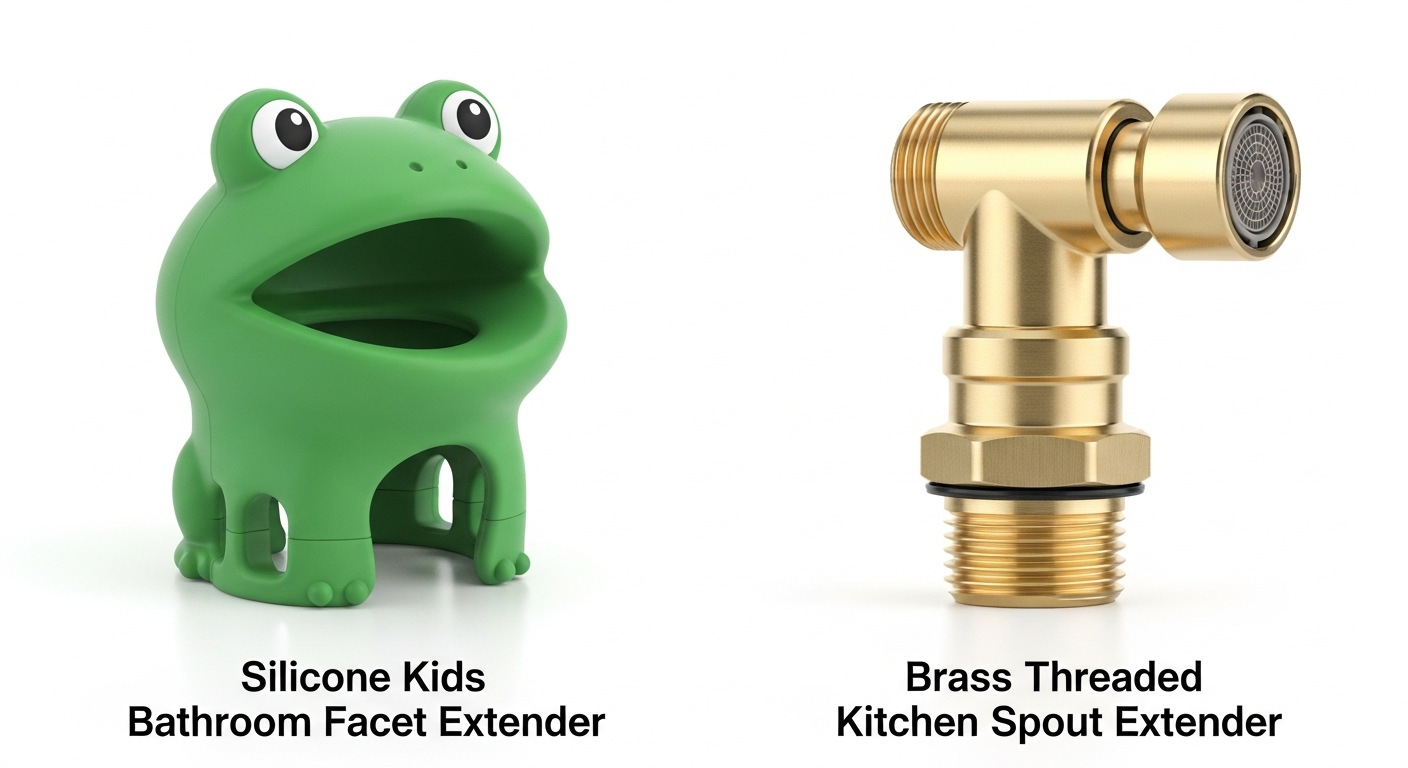
If you’ve ever watched a toddler stretch on tiptoe to rinse their hands under a sink they can’t reach, you already understand the problem a quality faucet extender solves. It’s a tiny, inexpensive part — usually under $15 — but the difference between a good one and a cheap one is the difference between a gadget that lasts years and a slimy, dripping thing you toss in a month. This guide breaks down exactly what separates a quality faucet extender from junk, which type fits your situation, and how to install one that actually stays put.
Faucet extenders come in two very different flavors that people constantly confuse, so let’s define terms up front. A reach extender (the “froggy” or animal-spout style) clips onto a bathroom faucet and guides the water outward so kids can reach it. A height/length extender is a threaded metal adapter that permanently lengthens the spout or raises the aerator — used in kitchens, garages, and utility sinks for filling tall pots. Both get called “faucet extenders.” This article covers both, because “quality” means something slightly different for each.
What actually makes a faucet extender “quality” instead of cheap junk?
A quality faucet extender comes down to three things: the material is food-safe and mold-resistant, the fit is tight enough that it won’t rotate or spray sideways, and the water flow stays smooth without dripping at the seam. Everything else is marketing.
Cheap extenders fail in predictable ways. The soft rubber ones grow black mildew inside within weeks because water pools in the channel and never dries. The hard plastic ones crack at the clip. And the loose-fitting ones slide off or twist so the water sprays the mirror instead of the sink. When you’re evaluating one, run through this checklist:
- Material: Solid, single-piece food-grade silicone (for kids’ extenders) or lead-free brass/stainless (for threaded extenders). Avoid thin PVC and mystery “rubber.”
- Grip design: A wide, textured inner sleeve that hugs the spout — not a thin lip that just rests on the edge.
- Drainage: The channel should shed water when the tap shuts off, so it dries between uses. Enclosed tubes that trap water breed mold.
- Flow behavior: The stream should exit as a clean arc, not a fan of side-spray. Test it the first day.
- Certifications: Look for BPA-free / food-contact-safe labeling on kids’ models, and lead-free (NSF/ANSI 61 or “meets lead-free law”) on metal ones.
One quick tell for silicone quality: pinch it. Good silicone springs back instantly and has a slightly matte, dry feel. Cheap material feels tacky, holds fingerprints, and stays deformed for a second after you squeeze it — that tackiness is exactly what mold clings to.
Which faucet extender is best for a toddler who can’t reach the sink?
For a toddler, the best faucet extender is a one-piece food-grade silicone “reach guide” that slips over your existing spout and redirects the stream forward — no tools, no plumbing. It lets a 2–4 year old wash hands independently without a wobbly step stool doing all the work.
The key spec parents miss is spout compatibility. These extenders grip the underside of the spout, so they only work on a fairly standard rounded or slightly flared bathroom spout. They struggle on very wide “waterfall” spouts, on square/geometric spouts, and on spouts where the aerator sits flush in a recessed housing. Before you buy, measure the width and height of your spout tip. If it’s an unusual shape, a universal silicone model with a stretchy sleeve fits far better than a rigid molded one.
A word on hygiene, because it’s the number-one complaint: buy a model you can pull off and flip inside-out to clean, and actually do it once a week. The reason cheap ones “get gross” isn’t always low quality — it’s that a closed design never dries. A quality extender is designed to be removed and rinsed in seconds.
Do I need a threaded metal extender for my kitchen or utility sink?
You need a threaded metal extender when you want to permanently lengthen or angle a kitchen, laundry, or garage faucet — for example, to fill a stockpot that won’t fit under the spout, or to reach the far side of a deep utility sink. This is a completely different product from the kids’ silicone type: it’s a brass or stainless coupler that screws into the faucet’s aerator threads.
Here’s where thread size matters and trips people up. Standard US faucet aerators come in Male 15/16″-27 and Female 55/64″-27, with smaller Junior sizes on some bathroom faucets. A quality extender comes with adapters or clearly states which thread it fits, and it uses a real rubber washer for the seal — not just Teflon tape and hope. If you’re unsure what your faucet uses, our guide on what a brass faucet with thread is and how to choose the right one walks through reading those threads correctly.
Material matters more here than on the silicone side, because this part is under constant water pressure. Go with lead-free brass or stainless steel. Skip pot-metal (zinc) extenders — they corrode from the inside, seize onto your aerator threads, and can crack under pressure. If you’ve ever fought a rusted, fused fitting, you know why this matters; it’s the same corrosion story behind rust coming out of a faucet.
Silicone vs. brass faucet extender: which type should you buy?
The short answer: buy silicone if the goal is helping kids reach a bathroom sink, and buy brass/stainless if the goal is permanently extending a kitchen or utility spout for reach and pot-filling. They solve different problems. Here’s the side-by-side.
| Feature | Silicone reach extender (kids) | Brass/stainless threaded extender |
|---|---|---|
| Best for | Toddlers reaching a bathroom faucet | Filling tall pots, deep utility sinks |
| Install | Slips on, no tools, 5 seconds | Screws into aerator threads, needs a wrench/pliers |
| Extends water | Forward & down ~2–4 in | Downward/outward, models vary 2–6 in |
| Removable | Yes — pull off to clean | Semi-permanent |
| Main failure mode | Mold if not dried; sliding if loose | Corrosion (if zinc); cross-threaded leaks |
| Typical price | $6–$14 | $8–$20 |
| Lifespan (quality unit) | 1–3 years | 5+ years |
A middle option worth knowing about: flexible metal-hose extenders that add a short gooseneck to a laundry or garage faucet. These give you the reach of a threaded extender plus the ability to aim the stream. Quality here means a stainless braided hose and brass fittings — the same build standard you’d want on any supply connection.
How do you install a faucet extender so it doesn’t leak or fall off?
For a silicone extender you just push it firmly over the clean, dry spout until the sleeve grips the underside — that’s it. For a threaded metal extender, the trick to a leak-free install is a clean thread, the right washer, and hand-tight-plus-a-quarter-turn — not gorilla force. Here’s the reliable sequence for the threaded type:
- Unscrew your existing aerator by hand (or with pliers padded by a cloth so you don’t scratch the finish). Turn counter-clockwise as you look up at it.
- Check the threads on the spout for grit or old washer bits. Wipe them clean and dry.
- Confirm the extender’s thread and washer match your faucet — male vs. female, and that the rubber washer is seated flat in the fitting.
- Thread the extender on by hand first. If it won’t start smoothly, stop and re-align — forcing it cross-threads the aerator and guarantees a leak.
- Snug it hand-tight, then give it about a quarter turn with padded pliers. Reinstall your aerator into the extender’s outlet if it’s a separate piece.
- Run the water. Watch the seam for drips for 30 seconds. A slow weep means the washer isn’t seated — back it off and reseat, don’t just crank harder.
If your faucet uses a quick-connect coupler at the spout rather than simple threads, the removal step is different and you can crack the plastic if you yank it — our walkthrough on removing a Glacier Bay quick-connect without breaking it shows the release technique that applies to most quick-connect spouts.
Is a store-bought faucet extender better than a 3D-printed one?
Yes — for anything that touches drinking or hand-washing water, a store-bought food-grade extender beats a 3D-printed one, because standard FDM prints have porous layer lines that trap bacteria and aren’t made from certified food-contact material. A 3D print is fine for a quick prototype or a purely decorative reach guide, but it’s not the move for a part water flows through daily.
People are drawn to printing their own because the files are free and the shape looks simple. The catch is material safety and surface finish: the tiny grooves between print layers are nearly impossible to clean and are exactly where biofilm forms. If you’re weighing the DIY route, we compared it head-to-head in should you 3D-print a faucet extender STL file or just buy a real one — the short version is that a $10 certified silicone unit wins on hygiene, durability, and fit for almost everyone.
How long should a quality faucet extender last, and how do you make it last?
A quality silicone extender should last 1–3 years, and a lead-free brass one 5+ years, if you keep them clean and installed correctly. Most early failures aren’t manufacturing defects — they’re maintenance and fit problems. To get the full lifespan:
- Dry it out. For silicone, pull it off once a week, flip it, and rinse. Let it air-dry. This single habit prevents 90% of the “it got moldy” complaints.
- Descale it. Hard-water minerals build up in the channel and at the aerator, weakening flow. Soak in a 50/50 white vinegar and water solution for 20 minutes, then rinse.
- Don’t over-torque metal fittings. Cranking a brass extender doesn’t stop leaks — a properly seated washer does. Over-tightening deforms the washer and causes the very drip you’re trying to prevent.
- Match the material to your water. If you have aggressive or high-mineral water, brass and stainless hold up far better than plated zinc.
One more longevity note: a faucet extender is only as good as the faucet behind it. If your spout already drips or the aerator is corroded, add the extender to a healthy faucet — otherwise you’re just relocating the leak an inch downstream.
FAQ
Will a faucet extender fit any bathroom faucet?
No. Silicone reach extenders fit most standard rounded spouts but struggle on wide waterfall, square, or recessed-aerator spouts. Threaded metal extenders fit only faucets with standard aerator threads (commonly 15/16″-27 male or 55/64″-27 female). Measure your spout tip or check your aerator thread before buying, and favor a universal-fit model if your spout is an unusual shape.
Are silicone faucet extenders safe for kids and drinking water?
A quality one is, as long as it’s labeled food-grade and BPA-free silicone. That certification means the material is rated for repeated food and water contact. The bigger day-to-day safety issue is mold from trapped moisture, which is why a removable, easy-to-dry design matters more than any fancy feature.
Why does my faucet extender spray water sideways or make a mess?
Side-spray almost always means the extender isn’t gripping the spout tightly, so it’s slightly rotated or tilted, or mineral buildup is disrupting the stream. Reseat it fully onto a clean, dry spout, and descale the channel with vinegar. If it still fans out, the extender is too loose for your spout diameter and you need a snugger or universal-fit model.
Can a faucet extender reduce my water pressure?
A well-made extender barely affects pressure because it doesn’t restrict the opening much. If you notice a real drop after installing a threaded model, the usual culprit is a clogged or double-stacked aerator, or debris knocked loose during install. Remove the aerator, rinse it, and reinstall — flow usually returns to normal.
What’s the difference between a faucet extender and a faucet adapter?
An extender changes where the water comes out — it lengthens or redirects the stream. An adapter changes what you can connect to the faucet, like attaching a sprayer or hose to the threads. They sometimes share the same threaded fitting, but the goals differ. If you’re trying to hook up a sprayer instead, look at a faucet sprayer quick-connect adapter rather than an extender.
How much should I spend on a quality faucet extender?
Expect $6–$14 for a solid food-grade silicone kids’ extender and $8–$20 for a lead-free brass or stainless threaded one. Spending more than that rarely buys better performance — above this range you’re usually paying for branding. Spending far less is where you hit the thin PVC and pot-metal units that mold or corrode within weeks.
The bottom line, and a note on how we test
Buy for your actual scenario: silicone for kids’ reach, lead-free brass or stainless for permanent kitchen and utility extension, and skip the 3D-printed route for anything water flows through daily. Match the fit to your spout, keep it clean and dry, and a quality faucet extender will quietly do its job for years.
Author note: This guide was written by the wewefaucet product team, who spec, source, and pressure-test faucet fittings and accessories for a living. We evaluate extenders the same way we evaluate our faucets — checking material certifications (food-grade silicone, lead-free brass per NSF/ANSI 61 standards), running real fit tests across common US spout and aerator threads, and confirming leak-tight seals under normal household pressure. At wewefaucet we back the fixtures we sell with a manufacturer warranty and stand behind lead-free, food-contact-safe materials, because a part this small shouldn’t be the weak link in your sink.
您好!please sign in