 WEWE Kitchen Faucets
Are Rainfall Shower Head Taps Worth It, and How Do You Pick the Right One for Low Water Pressure?
Views:310 classificationProduct
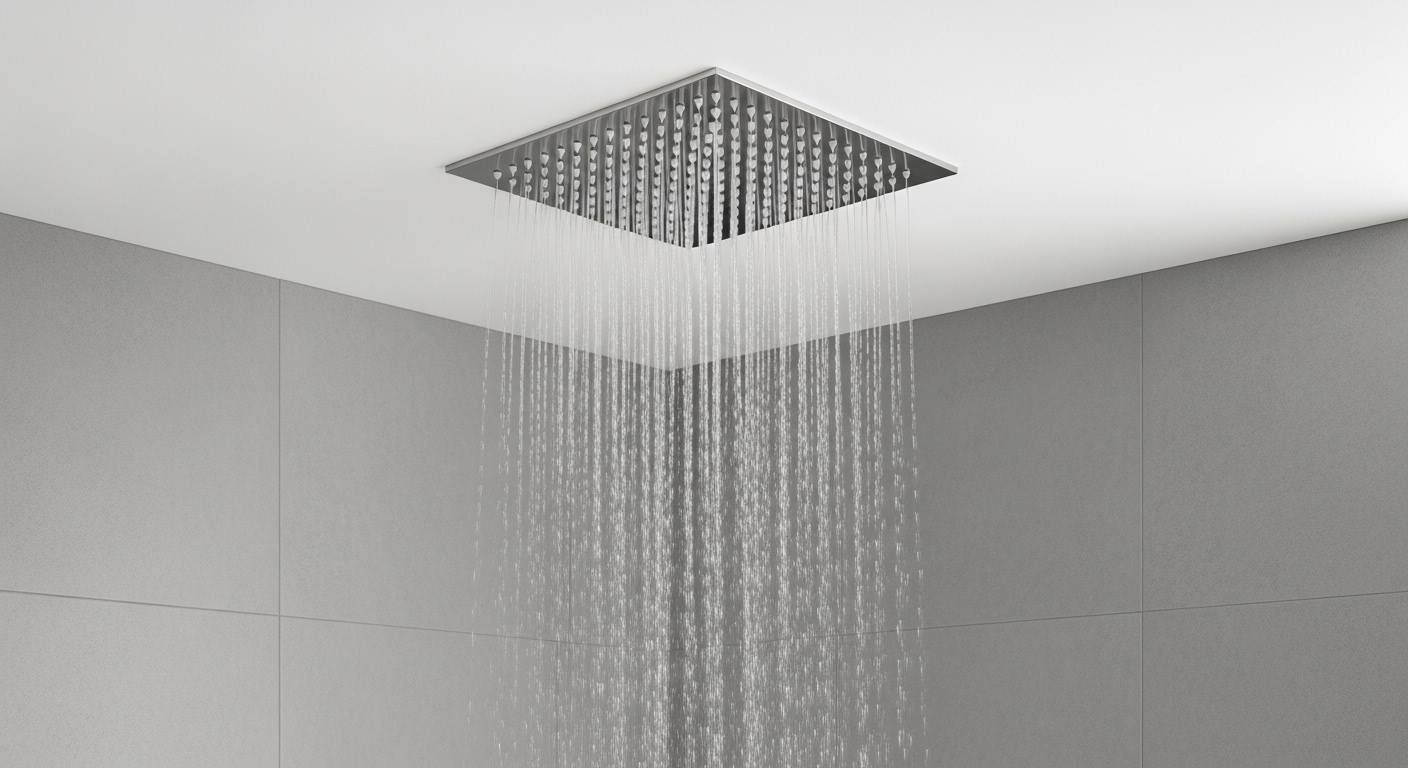
If you’ve been comparing rainfall shower head taps for a bathroom upgrade, the real question isn’t “do they look nice” — they all do in the photos. The real question is whether that wide, gentle, overhead downpour will actually feel good in your bathroom, with your water pressure, on your budget. That’s where most buyers get burned: they buy a gorgeous 12-inch square rain head, install it, and end up standing under a sad drizzle because their home only pushes 35 PSI. This guide walks you through exactly how to choose, what the specs mean in plain English, and which type fits your situation.
A quick definition first, because the terminology gets muddled online. A “rainfall shower head tap” usually refers to the large overhead shower head (the wide rain plate) plus the wall valve/handle (“tap” in British and Australian English) that controls it. Some listings sell the rain head alone; others sell a full set with the valve, arm, and sometimes a handheld. Knowing which you’re buying matters, and we’ll cover that below.
What exactly is a rainfall shower head tap, and how is it different from a regular shower head?
A rainfall shower head is a large, flat spray face — usually 8 to 12 inches wide — mounted overhead so water falls straight down on you like rain, instead of spraying out at you under pressure. The “tap” is the valve and handle on the wall that turns it on and sets the temperature. Compared to a standard 4–5 inch shower head, a rain head trades force for coverage: it wets your whole upper body at once with a soft, low-velocity flow.
That trade-off is the single most important thing to understand. A regular shower head concentrates the same gallons-per-minute through a small face, so it feels powerful and rinses shampoo fast. A rain head spreads those gallons across a much larger area, so each droplet hits gently. People who love rain heads describe them as relaxing and immersive. People who hate them complain they feel weak and that rinsing conditioner takes longer — and almost every one of those complaints traces back to low household water pressure or a poorly chosen high-restriction model.
There are three common configurations on the market:
- Ceiling-mounted rain head — water falls perfectly vertical onto the top of your head; the most “real rain” feel, but requires plumbing run through the ceiling.
- Wall-arm rain head — mounted on a long curved or straight arm from the wall, angled down; far easier to retrofit because it uses your existing shower pipe outlet.
- Rain head + handheld combo (dual-function tap set) — a diverter lets you switch between the overhead rain plate and a handheld sprayer, which solves the “hard to rinse” problem and makes cleaning the shower and rinsing kids or pets much easier.
Are rainfall shower heads worth it if I have low water pressure?
Yes, but only if you choose the right model — a standard rain head on low pressure will disappoint you. If your home runs under about 40 PSI, pick a rain head with air-injection nozzles (it mixes air into the water to keep droplets full and falling with body), a lower flow rate around 1.8–2.0 GPM (counterintuitively, a slightly restricted head holds pressure better than a wide-open 2.5 GPM one), and ideally a pressure-compensating design. If pressure is genuinely poor, a small shower booster pump is the permanent fix.
Here’s the physics in plain terms: pressure (PSI) is the push behind the water; flow (GPM) is how much comes out. A big rain plate has dozens or hundreds of holes. If your push is weak, the water just dribbles out of every hole instead of shooting through — and the bigger the plate, the more spread-out and limp it feels. So on low pressure, a smaller 8-inch rain head will actually feel better than a 12-inch one, because the same weak push is concentrated through fewer, smaller holes. Flow rate matters too; if you’re unsure what GPM your setup can support, our guide on what GPM is in faucets and why flow rates matter breaks down how to read these numbers before you buy.
One more thing buyers overlook: a low-flow rain head doesn’t have to mean a weak shower. Modern low-flow nozzles are engineered to hold velocity even at 1.8 GPM. We dug into whether these actually deliver in do low-flow faucets really save water — the short version is that good ones save 20–40% on water and energy without you noticing a drop in feel.
What size rainfall shower head should I get for a standard bathroom?
For most home bathrooms, an 8-inch to 10-inch rain head is the sweet spot — big enough to feel luxurious, small enough to keep good water pressure. Go to 12 inches or larger only if you have strong water pressure (45+ PSI) and a generous shower enclosure; oversized heads in small showers spray onto walls and the curtain, waste water, and feel weak on average household pressure.
Match the head to the enclosure. In a compact 32×32 inch shower stall, a 12-inch plate is overkill and will splash outside the spray zone. In a roomy walk-in or wet room, a 10–12 inch ceiling head feels incredible. Here’s a quick reference:
| Shower size | Recommended rain head | Ideal water pressure | Best mount |
|---|---|---|---|
| Compact stall (≤ 36 in.) | 8 in. | 35–45 PSI | Wall arm |
| Standard bath/shower (36–48 in.) | 8–10 in. | 40+ PSI | Wall arm or ceiling |
| Large walk-in / wet room | 10–12 in. | 45+ PSI | Ceiling |
| Luxury / dual-head spa | 12 in.+ with handheld | 50+ PSI (or pump) | Ceiling + wall handheld |
Round vs. square rainfall shower head — does the shape change anything?
Shape is mostly aesthetic, not functional — both round and square rain heads deliver the same drenching spray if the internal nozzle design and diameter are equal. Choose round for a softer, traditional or transitional bathroom look, and square for a sharp, modern, minimalist feel. The performance difference comes from build quality and spray engineering, not the silhouette.
That said, there are a couple of practical notes. Square heads have corners that can collect mineral scale slightly more readily if you have hard water, so look for silicone anti-clog nozzles you can rub clean with a thumb. Round heads tend to be a touch cheaper at the same diameter because they’re simpler to manufacture. Finish matters more than shape for longevity — brushed nickel and matte black hide water spots better than polished chrome, which shows every droplet.
Can I install a rainfall shower head tap myself, or do I need a plumber?
If you’re replacing a wall-arm shower head and keeping your existing valve, you can absolutely do it yourself in 20–30 minutes with a wrench and some PTFE plumber’s tape — no plumber needed. If you’re moving to a ceiling-mounted rain head or swapping the in-wall valve (“tap”), that’s a bigger job involving opening the wall or ceiling, and most people should hire a pro for that part.
The simple wall-arm swap goes like this:
- Unscrew the old shower head from the arm by hand or with a wrench (wrap the jaws in a cloth to avoid scratching the finish).
- Clean the threads on the shower arm and wrap them clockwise with 2–3 turns of PTFE tape.
- If your rain head needs a longer or extended arm to angle the spray correctly, screw that on first, taping each joint.
- Hand-tighten the new rain head, then snug it about a quarter turn more with the cloth-wrapped wrench — don’t overtighten and crack the nut.
- Turn the water on and check every joint for drips; add another wrap of tape if anything weeps.
If you’re also adding a slide bar or repositioning a handheld at the same time, our walkthrough on how to install a shower head slide bar yourself without hiring a plumber covers the anchoring and sealing steps. And if you notice your shower drips or won’t fully shut off after the swap, that’s almost always a worn valve cartridge, not the new head — we explain the fix in shower faucet keeps running when turned off.
How much should I spend, and what separates a cheap rain head from a good one?
Plan on $40–$90 for a solid mid-range rainfall shower head, $100–$250 for a full rain-plus-handheld tap set with the valve, and $250+ for premium thermostatic systems. Below about $30, you’re usually buying thin ABS plastic with a chrome coating that flakes, hollow nozzles that clog, and no real pressure engineering — which is exactly where the “weak rain shower” reputation comes from.
What you’re actually paying for as price climbs:
- Body material — a solid brass valve body and a metal (stainless or brass) face plate last decades; cheap zinc or plastic corrodes and cracks. If you want the full breakdown on why this matters, see brass vs. zinc faucets: which lasts longer.
- Anti-clog silicone nozzles — flexible nubs you can wipe to dislodge hard-water scale, instead of fixed holes that mineralize shut.
- Pressure/flow engineering — air injection and pressure-compensating internals that keep the spray strong at 2.0 GPM or less.
- Thermostatic valve — on higher-end tap sets, this holds your set temperature and prevents scalding if someone flushes a toilet.
- Finish durability — PVD-coated finishes resist scratching and tarnish far better than electroplated chrome.
- Warranty — a real manufacturer warranty (and certification to standards like ASME A112.18.1 / NSF 61 for lead-free safety) signals the maker stands behind the product.
Rainfall vs. standard high-pressure shower head: which should you actually buy?
Buy a rainfall head if you prioritize relaxation, a spa feel, and full-body coverage, and you have decent pressure. Buy a standard high-pressure head if you have low water pressure, want fast rinsing, or take quick functional showers. The best answer for many homes is a combo — an overhead rain head plus a handheld on a diverter — so you get both.
| Feature | Rainfall shower head | Standard high-pressure head |
|---|---|---|
| Feel | Soft, drenching, spa-like | Strong, targeted, invigorating |
| Rinsing speed | Slower | Faster |
| Low-pressure homes | Needs the right model or a pump | Performs well |
| Coverage | Whole upper body | Concentrated stream |
| Install (wall arm) | Easy DIY | Easy DIY |
| Best for | Relaxation, walk-in showers | Quick showers, kids, pets |
How do you keep a rainfall shower head from clogging and looking spotty?
Wipe the silicone nozzles with your thumb weekly and deep-clean the face monthly by soaking it in white vinegar — that handles 90% of hard-water clogging and water spots. Rain heads have a huge surface area, so mineral scale and spotting show more than on a small head, which is why hard-water households should prioritize anti-clog nozzles and a spot-resistant finish from day one.
For a deeper clean on a removable head, unscrew it, soak it face-down in a bowl of warm white vinegar for an hour, then scrub the nozzles with an old toothbrush and rinse. For a fixed ceiling head, fill a plastic bag with vinegar, tie it over the head with a rubber band so the face is submerged, leave it an hour, and remove. If you’re on very hard water, a whole-shower or inline filter slows scale buildup dramatically and protects the finish over the years.
A note on expertise, testing, and warranty
Author note: This guide was written by the wewefaucet product team, who spec, pressure-test, and sell shower fixtures every day. We’ve installed and bench-tested rain heads across the full pressure range — from weak 30 PSI apartment supplies to strong 60 PSI homes — which is why we keep hammering on pressure and flow instead of just aesthetics. The most common return reason we see isn’t a defect; it’s a beautiful oversized head bought for a low-pressure home.
Brand credibility: wewefaucet manufactures and curates faucets and shower fixtures with solid-brass bodies and certified lead-free waterways. Our rainfall systems are built to recognized plumbing standards (such as ASME A112.18.1/CSA B125.1 for performance and NSF/ANSI 61 & 372 for lead-free safety), and our shower heads carry a multi-year limited warranty on the finish and the valve cartridge. Before you buy from anyone, it’s worth understanding the fine print — our explainer on understanding faucet warranty terms shows you which clauses actually protect you.
FAQ
Do rainfall shower heads use more water than regular ones?
Not necessarily. Water use depends on the flow rate (GPM), not the head size. A rain head capped at 1.8 GPM uses the same water as a standard 1.8 GPM head — it just spreads it over a wider area. The U.S. federal maximum is 2.5 GPM, and WaterSense-labeled heads cap at 2.0 GPM, so look for that label if conservation matters to you.
Will a rainfall shower head work with my existing shower valve?
If you’re buying just the rain head and your home has standard 1/2-inch shower-arm threads, yes — it screws onto your existing arm. If you’re buying a full tap set with its own thermostatic or pressure-balance valve, you’ll be replacing the in-wall valve, which means opening the wall and ideally hiring a plumber. Always check the valve type and inlet size in the product spec before ordering.
Why does my rainfall shower head feel weak?
Almost always low water pressure relative to the head’s size, or a flow restrictor combined with a wide plate. Fixes, in order: clean any clogged nozzles, confirm your home’s PSI (under 40 is the culprit), switch to a smaller 8-inch or air-injection head, or install a shower booster pump. A clogged or oversized head on weak pressure is the number-one reason rain showers disappoint.
Ceiling-mounted or wall-mounted rainfall head — which is better?
Ceiling-mounted gives the truest straight-down “rain” feel and looks cleanest, but it requires plumbing in the ceiling, so it’s best for new builds or full remodels. Wall-mounted on an arm is far easier to retrofit and angle, and it’s the practical choice for upgrading an existing shower without opening the ceiling.
What’s the difference between a rainfall shower head and a “rain tap” set?
A rainfall shower head is just the overhead plate. A “rain tap” or rain shower set typically includes the overhead head plus the valve and handle (“tap”) that control it, and often a hose, handheld sprayer, and diverter. If a listing’s price looks too low for a complete system, you’re probably buying the head only — read the “what’s in the box” section carefully.
Is matte black or brushed nickel better for a rainfall shower head?
Both hide water spots and fingerprints far better than polished chrome, so either is a smart pick for a low-maintenance rain head. Matte black suits modern and industrial bathrooms; brushed nickel is warmer and more forgiving with mixed fixtures. Just make sure the finish is PVD-coated for scratch and tarnish resistance, not a thin electroplate.
您好!please sign in