 WEWE Kitchen Faucets
Is a Faucet Water Filter Effective, or Are You Just Paying for a Fancy Aerator?
Views:60 classificationProduct
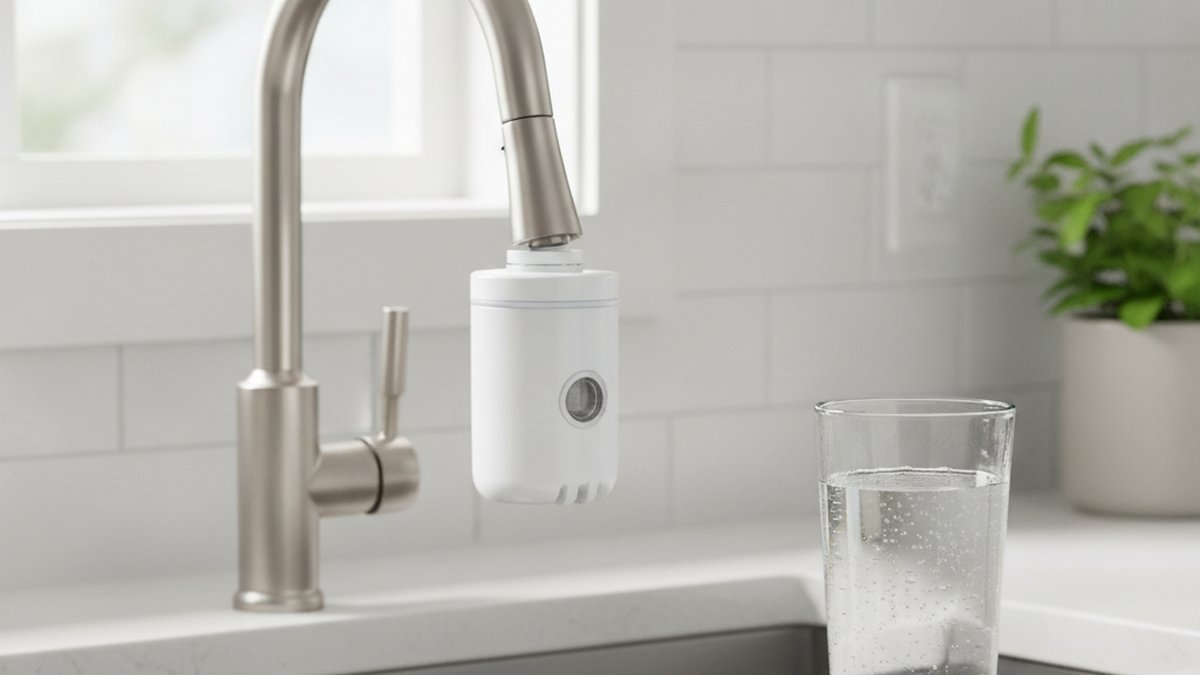
People ask whether a faucet water filter effective enough to bother with, or whether it’s just marketing bolted onto a spout, and the honest answer is: it depends on two things — the certification behind the filter and how well you maintain it. A genuinely certified faucet-mounted or under-sink filter will measurably lower contaminants you actually care about. A generic “water-saving filter aerator” from a bargain bin usually just adds air and a screen. This guide walks through exactly what these filters remove, when they work, when they don’t, and how to pick one that earns its place on your tap.
What does a faucet water filter actually remove — and is it effective against lead?
A properly certified faucet water filter removes chlorine, chloramine (in many models), lead, mercury, sediment, rust particles, and the off-tastes and odors that come with them — and yes, the ones certified to NSF/ANSI 53 are genuinely effective against lead, cutting it by up to 99%. That last point matters most because lead is the contaminant people most want gone and the one a plain aerator can never touch.
Here’s the key distinction. Contaminant reduction is tied to specific standards:
- NSF/ANSI 42 — aesthetic effects: chlorine, taste, odor, and larger sediment particles. This is the “makes your water taste better” tier.
- NSF/ANSI 53 — health effects: lead, mercury, cysts (like Cryptosporidium and Giardia), VOCs, and asbestos. This is the tier that actually protects you.
- NSF/ANSI 401 — emerging contaminants: certain pharmaceuticals, pesticides, and PFOA/PFOS “forever chemicals” in some models.
If a faucet filter carries NSF/ANSI 42 and 53 certification, it is effective in the meaningful sense of the word — a third-party lab verified it removes what the box claims. If it only carries NSF 42, it will improve taste and smell but does nothing for lead. And if it carries no certification at all, treat every claim on the packaging as an unverified guess.
Why do some people say faucet water filters are useless?
Because they bought the wrong product, or they never changed the cartridge — those are the two reasons a faucet water filter “stops working.” An effective filter that’s four months overdue for a cartridge swap is, functionally, no longer a filter. Carbon filters don’t just stop; they saturate, and a saturated carbon block can actually release trapped contaminants back into your water.
The other common complaint is confusion between three very different products that all get called “filters”:
- A filter aerator — a screen-and-mesh insert that catches grit and mixes air into the stream. It reduces splashing and traps rust flakes, but it does not purify water. Useful, cheap, but not a health filter.
- A faucet-mounted filter — the unit that clips onto your existing spout with a diverter, holding a small carbon cartridge. Genuinely reduces chlorine and, if certified to NSF 53, lead.
- An under-sink filter — a larger cartridge (or multi-stage system) plumbed into your cold line, feeding a dedicated tap or the main faucet. Highest capacity, best flow, longest life between changes.
When someone says “my faucet filter is useless,” nine times out of ten they either owned category one and expected category two, or they neglected maintenance. The technology works; the expectations and upkeep are where it falls apart.
Faucet-mounted vs. under-sink vs. pitcher: which is most effective for the money?
For most households on city water who want lead and chlorine gone without plumbing work, a certified faucet-mounted filter is the best value — real NSF 53 protection for a low upfront cost. If you drink a lot of water daily or have a big family, an under-sink system is more effective per dollar over time because the cartridges last far longer. Here’s how the common options stack up.
| Filter type | Typical upfront cost | Cartridge life | Lead reduction (NSF 53)? | Best for |
|---|---|---|---|---|
| Filter aerator only | $5–$15 | N/A (rinse the screen) | No | Catching sediment, reducing splash |
| Faucet-mounted filter | $25–$60 | ~100–200 gallons (2–3 months) | Yes, if certified | Renters, quick install, no tools |
| Under-sink (single-stage) | $80–$180 | ~500–1,000 gallons (6–12 months) | Yes, if certified | Families, heavy daily use |
| Under-sink reverse osmosis | $200–$500 | Membrane 2–3 yrs, pre/post 6–12 mo | Yes, plus dissolved solids | Well water, high TDS, maximum purity |
| Pitcher filter | $20–$45 | ~40 gallons (1 month) | Some models only | One or two people, minimal water use |
Notice the pattern: effectiveness against health contaminants isn’t about the format — a faucet-mounted unit and a pitcher can both hit NSF 53 — it’s about certification and capacity. The under-sink options win on cost-per-gallon and flow rate, which is why heavy users gravitate to them. Faucet-mounted units win on convenience and the fact that you can take them with you when you move, which makes them the renter’s default.
One practical note before you buy any faucet-mounted unit: check that your spout is compatible. Pull-down and pull-out sprayers, and some designer spouts, won’t accept a clip-on diverter. If you’re already shopping for a new tap, it’s worth thinking about filter compatibility up front — our guide on what size faucet for a kitchen sink you actually need covers spout dimensions and threading that affect whether an external filter will even fit.
How do you know a faucet water filter is actually effective before you buy it?
Look for a genuine NSF/ANSI certification mark and the specific contaminant list it’s certified for — not vague phrases like “reduces up to 99% of impurities.” Effectiveness is a testable, documented claim, and reputable manufacturers publish exactly what their filter removes and to what standard. Here’s the buyer’s checklist we give customers.
- Certification body listed by name. NSF, WQA (Water Quality Association), or IAPMO are the credible ones. “Tested to NSF standards” is not the same as “NSF certified” — certification means the lab audits the factory, not just one sample.
- The exact standards. You want to see 42 and 53 at minimum for lead protection. 401 is a bonus for pharmaceuticals and PFAS.
- Rated capacity in gallons. A filter rated for 100 gallons at a real flow rate tells you the replacement schedule. No stated capacity is a red flag.
- Flow rate. Below ~0.5 GPM and filtered water becomes a trickle you’ll resent. Good faucet filters deliver around 0.5–1.0 GPM.
- Your actual water report. Get your municipal Consumer Confidence Report (it’s free and public) or test your water. Filter for what you actually have, not for fear.
If you’re on well water, this step is non-negotiable — test first. Wells can carry iron, hardness, nitrates, or bacteria that a standard carbon faucet filter isn’t designed to handle, and matching the filter to the problem is the whole game.
Does a faucet water filter help with hard water and limescale?
Mostly no — a standard carbon faucet water filter is not effective at softening hard water, because it doesn’t remove the dissolved calcium and magnesium that cause scale. It improves taste and removes chlorine and lead, but the white crusty buildup on your aerator and spout will keep coming unless you use a dedicated softener or a scale-inhibiting filter.
This trips people up constantly. They install a filter expecting the limescale spots to vanish, and they don’t, because filtration and softening are two different jobs. If hard water is your main frustration, a faucet filter is the wrong tool — you want a water softener or a template-assisted crystallization (TAC) conditioner upstream. For the buildup that’s already on your fixtures, cleaning is the fix, and our rundown of the best bathroom faucet cleaner for hard water, chrome, and brushed finishes walks through what actually dissolves limescale without damaging your finish. Keeping that scale off your aerator also directly helps your filter, since a clogged aerator downstream chokes flow and makes the whole tap feel weaker.
How often do you really need to change a faucet water filter cartridge?
Change the cartridge on the manufacturer’s gallon rating or every 2–3 months for a faucet-mounted unit, whichever comes first — that schedule is what keeps the filter effective. Carbon has a finite number of binding sites, and once they’re full, the filter stops adsorbing contaminants and starts becoming a nutrient-rich home for bacteria.
A few real-world guidelines:
- Faucet-mounted: 2–3 months, or ~100–200 gallons. Many have a little indicator light or sticker to help you track it.
- Under-sink single-stage: 6–12 months, or up to 1,000 gallons.
- Reverse osmosis: pre- and post-filters every 6–12 months; the membrane every 2–3 years.
- If flow drops noticeably or you taste chlorine returning, change it early — those are your senses telling you the cartridge is spent.
The single biggest reason a good filter underperforms is a lazy replacement schedule. Set a phone reminder tied to the gallon rating and you’ll get the performance you paid for. Skip it, and even an NSF 53 unit becomes a decorative attachment.
Is a faucet water filter worth it if your water already tastes fine?
Often yes, because taste and safety are not the same thing — lead, cysts, and some VOCs are completely tasteless and odorless, so “my water tastes fine” tells you nothing about whether it’s carrying something you’d want filtered. If your home has any lead service lines or old brass fixtures, a certified NSF 53 filter is worth it regardless of taste.
That said, this is a genuinely personal calculus. If you’re on a modern municipal supply with a clean water report, no lead plumbing, and water you enjoy drinking, a filter is a nice-to-have rather than a necessity — and a simple filter aerator to catch the occasional sediment flake might be all you want. The people for whom a certified filter is clearly worth it: anyone in a home built before 1986 (when lead solder was common), anyone on a private well, families with infants or immunocompromised members, and anyone whose water report shows disinfection byproducts near the limit.
Budget matters here too — you don’t need to overspend to get real protection. Just as you can find genuinely durable fixtures without premium pricing, the way we lay out in our guide to the best bathroom faucets under $100 that actually last, a $40 certified faucet filter can outperform a $150 uncertified “premium” gadget. Price tracks certification and capacity, not shiny housings.
Choosing the right setup for your kitchen faucet
The most effective filter is the one that fits your faucet, your water, and your habits — so match all three before you buy. If you have a modern pull-down or pull-out sprayer, a clip-on unit usually won’t work, and an under-sink filter feeding your existing tap (or a dedicated filtered-water faucet) is the cleaner solution. High-end sprayer faucets like the ones we cover in our review of the Grohe Eurosmart pull-out kitchen faucet are a good example of spouts where an inline under-sink filter beats a bulky clip-on.
For a decision in one line: renters and simple spouts → certified faucet-mounted filter; homeowners, families, or high daily use → certified under-sink system; well water or high TDS → under-sink reverse osmosis after a proper water test. Every one of those can be effective. The failure mode is buying on price alone, ignoring certification, and forgetting to change the cartridge.
FAQ
Is a faucet water filter effective at removing chlorine?
Yes — chlorine reduction is the one thing nearly every carbon-based faucet filter does well, and even NSF 42-only models handle it. Activated carbon is excellent at adsorbing chlorine and the taste and odor it causes, so if better-tasting water is your goal, almost any certified faucet filter will deliver. Chloramine (a chlorine-ammonia blend some cities use) is tougher, so check that the specific model lists chloramine reduction if that’s what your utility uses.
Do faucet water filters remove fluoride?
No, standard carbon faucet filters do not remove fluoride in any meaningful amount. Fluoride removal requires reverse osmosis, activated alumina, or a bone-char filter specifically rated for it. If fluoride reduction is your priority, a faucet-mounted carbon filter is the wrong tool — you’ll want an under-sink reverse osmosis system, which reduces fluoride along with a broad range of dissolved solids.
How long does a faucet-mounted water filter last?
Most faucet-mounted cartridges last about 2–3 months or 100–200 gallons, whichever comes first. Heavy cooking, a large household, or particularly dirty source water shortens that. Watch for two warning signs that it’s time to swap early: a noticeable drop in flow rate, or the return of a chlorine taste or smell. Both mean the carbon is saturated and no longer protecting you.
Will a water filter reduce my faucet’s water pressure?
A little, yes — every filter adds some flow resistance, and faucet-mounted units drop flow more than under-sink systems because their cartridges are small. Expect a filtered stream of roughly 0.5–1.0 GPM on a faucet-mounted model. If strong pressure matters to you, an under-sink filter with a larger cartridge preserves flow far better. A clogged or overdue cartridge makes the pressure drop dramatically, which is another reason to stay on schedule.
Can I install a faucet water filter myself without a plumber?
A faucet-mounted filter installs in about five minutes with no tools — you unscrew your existing aerator and screw on the filter’s diverter. Under-sink single-stage filters are a moderate DIY job needing a few basic tools and a tee connection on your cold line, usually an hour or two. Reverse osmosis systems are more involved but still homeowner-doable with patience. Only whole-house or complex setups typically warrant a plumber.
Does a faucet water filter remove bacteria and make water safe from a well?
Not reliably — standard carbon faucet filters are not designed to remove bacteria or viruses, and you should never assume one makes microbiologically unsafe water drinkable. Some are certified for cysts like Giardia and Cryptosporidium under NSF 53, but that’s different from bacteria and viruses. For well water, test first, and if there’s a bacterial concern, use UV disinfection or an appropriate treatment system rather than relying on a carbon filter alone.
A note on how we tested and who wrote this
This guide was written by the wewefaucet product team, drawing on years of specifying, installing, and pressure-testing kitchen and bathroom faucets and the accessories that attach to them. We cross-reference every filtration claim against published NSF/ANSI 42, 53, and 401 certification listings rather than manufacturer marketing copy, and our compatibility guidance comes from hands-on fitment testing across standard, pull-down, and pull-out spouts. As a brand, wewefaucet designs and sells faucets and fixtures backed by finish and function warranties, and we recommend filters the same way we recommend our own products — by what’s verifiable, not what sounds impressive on a box. Always confirm certification and warranty terms for the specific model you buy before you rely on it.
您好!please sign in