 WEWE Kitchen Faucets
Is a Shower Faucet Panel Worth It, and How Do You Choose the Right One in 2026?
Views:141 classificationProduct
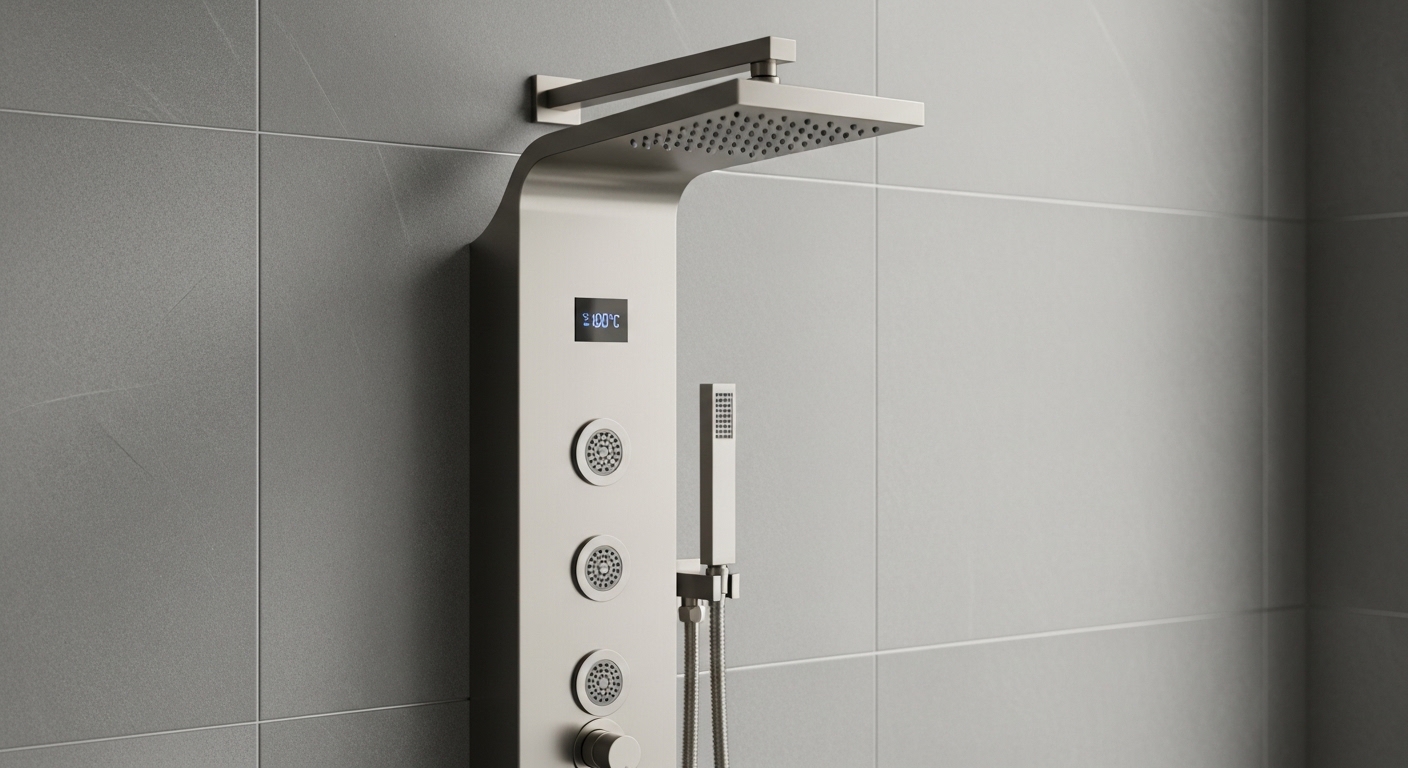
A shower faucet panel — sometimes called a shower tower or shower column — is an all-in-one wall-mounted unit that bundles the valve, the controls, a rain or overhead shower, several body spray jets, and usually a handheld sprayer into a single vertical fixture. Instead of piping and mounting each piece separately, you get one panel that does everything. For a lot of buyers that’s the whole appeal: one purchase, one install, one clean look. But panels vary wildly in quality and plumbing demands, so choosing the right one matters more than the marketing photos suggest.
This guide answers the real questions people actually ask before buying — flow requirements, materials, thermostatic vs. non-thermostatic, whether you can install one over an existing valve, and what a good panel should cost in 2026. No fluff, just the specifics that decide whether you love it or return it.
What exactly is a shower faucet panel, and how is it different from a regular shower?
A shower faucet panel is a single flat or slightly curved fixture — typically 47 to 59 inches tall and 8 to 10 inches wide — that mounts flat against your shower wall and integrates every function you’d otherwise install as separate parts. A regular shower has a valve buried in the wall, an arm and head up top, and maybe a separate handheld — three or four disconnected pieces. A panel puts the diverter, the controls, the rain head, the body jets, and the handheld all on one visible surface fed by a single hot and cold connection.
The practical difference comes down to three things: function, install, and looks. A panel gives you body jets that a standard setup almost never includes. It usually installs onto your existing hot/cold stub-outs without opening the wall. And it reads as one deliberate design element rather than a collection of chrome bits. The trade-off is that everything lives on one part — if the diverter fails, you’re servicing the whole panel, not swapping a $20 cartridge.
- Overhead rain head — the wide top shower, usually 8–10 inches, for full-body rainfall.
- Body spray jets — 3 to 6 nozzles down the column that hit your back and shoulders.
- Handheld sprayer — on a flexible hose, for rinsing, cleaning, or seated bathing.
- Diverter control — switches water between the three functions (rarely all at once — more on that below).
- Tub spout — some taller panels add a bottom spout for filling a tub or bucket.
Do I have enough water pressure and flow to run body jets on a shower panel?
You need roughly 2.5 GPM (gallons per minute) of usable flow at 45–80 PSI to run a shower panel well — and here’s the catch most buyers miss: a panel’s diverter almost always runs one function at a time, not all of them together. That’s not a defect; it’s physics. Federal law caps most showerheads at 2.5 GPM, and you simply can’t push a rain head plus six body jets plus a handheld off a residential line simultaneously without every outlet turning into a weak trickle.
So the real question isn’t “can I run everything at once” — you usually can’t, and a good panel is designed so you don’t try. The question is whether each individual mode feels strong. If your home has low pressure (below 40 PSI), the body jets will feel disappointing no matter which panel you buy. Before purchasing, test your pressure with a $10 gauge on an outside hose bib, or just notice whether your current shower feels forceful. If it’s weak now, a panel won’t fix it — and cheap panels with narrow internal channels make weak pressure worse.
| Function running | Typical flow | Feels good at PSI |
|---|---|---|
| Rain head only | 2.5 GPM | 45+ PSI |
| Body jets only (all) | 2.5 GPM split 4–6 ways | 50+ PSI |
| Handheld only | 1.8–2.5 GPM | 40+ PSI |
| Rain + jets together | Exceeds supply — trickle | Not recommended |
If you’re dealing with genuinely low pressure and love the rain experience, it’s often smarter to skip the jet-heavy panel and choose a well-designed rain head instead. We break down exactly how to make rainfall work on weak lines in our guide to rainfall shower head taps for low water pressure.
What material should a shower faucet panel be made of — and which ones fail?
Buy 304-grade stainless steel or solid brass, and walk away from anything advertised as “space aluminum” or that won’t name its material at all. This single choice predicts whether your panel still looks and works right in five years, or whether it pits, warps, and clouds within two. The panel lives in a hot, wet, mineral-heavy environment every day — cheap metal doesn’t survive it.
Aluminum panels are the most common budget trap. They’re light and cheap, but aluminum corrodes in constant hot-water contact, and the thin walls let the panel flex and warp when the metal expands. Tempered-glass-fronted panels look upscale but add weight and cost and can crack if the wall isn’t perfectly flat. Here’s how the common materials actually hold up:
| Material | Durability | Best for | Watch out for |
|---|---|---|---|
| 304 stainless steel | Excellent | Everyday long-term use | Slightly higher price |
| Solid brass | Excellent | Hard water, longevity | Heaviest; needs solid anchors |
| Tempered glass front | Good (looks) | Design-forward bathrooms | Cracks on uneven walls |
| Aluminum / “space aluminum” | Poor | Short-term / rentals only | Corrodes, warps, clouds |
Also check the internal waterways — the best panels use brass or stainless internal channels rather than plastic. Plastic manifolds are where hard-water scale builds fastest, and where cheap panels spring leaks. If your area has hard water, brass internals and a self-cleaning silicone-nozzle rain head are non-negotiable.
Thermostatic vs. standard mixing valve — which shower panel valve do I actually need?
Get a thermostatic valve if your budget allows and your household includes kids or older adults — it locks the water at your set temperature and won’t scald you when someone flushes a toilet. A standard pressure-balance or manual mixing valve is fine for a single-user shower on a stable water system, and it costs less. The valve is the heart of the panel, so this is the one spec worth paying up for.
A thermostatic valve uses a wax or bimetal element that reacts instantly to temperature change, holding your set point within about ±1–2°F even when cold-water pressure drops. It also has an anti-scald stop, usually preset around 100–104°F, that you can override deliberately but that protects against accidental burns. For a family bathroom, that safety margin is worth the extra $40–$80 a thermostatic panel typically costs over a manual one.
One thing to verify: some panels claim “constant temperature” but really just mean pressure-balanced, which reacts to pressure swings, not temperature. True thermostatic panels have a separate temperature dial with a numbered scale and a safety button at the 38°C/100°F mark. If the listing doesn’t show that dial, assume it’s a standard valve regardless of the marketing words.
Can I install a shower faucet panel myself over my existing shower valve?
Yes, most modern shower panels are designed to mount onto your existing hot and cold supply connections without opening the wall — it’s one of the biggest reasons people choose them. If your current shower has standard 1/2-inch hot and cold outlets roughly 6 inches apart (or the panel includes adjustable/offset connectors), a confident DIYer can install one in an afternoon with basic tools, thread seal tape, and patience.
The typical process looks like this:
- Shut off the water and remove your old showerhead, arm, valve trim, and handle.
- Cap or use the existing hot/cold stub-outs; most panels feed from two flexible braided hoses.
- Mark and drill the mounting bracket holes into tile, using a tile bit and anchors rated for the panel’s weight (brass panels can top 25 lbs).
- Connect hot and cold with thread seal tape on every threaded joint — panels have many connections, and each one is a potential drip.
- Hang the panel on the brackets, tighten, then run every function for several minutes checking for leaks before you seal the edges with silicone.
Two honest cautions. First, panels have far more joints than a normal shower, so leak-testing every single connection matters — don’t caulk the edges until you’ve confirmed it’s dry. Second, if your existing valve rough-in is non-standard or you’re building new, you may need to set the plumbing behind the wall first. If that’s your situation, our step-by-step on how to install a shower valve rough-in the right way walks through the behind-the-wall part, and if you’re only replacing exposed trim, installing a shower faucet trim kit yourself covers the surface-level swap.
If your panel relies on a diverter to switch between rain head, jets, and handheld and it isn’t diverting cleanly, the diverter cartridge is usually the culprit — the same troubleshooting logic in our Delta diverter valve installation instructions applies to most panel diverters.
How much should a good shower faucet panel cost in 2026?
Expect to pay $150–$350 for a genuinely good 304-stainless or brass thermostatic shower panel in 2026, $350–$700 for premium units with digital displays and LED temperature indicators, and under $120 only for aluminum panels you should avoid for a primary bathroom. Price tracks material and valve type more than brand name, so read the specs, not just the sticker.
Here’s how the tiers break down in practice:
- Under $120: Almost always aluminum with plastic internals and a manual valve. Fine for a rental or a rarely-used guest shower; a poor bet for daily use.
- $150–$350: The sweet spot — 304 stainless or brass, thermostatic valve, brass internal waterways, 3–5 real body jets. This is where most buyers should shop.
- $350–$700: Adds digital temperature readouts, LED water-temp lighting, multi-function overhead heads, and heavier solid-brass construction with better warranties.
Whatever tier you choose, weigh the total experience. A panel is a system — if you find yourself mostly wanting a great overhead rain experience rather than jets, a dedicated rain head plus a slide bar for an adjustable handheld can deliver more satisfaction for less money and simpler maintenance than a jet-heavy panel you’ll rarely use at full function.
What are the real downsides of a shower faucet panel nobody mentions?
The three honest drawbacks are single-point-of-failure servicing, hard-water scale on the jets, and the “you can’t run everything at once” reality. None of these are dealbreakers, but knowing them upfront prevents buyer’s remorse. A panel is a fantastic upgrade when you go in with clear expectations.
On servicing: because the valve, diverter, and outlets are integrated, a failed component often means removing or replacing more of the unit than you would with separate fixtures. Buy a panel with a serviceable, standard cartridge and a real warranty so a repair isn’t a full replacement. On scale: those small body-jet nozzles clog with mineral buildup in hard water — look for rubber or silicone tips you can rub clean, and wipe them monthly. On flow: as covered above, plan to enjoy one mode at a time. Once you accept that, the experience is genuinely spa-like.
FAQ
Can a shower faucet panel run the rain head and body jets at the same time?
Usually no. Most panels use a diverter that sends water to one function at a time because a standard 2.5 GPM residential supply can’t feed a rain head and multiple jets simultaneously without every outlet weakening to a trickle. A few high-flow homes with 3/4-inch lines and 60+ PSI can run two modes, but plan around one-at-a-time as the norm.
Do shower panels work with low water pressure?
The rain head and handheld can work acceptably above about 40 PSI, but body jets need 50+ PSI to feel strong. If your current shower already feels weak, a panel won’t fix it — the jets will feel like a light mist. Below 40 PSI, consider a pressure-optimized rain head instead of a jet panel, or add a booster pump.
Are aluminum shower panels really that bad?
For a daily-use primary shower, yes — aluminum corrodes and warps under constant hot water, and the thin walls flex over time, often clouding or pitting within two years. They’re acceptable only for low-use guest baths or short-term rentals. For anything you’ll use every day, 304 stainless steel or solid brass is worth the extra $50–$100.
Will a shower panel fit my existing plumbing?
Most panels are made to connect to standard 1/2-inch hot and cold supply lines and include adjustable brackets to accommodate common spacing. Measure the distance between your existing hot and cold outlets before buying and confirm the panel’s connection range covers it. If your rough-in is non-standard, you may need minor plumbing adjustments behind the wall.
How long should a quality shower faucet panel last?
A well-made 304-stainless or brass panel with a thermostatic valve should last 10–15 years or more with routine cleaning, especially if the internal waterways are brass rather than plastic. The most common failure points are the diverter cartridge and clogged jets — both serviceable if you chose a panel with standard parts and a solid warranty.
Is a shower panel better than separate fixtures?
It depends on what you want. A panel wins on all-in-one looks, body jets, and no-wall-opening installation. Separate fixtures win on easier, cheaper individual repairs and letting you pick a best-in-class rain head and valve independently. If body jets excite you and your pressure is good, get a panel; if you mainly want a great overhead shower, separate fixtures often serve you better.
About the author: This guide was written by the product team at wewefaucet, who spec, pressure-test, and install shower fixtures for a living. We’ve bench-tested panels across the aluminum-to-brass range for flow consistency, valve accuracy, and corrosion resistance.
About wewefaucet: wewefaucet designs and sells faucets, shower systems, and bathroom fixtures built to real-world plumbing standards. Our shower panels use 304 stainless or solid-brass construction with thermostatic valves rated to hold temperature within ±2°F, are tested against ASME A112.18.1/CSA B125.1 flow and safety standards, and are backed by a multi-year limited warranty on the valve and finish. See the full range at www.wewefaucet.net.
您好!please sign in