 WEWE Kitchen Faucets
What Size Faucet for a Kitchen Sink Do You Actually Need? A Real Buyer’s Guide
Views:431 classificationProduct
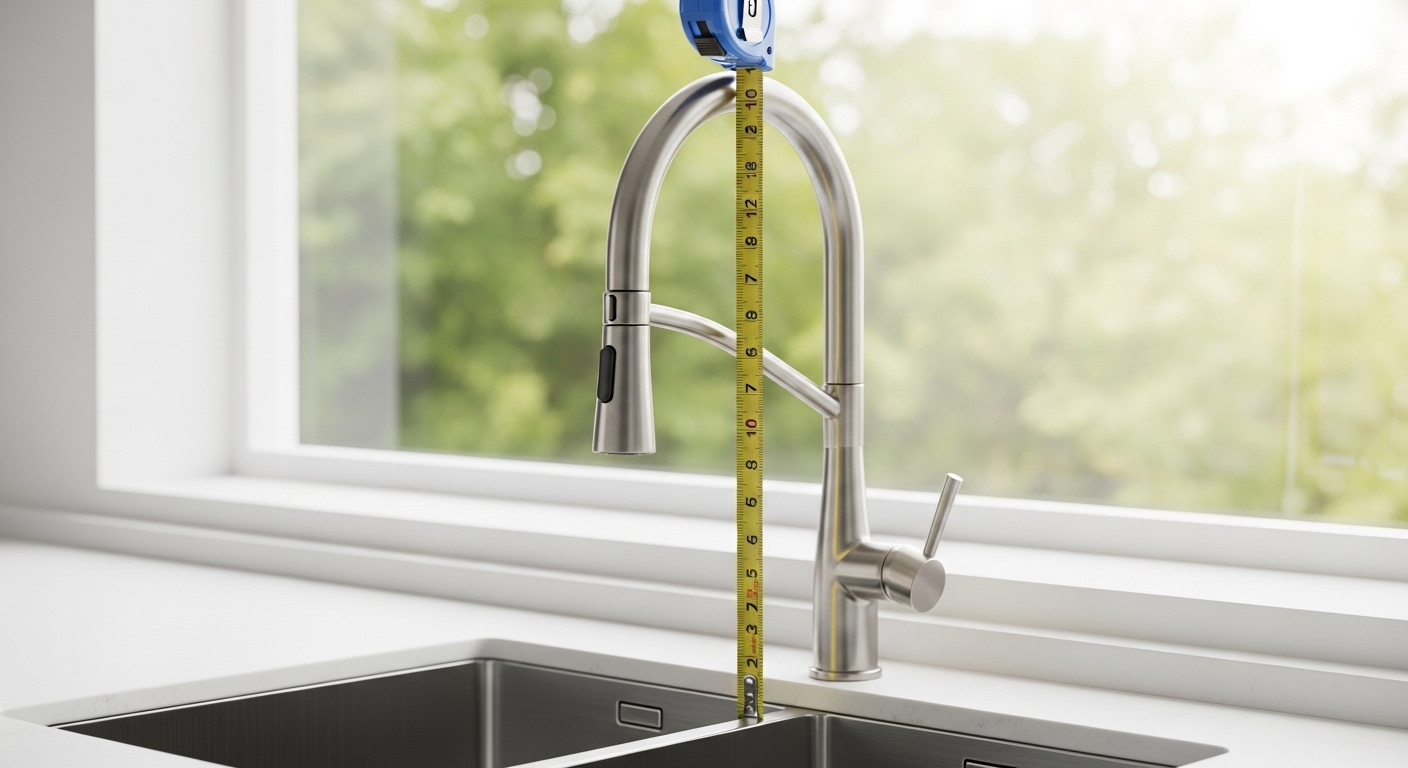
Figuring out what size faucet for kitchen sink setups actually fits comes down to four numbers: spout height, spout reach, the number of mounting holes, and the deck clearance behind the basin. Get those right and the faucet feels like it was made for your sink — you can fill a stockpot, rinse a sheet pan, and swing the spout side to side without banging the backsplash or the window sash. Get them wrong and you’re returning a beautiful faucet because it either fires water past the drain or won’t clear the cabinet above. This guide walks through each measurement in plain terms, with real numbers and the exact scenarios where a “standard” size is the wrong call.
At wewefaucet, we spec and pressure-test kitchen faucets for a living, and the single most common return reason we see isn’t finish or flow — it’s fit. So before you fall in love with a design, let’s size it properly.
What is the standard size for a kitchen sink faucet?
The standard kitchen faucet is roughly 12 to 18 inches tall (measured from the sink deck to the top of the spout) with an 8 to 10 inch horizontal reach, and it mounts in a single hole or a standard 3-hole configuration set 4 inches apart. That range covers the overwhelming majority of North American kitchen sinks, which is why most faucets you’ll see online land inside it.
Here’s why that range exists. “Spout height” is the arc — how much vertical room you have to slide a tall pot or a cutting board underneath. “Spout reach” is how far the water lands away from the base; you want the stream to hit the drain area of the bowl, not the front wall of the basin (which splashes) or the back (which pools). A 9-inch reach on a 22-inch-wide standard sink usually drops water right over the drain. Anything advertised as “high-arc” or “gooseneck” simply sits at the taller end of the height range, typically 15 to 18 inches, giving you more headroom for big cookware.
If you want a shortcut: a 12–16 inch tall faucet with a 9-inch reach and a single-hole base is the safest all-around pick for a standard 30–33 inch sink cabinet. It’s why so many of our best-value kitchen sink faucet picks cluster right in that zone — it fits the most kitchens with the fewest surprises.
How do I measure my kitchen sink for a new faucet before I buy?
Measure five things in this order: the number of mounting holes, the hole diameter, the space behind the sink (deck clearance), the height of any cabinet or window above, and the width of your sink basin. Twenty minutes with a tape measure will save you a return.
- Count the mounting holes. Look at the back ledge of your sink or the countertop. A single hole means you can only run single-hole faucets (or add a deck plate to cover extra holes). Three holes usually sit 4 inches apart (centerset) or 8 inches apart (widespread on the counter).
- Measure the hole diameter. Most kitchen faucets need a 1⅜ inch (1.375″) hole; some larger commercial-style units want 1½ inch. Measure the actual opening, not the trim ring.
- Measure deck clearance. From the center of the mounting hole back to the wall or backsplash. You need enough room for the faucet base and, on pull-down models, for the handle to lift fully.
- Measure the height above the sink. If a window, shelf, or upper cabinet sits behind or over the sink, note the clear height. This is the number that kills tall gooseneck dreams.
- Measure basin width and depth. A wide double bowl often needs more spout reach and a spout that swivels a full 180–360 degrees to serve both bowls.
Write those five numbers down and keep them next to you while you shop. Every reputable product page — ours included — lists spout height, reach, hole size, and swivel range in the specs. If a listing doesn’t, that’s a red flag.
What size faucet for kitchen sink setups under a window?
If your kitchen sink sits under a window, keep the faucet under about 12 inches tall — measure the clear height from the deck to the bottom of the window sash first, then subtract an inch or two so the handle can lift without hitting the frame. This is the number-one sizing mistake, because people fall for a dramatic 17-inch gooseneck and only discover at install that the handle jams into the raised window or the sill.
The fix is a low-arc or “low-profile” faucet, generally 8 to 12 inches tall, often with a pull-out (rather than pull-down) sprayer so you get reach without height. Pull-out sprayers extend horizontally toward you, which is ideal when vertical space is tight. So the rule for windows is simple: measure the sash-clearance number first, then shop only faucets whose total height (with the handle up, if it’s a top-mounted lever) fits under it. When a spec sheet lists height in the “handle down” position, add a couple of inches to estimate the handle-up clearance.
Do I need a taller faucet for a deep or farmhouse sink?
Yes — for a deep basin (9–10 inches) or an apron-front farmhouse sink, step up to a 15–18 inch tall faucet so you keep enough working clearance above the deep bowl. A deep sink “eats” the arc: if the basin is 10 inches deep and the spout is only 12 inches tall, you’ve got just a couple of inches of usable space above the rim, which makes filling tall pots awkward.
The math is straightforward. Usable clearance above the rim ≈ spout height − sink depth (roughly, since the sink deck sits at the rim). A 16-inch faucet over a 9-inch farmhouse basin leaves you around 7 inches of comfortable working room above the rim — plenty for a large pot. Pair the height with an 9–10 inch reach so water still lands over the drain rather than the front apron.
Farmhouse sinks add one more wrinkle: because the front apron is exposed, spout reach matters more. Too short and the stream hits the back of the bowl; too long and it can splash the front lip. Aim for a reach that puts the water two-thirds of the way across the basin, right over the drain. A pull-down faucet is the natural match here — the tall arc looks proportional to the big sink, and the sprayer pulls straight down into the deep bowl. Models like the ones we cover in our Kraus Oletto pull-down review are sized for exactly this kind of deep-basin duty.
How many mounting holes does my kitchen faucet need — 1 or 3?
Count the holes already in your sink or countertop first: a single-hole faucet needs one hole, while a traditional faucet with separate handles and a sprayer needs three (or four). The good news is you can almost always adapt down — a single-hole faucet can cover extra unused holes with a deck plate (also called an escutcheon), but you can’t easily add holes to a stainless or granite sink.
Here’s how the common configurations break down:
| Configuration | Holes needed | Best for | Notes |
|---|---|---|---|
| Single-hole | 1 | Modern kitchens, most pull-down/pull-out faucets | Cleanest look; covers 3-hole sinks with an optional deck plate |
| Centerset (4″) | 3 | Two-handle faucets, budget builder sinks | Handles and spout share one base unit |
| Widespread / 8″ | 3 | Large sinks, separate handle look | Handles mount independently up to 8–16″ apart |
| Single-hole + side sprayer | 2 | Older sinks with a separate sprayer hole | Use the spare hole for a soap dispenser or filtered-water tap |
A practical tip: if you have a 3-hole sink and want a sleek single-handle faucet, buy one that ships with a deck plate (or lists one as an accessory). That one detail turns a “won’t fit” into a five-minute install. And if you’re switching faucet types entirely, double-check the hole diameter too — going from an old faucet to a new one occasionally means the new base needs the standard 1⅜” opening.
What size supply lines and connections does a kitchen faucet use?
Most kitchen faucets connect with 3/8-inch compression supply lines on the shutoff-valve end and either a 1/2-inch or 3/8-inch fitting on the faucet end, though many modern faucets come with the supply lines permanently attached. Under the sink, your shutoff valves are typically 3/8-inch compression, so a 3/8″ female-to-faucet flexible braided connector is the usual match.
Two things trip people up here. First, faucet-end threads aren’t universal — some brands use proprietary quick-connects, so buy the connector length and fitting the manufacturer specifies rather than guessing. Second, length: measure from the shutoff valve up to where the faucet tailpiece lands, then add a few inches of slack. A 20-inch braided line is common, but deep cabinets or low valves sometimes need 24–30 inches. If you want a deeper walkthrough of matching connectors to a specific model, our guide on the Moen Banbury supply line size shows exactly how to read those fittings without cross-threading anything.
One more spec worth checking while you’re under there: flow rate. Kitchen faucets in the U.S. are capped at 2.2 gallons per minute (GPM) by federal standard, and many efficient models run 1.5–1.8 GPM. A lower GPM still feels strong if the aerator is designed well — it’s about pressure and spray pattern, not just raw volume. If you’re trying to keep pressure while cutting usage, our piece on saving water in the kitchen without losing pressure covers the aerator tricks that actually work.
High-arc vs. low-arc: which spout height should you choose?
Choose high-arc (15–18 inches) if you wash big cookware and have open space above the sink; choose low-arc (8–12 inches) if a window or cabinet limits height or you prefer less splash. Neither is “better” — they solve different problems, and the right one depends entirely on the clearance numbers you measured.
- High-arc (gooseneck) pros: easy to fill and rinse tall pots, dramatic look, works great over deep and farmhouse sinks.
- High-arc cons: more splash in a shallow sink, can crowd a window, needs more deck clearance behind the base.
- Low-arc pros: fits under windows and cabinets, less splash-back in shallow basins, understated look.
- Low-arc cons: tight clearance for big stockpots, sometimes shorter reach.
A reliable middle path for most standard kitchens is a mid-height pull-down around 14–16 inches: tall enough for pots, short enough for most windows, and the sprayer pulls down so you’re not relying on arc height alone for reach. If you’re leaning toward hands-free convenience on top of the right size, the touchless models people vouch for in our best touchless kitchen faucet roundup come in both arc heights, so you don’t have to trade fit for features.
How wide does my faucet need to be for a double-bowl sink?
For a double-bowl sink, prioritize spout reach and swivel range over height: pick a faucet with at least a 9-inch reach and a spout that swivels 180 degrees (ideally 360) so it can serve both bowls without you fighting it. A tall arc that only reaches one bowl is worse than a mid-height spout that swings freely across both.
Measure the total width of the two bowls plus the divider, then confirm the spout can pivot far enough that water reaches the outer edge of each basin. On very wide 36-inch double sinks, a pull-down sprayer earns its keep — you pull the head to the far corner rather than relying on the fixed spout to reach it. Reach and swivel, not height, are the sizing numbers that matter most here.
Author note & why you can trust this guide
This guide was written by the wewefaucet product team, who spec, install, and bench-test kitchen and bathroom faucets year-round. Our sizing recommendations come from real fit data across hundreds of sink-and-faucet combinations, not generic filler. Every faucet we sell is built from lead-free brass or stainless components, meets U.S. federal 2.2 GPM flow standards, and is tested to relevant ceramic-disc valve durability and NSF/ANSI safe-drinking-water benchmarks — the same standards that keep your water clean and your faucet drip-free. Most of our kitchen faucets carry a limited lifetime warranty on the finish and cartridge, so if a valve fails, you’re covered. When we say a size “fits,” it’s because we’ve measured it.
FAQ
What is the most common kitchen faucet size?
The most common kitchen faucet is 12–18 inches tall with an 8–10 inch spout reach, mounted in a single hole. This range fits the typical 30–33 inch sink cabinet, which is why the majority of faucets sold in North America land inside it. A 14–16 inch tall, 9-inch-reach single-hole faucet is the safest default for a standard sink.
Will any faucet fit any kitchen sink?
No. A faucet fits only if the number of mounting holes, the hole diameter (usually 1⅜”), and the deck clearance match your sink. You can adapt a single-hole faucet onto a 3-hole sink using a deck plate, but you can’t add holes to a stainless or stone sink. Always match the hole count and diameter before buying.
How tall should a faucet be for a deep kitchen sink?
For a deep sink (9–10 inches), choose a faucet 15–18 inches tall so you keep about 6–8 inches of usable clearance above the rim. Deeper basins absorb the spout’s arc, so a taller faucet restores the working room you need to fill and rinse large pots comfortably.
What size supply line does a kitchen faucet need?
Most kitchen faucets use a 3/8-inch compression connection at the shutoff valve, paired with a braided flexible line (commonly 20 inches, sometimes 24–30 inches for deep cabinets). Measure from the valve to the faucet tailpiece and add a few inches of slack. Some faucets come with the supply lines pre-attached, so check the spec sheet first.
Can I put a high-arc faucet under a window?
Usually not, unless the window sits high above the sink. Measure the clear height from the deck to the bottom of the window sash, subtract an inch or two for handle lift, and only choose a faucet that fits under that number. Most under-window sinks call for a low-arc faucet 8–12 inches tall, often with a horizontal pull-out sprayer for reach.
How far should a kitchen faucet reach into the sink?
The spout should place the water stream about two-thirds of the way across the basin, directly over the drain — typically an 8–10 inch reach on a standard sink. Too short and water hits the back wall; too long and it splashes the front. For double bowls, prioritize a spout that swivels 180–360 degrees so it can serve both basins.
您好!please sign in