 WEWE Kitchen Faucets
Is a Vessel Sink Faucet With Side Handle Right for Your Bathroom in 2026?
Views:183 classificationProduct
Here is the complete, publish-ready HTML article:
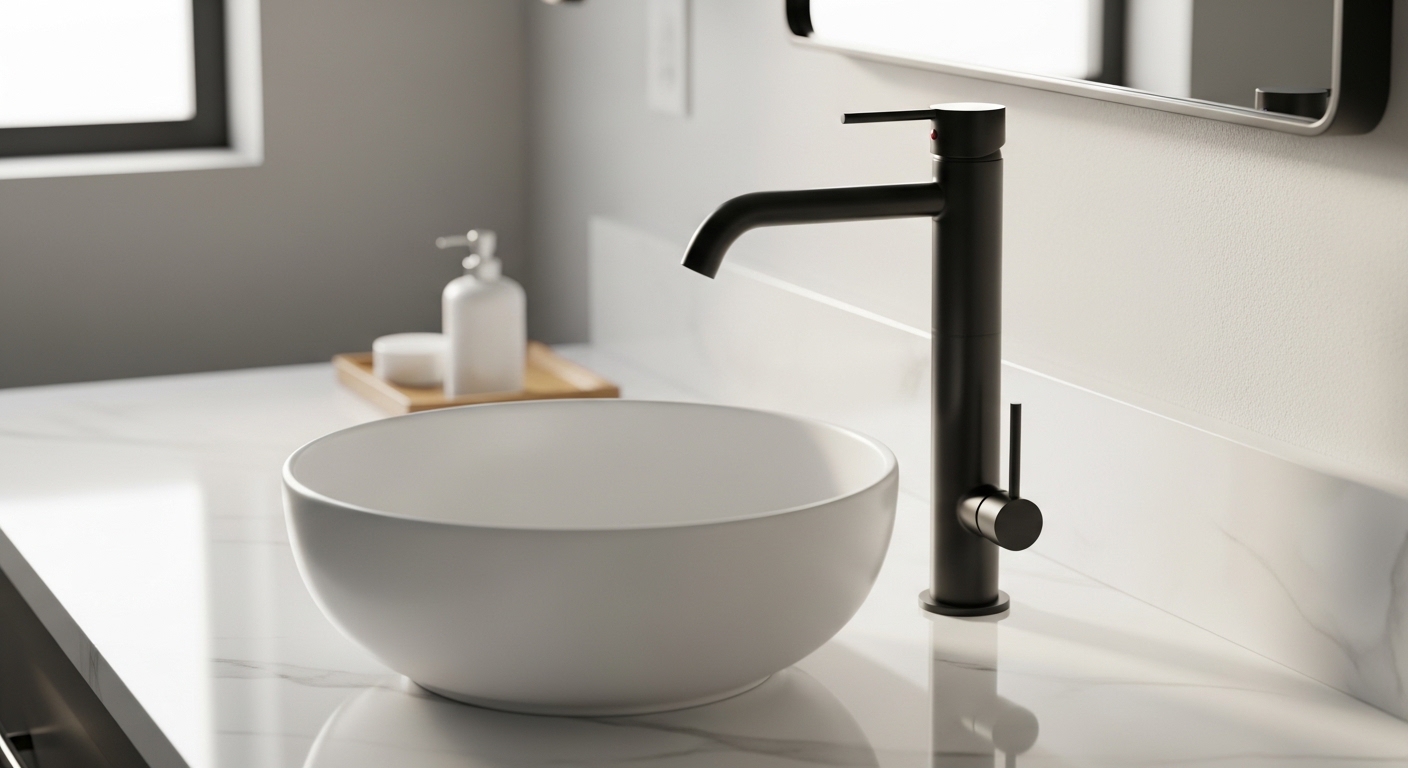
If you’ve fallen for the look of a bowl-style basin sitting on top of your vanity, the next question is almost always the same: what faucet actually works with it? A vessel sink faucet with side handle is one of the most popular answers, and for good reason. Because the sink rides high above the counter, a standard short faucet won’t reach over the rim, and a faucet with the handle on top can be a stretch to operate. Moving the lever to the side keeps everything within easy reach and keeps the silhouette tall and clean. Below, I’ll walk through when a side-handle design genuinely beats the alternatives, how to size it, what to look for in build quality, and the mistakes that send people back to the store.
What exactly is a vessel sink faucet with a side handle, and how is it different from a regular tall faucet?
A vessel sink faucet with a side handle is a single-hole faucet, usually 12 to 18 inches tall, where the mixing lever is mounted on the side of the spout column rather than on top of it. That one design change is the whole point: it puts the control at hand-height on the front or side of the faucet, so you’re not reaching up and over a tall spout to nudge a top lever.
Regular tall vessel faucets typically put the handle on top, a “single-lever high-arc” arrangement. That’s fine when the faucet is shorter or the sink is lower, but on a genuinely tall bowl it means reaching your hand above the water outlet every time. The side handle solves that ergonomically. It also tends to read as more transitional or modern-industrial, while top-lever tall faucets often look more contemporary-minimalist. Neither is “better” universally — it depends on your bowl height and how you like to operate a tap.
One thing to get straight early: almost every vessel faucet, side-handle or not, is a single-hole installation. If your countertop or sink is drilled for a widespread or centerset layout, that’s a different animal entirely. If you’re weighing layouts, our explainer on what a centerset faucet is spells out how the drilling and handle spacing differ, which matters if you haven’t bought the sink or vanity top yet.
How tall should a vessel sink faucet be, and where does the side handle fit in?
Your faucet needs to clear the rim of the bowl by a comfortable margin — aim for the spout outlet to sit at least 2 to 4 inches above the top edge of the sink, with the actual faucet height landing somewhere between 12 and 18 inches for most vessel bowls. The side handle should fall in the lower third of that height so it’s easy to reach without leaning in.
Here’s the practical math. Vessel bowls commonly stand 4 to 6 inches tall. Add that to a standard 32–36 inch vanity height and your rim is already at counter-plus-bowl. So the faucet must be tall enough to arc over that rim and still deliver water into the center of the basin, not onto the front lip. That’s why 12 inches is roughly the floor and taller bowls push you toward 16–18 inches.
- Bowl height 4–5 in: a 12–14 in faucet usually clears comfortably.
- Bowl height 5–6 in: lean toward 14–16 in.
- Bowl height 6 in+ or a deep basin: 16–18 in, and check the spout reach so water lands center.
- Spout reach (horizontal): aim for the water to hit the middle of the bowl, not the drain edge, to reduce splashing.
The side handle’s advantage grows as the faucet gets taller. On an 18-inch faucet, a top lever is genuinely a reach for a shorter person; a side handle at hand height stays easy for everyone in the household.
Is a side handle actually easier to use, or is it just a style choice?
It’s both, but the ergonomics are real, not marketing. A side handle keeps the control at roughly the same height as your hand when you approach the sink, so you turn water on and adjust temperature without reaching over the spout or getting your wrist under the stream. On tall bowls, that’s a daily convenience you’ll notice.
Where it matters most:
- Tall bowls (6 in+): a top handle forces an upward reach every time; the side lever removes that.
- Kids and shorter users: a lower, side-mounted lever is far easier for a child to reach and operate safely.
- Tight backsplash clearance: some top-lever faucets need the handle to swing backward toward the wall; a side handle swings out to the side or front, so it works better when the faucet sits close to a wall or mirror.
The trade-off: a side handle sticks out slightly, so if your vanity is very narrow or the faucet is jammed against a corner wall, check that the lever has room to swing to full-hot without hitting anything. That’s the one clearance issue side-handle designs introduce, and it’s easy to miss on paper.
Which finish and material should you choose so it lasts and matches the bathroom?
For longevity, choose a faucet with a solid brass body and a ceramic-disc cartridge; for looks, match the finish to your existing hardware — matte black and brushed gold are the two most-requested vessel finishes in 2026, with brushed nickel and chrome the safe, forgiving classics. The material under the finish matters more than the color for how long the faucet survives.
Solid brass resists corrosion, holds a finish well, and threads cleanly, which is why it’s the standard for quality fixtures. Cheaper faucets use zinc alloy (sometimes called “pot metal”) for the body, which is fine short-term but more prone to cracking at threaded joints and pitting over years of humidity. If you want the full breakdown, we compared them directly in brass vs zinc faucets and which lasts longer — the short version is that brass is the material you want on a faucet you plan to keep. The same logic applies to threaded connections and adapters; our guide to what a brass faucet with thread is explains why the threaded fittings deserve the same attention as the body.
| Finish | Best for | Shows water spots / fingerprints? | Upkeep |
|---|---|---|---|
| Matte black | Modern, industrial, high-contrast baths | Water spots yes, fingerprints minimal | Wipe dry to avoid mineral rings |
| Brushed gold / champagne bronze | Warm, transitional, boutique looks | Very forgiving | Low |
| Brushed nickel | Safe all-rounder, hides everything | Very forgiving | Very low |
| Chrome | Classic, budget-friendly, bright | Shows spots readily | Frequent quick wipe |
| Oil-rubbed bronze | Traditional, rustic vanities | Forgiving | Low, patina varies |
One finish tip specific to hard water: matte black and polished chrome both show mineral spotting fastest. If your water is hard and you don’t want to wipe the faucet daily, brushed nickel or brushed gold hides spotting best.
How do you install a vessel sink faucet with a side handle yourself?
You can install a vessel sink faucet with a side handle in about an hour with basic tools, because it’s a single-hole faucet with just two supply connections. The core steps are: shut off water, drop the faucet through the single hole, secure it from below with the mounting nut, connect the hot and cold supply lines, then connect the drain and test.
- Shut off the water at the two angle stops under the sink and open the old faucet to relieve pressure.
- Feed the faucet down through the single mounting hole in the sink or countertop. Vessel bowls with a bottom drain often mount the faucet in the counter behind the bowl.
- Secure from below with the rubber gasket, washer, and mounting nut. Snug it so the faucet can’t twist, but don’t overtighten against a ceramic or glass bowl.
- Connect supply lines — hot to left, cold to right. Confirm the supply line length and thread size match your angle stops before you buy; a too-short or wrong-thread line is the number-one reason a “quick” install stalls. Our guide on bathroom sink supply line height and rough-in sizing covers exactly how to check that so you’re not making a second hardware-store trip.
- Install or connect the drain — most vessel setups use a grid drain or pop-up without overflow (since vessel bowls usually have no overflow hole).
- Turn water on slowly, check every joint for drips, and run the faucet hot and cold to confirm the side handle mixes correctly.
If you find a slow weep at a connection, it’s almost always the supply line or a gasket that isn’t seated, not the faucet itself. Hand-tighten plus a quarter turn with a wrench usually stops it. Do not use excessive force against a glass or stone vessel — you can crack the bowl.
What’s the biggest mistake people make buying a vessel faucet with a side handle?
The most common mistake is buying on height alone and ignoring spout reach, so the water lands on the front rim or near the drain edge instead of the center of the bowl — which means constant splashing onto the counter. The second most common is not checking side-handle swing clearance against the wall or backsplash.
A quick pre-purchase checklist that prevents almost every return:
- Spout reach vs bowl diameter: the water outlet should sit over roughly the center of the basin. Compare the faucet’s stated reach to your bowl’s radius.
- Handle swing: confirm the side lever can travel to full-hot without hitting the wall, mirror, or backsplash.
- Single hole confirmed: your sink/counter must be drilled for one hole; vessel faucets don’t fit 3-hole layouts without a deck plate that many vessel faucets don’t offer.
- Drain type: vessel bowls usually need a no-overflow drain. Buy the matching drain, ideally in the same finish.
- Flow rate: look for a WaterSense-labeled 1.2 GPM aerator for water savings; 1.5 GPM if you want a fuller feel.
Get those five right and the faucet you receive will fit and behave the way the product photo promised. If you like the vessel aesthetic but are still exploring bathroom fixture styles overall, our look at whether a vintage bidet faucet is worth it shows how the same tall-spout, exposed-lever design language carries across a coordinated bathroom.
Vessel sink faucet with side handle vs top handle: which should you actually pick?
Pick a side handle if your bowl is tall (6 inches or more), if shorter household members use the sink, or if the faucet sits close to a wall where a top handle would swing back awkwardly. Pick a top handle if you want the most minimalist silhouette, your bowl is on the shorter side, and reach isn’t an issue.
| Factor | Side handle | Top handle |
|---|---|---|
| Tall bowls (6 in+) | Easier to operate | Requires reaching over spout |
| Minimalist look | Handle visible on side | Cleanest single-column look |
| Backsplash / wall clearance | Swings out to side/front | Often swings toward wall |
| Kids / shorter users | Lower, easier reach | Higher reach |
| Counter footprint | Lever protrudes slightly | Compact footprint |
There’s no wrong answer — it’s a genuine fit-to-your-situation decision. The people happiest with a side handle almost always have a tall bowl or a tight wall clearance. The people happiest with a top handle prioritized the look and had a shorter, freestanding bowl.
How much should a good one cost, and what do you get at each price?
Expect to spend $60–$120 for a solid, brass-bodied vessel faucet with a side handle and a ceramic cartridge, which is the sweet spot for daily-use durability. Below about $45 you’re usually looking at zinc bodies and lower-grade cartridges; above $200 you’re mostly paying for designer branding and premium finishes, not fundamentally better function.
- $30–$45: often zinc alloy, thinner finish, adequate for a guest bath or short-term use.
- $60–$120: solid brass, ceramic-disc cartridge, WaterSense aerator, quality finish — the recommended range for a primary bathroom.
- $150–$300+: premium designer finishes, occasionally heavier construction, name-brand warranty coverage.
The single spec that most predicts whether you’ll be replacing the faucet in two years is the cartridge. Ceramic-disc cartridges resist wear and hard-water grit far better than older rubber-washer or ball designs, and they’re what keep a faucet drip-free for a decade. That’s worth prioritizing over an extra design flourish.
FAQ
Does a vessel sink faucet with a side handle fit any vessel sink?
Almost, as long as your sink or countertop is drilled for a single hole and the faucet is tall enough to clear your specific bowl height. Confirm both the faucet height (12–18 in for most bowls) and the spout reach so water lands in the center of the basin. It will not fit a sink drilled for a 3-hole widespread or centerset layout.
Do vessel faucets need a special drain?
Usually yes. Most vessel bowls have no overflow hole, so you need a no-overflow (also called “grid” or “non-overflow”) pop-up drain. Using a standard overflow drain on a bowl without an overflow channel can cause seating and sealing problems. Buy the drain in the same finish as the faucet for a coordinated look.
Is a side handle harder to keep clean than a top handle?
Not meaningfully. Both collect the occasional splash and, in hard-water areas, mineral spotting. A quick wipe-down keeps either looking new. If low maintenance is a priority, a brushed nickel or brushed gold finish hides water spots and fingerprints far better than matte black or polished chrome.
What flow rate should a vessel bathroom faucet have?
Look for a WaterSense-labeled 1.2 GPM (gallons per minute) aerator for the best water efficiency, or 1.5 GPM if you prefer a slightly fuller stream. Both are plenty for a bathroom sink. Anything above 1.5 GPM is unnecessary for hand-washing and just wastes water.
Can I install a vessel faucet with a side handle myself without a plumber?
Yes. It’s a single-hole faucet with two supply connections and a drain, so most people finish in under an hour with an adjustable wrench and basin tools. The only steps that trip people up are matching the supply line length and thread to your angle stops, and not overtightening the mounting nut against a glass or ceramic bowl.
How long should a quality vessel faucet last?
A solid-brass faucet with a ceramic-disc cartridge should last 10–15 years or more with normal use, and often carries a limited lifetime warranty on the finish and cartridge. Zinc-bodied budget faucets typically show finish wear and cartridge drips much sooner, often within a few years in a humid bathroom.
Author note & brand credibility
Written by the wewefaucet product team. We design and sell bathroom and kitchen fixtures full-time, and this guidance comes from hands-on installation testing and years of fielding real customer fit questions — not spec-sheet copying. Our vessel faucets use solid brass bodies and ceramic-disc cartridges, are pressure-tested before shipping, and meet standard North American plumbing thread and flow standards (including WaterSense-eligible aerators), backed by our warranty. If you tell us your bowl height and hole drilling, we’ll confirm the right faucet height and reach before you buy so you get it right the first time. Learn more at www.wewefaucet.net.
您好!please sign in