 WEWE Kitchen Faucets
How Do You Remove a Glacier Bay Kitchen Faucet Quick Connect Without Breaking It?
Views:618 classificationInstall
If you’ve been wrestling under your sink trying to figure out how to remove glacier bay kitchen faucet quick connect fittings, here’s the good news: these couplings are designed to come apart by hand. There are no wrenches, no PTFE tape, and no over-tightened brass nuts to fight. The whole point of a quick connect is a tool-free release. The bad news is that if you pull the hose at an angle, yank without squeezing the collar, or forget to relieve the line pressure first, you’ll feel like the fitting is “stuck” — and you risk cracking the plastic clip. This guide walks you through exactly how the Glacier Bay quick-connect system works, how to release it cleanly the first time, and what to do when it genuinely won’t budge.
What Does a Glacier Bay Quick Connect Actually Look Like Under the Sink?
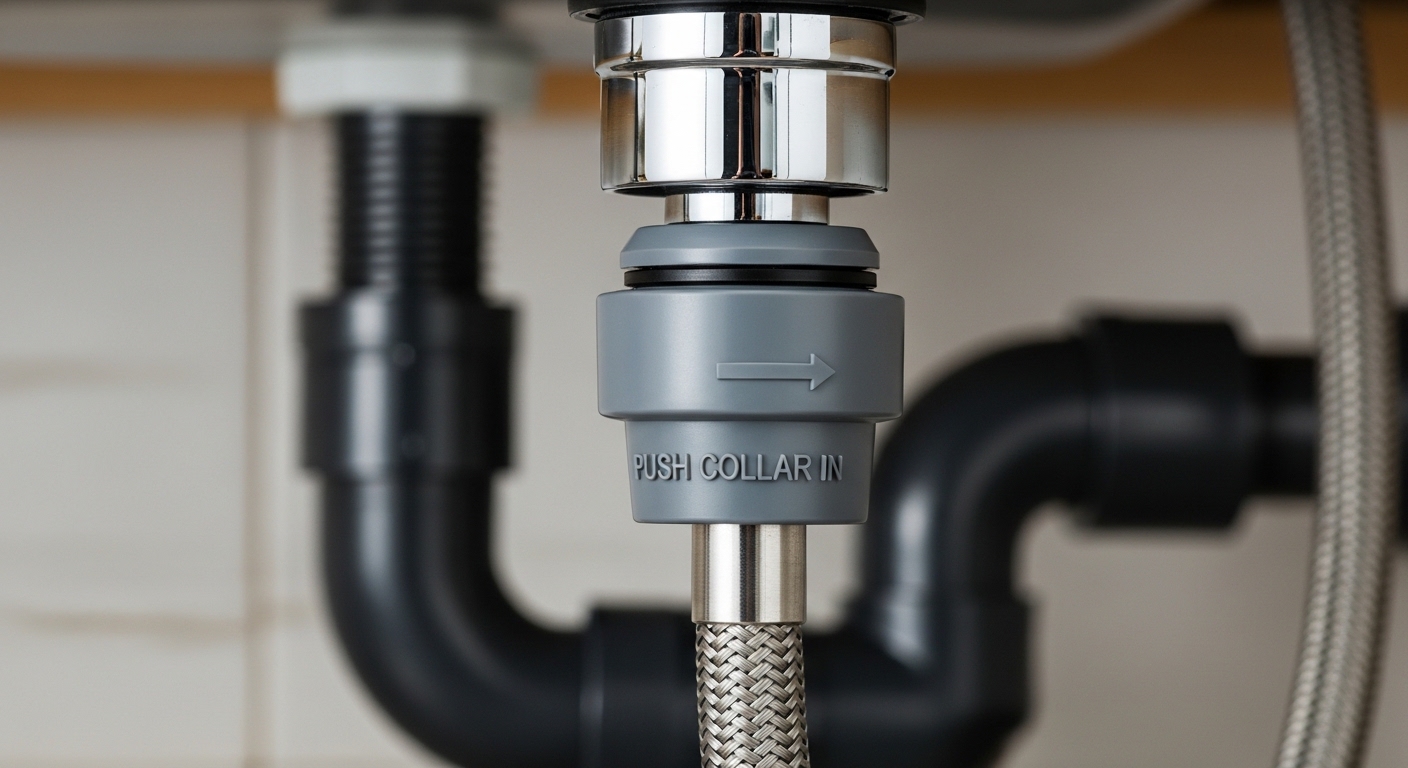
A Glacier Bay quick connect is a small plastic-and-metal coupling — usually with a gray, white, or sometimes blue collar — that joins the pull-down sprayer hose (or supply line) to the faucet body without threads. You’ll find it directly under the sink basin, where the braided hose from the faucet meets a rigid fitting or the faucet’s center shank.
Glacier Bay, which is The Home Depot’s house brand, uses a few different connector styles depending on the model and year. Knowing which one you have decides exactly how you release it:
- Push-collar (PEX-style) quick connect: The most common. A round plastic collar sits where the hose enters the fitting. You push the collar in toward the body and pull the hose out. This is the same mechanism used in PEX plumbing push fittings.
- Squeeze-tab / pinch-clip connector: Two plastic tabs or a U-shaped clip on opposite sides of the coupling. Pinch both tabs at once, then pull apart.
- Weighted sprayer hose quick connect: On pull-down models, the spray hose clips to the faucet outlet tube with a snap collar. Same push-and-pull motion, just higher up the hose near the pull-down weight.
- Threaded “quick connect” hybrid: A few Glacier Bay supply hoses use a 3/8″ compression or coupling nut that the packaging calls “quick connect” but actually needs a quarter-turn by hand or a small wrench.
Before you touch anything, take a phone photo of your fitting. It makes reassembly obvious later, and if you end up buying a replacement hose, you can match the collar style at the store.
What Do I Need to Do Before I Disconnect the Quick Connect?
Before disconnecting anything, shut off both water supply valves under the sink and relieve the pressure by turning the faucet on until water stops flowing. Skipping this single step is the number-one reason a “tool-free” job turns into a soaked cabinet.
Here’s the quick prep sequence, in order:
- Turn off the water. Reach behind the basin and turn both the hot and cold shutoff valves clockwise until they stop. If your valves are seized or you don’t have any, shut off the main water supply to the house.
- Open the faucet. Lift the handle to full hot and full cold for about 10 seconds each. This drains the line and drops the internal pressure to zero so the coupling releases easily and nothing sprays.
- Lay down a towel and put a small bowl underneath. Even a “drained” line holds a few ounces of trapped water that will dribble out when the coupling pops.
- Clear the cabinet and add light. Pull out the trash can, cleaning bottles, and that pile of sponges. A headlamp or a phone flashlight propped on a cup makes the collar far easier to see.
- Test the shutoff. With the faucet still open, confirm no water is flowing. If it keeps dripping steadily, your shutoff valve isn’t sealing — stop and fix that first.
How Do You Actually Release the Glacier Bay Quick Connect? (Step by Step)
Push the plastic collar straight in toward the fitting body while pulling the hose straight out — the coupling releases by hand in under five seconds. The motion is “push then pull,” done at the same time, with everything kept perfectly straight.
For the most common push-collar style:
- Grip the fitting body with one hand to hold it steady so you’re not stressing the faucet mounting nut above.
- Push the collar inward with the thumb and finger of your other hand. Press it evenly all the way around — not just one side. You’re retracting the internal locking teeth that grip the hose.
- Pull the hose straight out while the collar is held in. Don’t twist, don’t lever it sideways. It should slide free smoothly.
- Inspect the O-ring on the hose end. There’s usually a small rubber O-ring that does the sealing. If it’s cracked, flattened, or missing, replace it before reconnecting — that’s a common slow-leak culprit.
For the squeeze-tab / pinch-clip style, pinch both plastic tabs toward each other simultaneously and pull the two halves apart. If there’s a separate U-shaped retaining clip, slide or pop that clip out first with a small flathead screwdriver, then the hose pulls free.
For the pull-down sprayer hose connector higher up, the same push-collar motion applies — just locate the snap coupling between the faucet’s outlet tube and the spray hose, often near the bag weight. Unclip the weight first if it’s in the way.
If you’re disconnecting the quick connect because you’re swapping the sprayer hose or the whole spray head, our walkthrough on how to upgrade your faucet spray head covers the reconnection and aerator side of the job in more detail.
What If the Glacier Bay Quick Connect Won’t Come Off?
If the quick connect won’t release, 90% of the time it’s one of three things: the collar isn’t being pushed in fully, you’re pulling at an angle, or mineral scale has built up inside the coupling. Stop yanking — force cracks the plastic and turns a five-minute job into a hose replacement.
Work through these fixes in order:
| Symptom | Likely Cause | Fix |
|---|---|---|
| Collar moves but hose won’t slide | Collar not pushed in far enough; locking teeth still engaged | Push the collar fully and evenly around its whole circumference, then pull |
| Feels gritty or stiff | Hard-water mineral scale inside the fitting | Wrap a warm, wet cloth around the coupling for 2–3 minutes, then retry |
| Hose binds when pulling | Pulling at an angle, hose under tension | Relieve hose slack, pull dead-straight in line with the fitting |
| Collar feels brittle / cracks | Aged plastic, UV or heat degradation | Replace the connector or hose assembly rather than forcing it |
| Whole faucet body spins | Mounting nut loosened from underneath | Hold the fitting steady and re-tighten the mount after disconnecting |
A removal tool helps on the stubborn ones. For PEX-style push collars, an inexpensive plastic disconnect clip (the horseshoe-shaped tools sold for PEX/quick-connect fittings) wraps around the collar and pushes it in evenly with light squeeze — far more reliable than fat fingers in a dark cabinet. Glacier Bay sells matching quick-connect hose kits at Home Depot, and a fresh O-ring set costs a couple of dollars.
Hard water deserves special mention. If you live somewhere with high mineral content, scale builds up inside fittings and around O-rings and is the most common reason an “easy” coupling fights you. The same minerals are why rusty or discolored water shows up at the tap — if that sounds familiar, our guide on why rust comes out of a faucet and how to fix it fast is worth a read alongside this one.
Glacier Bay Connector Types Compared — Which One Do You Have?
The release motion depends entirely on the connector type, so identify yours before you start pushing and pulling. Here’s how the common Glacier Bay kitchen faucet connectors stack up.
| Connector Type | How to Identify It | Release Method | Tools Needed |
|---|---|---|---|
| Push-collar (PEX-style) | Round plastic collar, gray/white/blue, hose enters straight in | Push collar in, pull hose out | None (clip tool helps) |
| Squeeze-tab | Two flat plastic tabs on opposite sides | Pinch both tabs, pull apart | None |
| U-clip retainer | Visible horseshoe-shaped metal or plastic clip | Remove clip first, then pull | Small flathead screwdriver |
| Threaded “quick connect” | Hex or knurled coupling nut | Unscrew counterclockwise by hand | Hand, or 1/4-turn with pliers |
| Sprayer hose snap coupling | Collar high on the pull-down hose near the weight | Push collar, pull hose down off the outlet tube | None |
If you’re shopping for an aftermarket sprayer or adapter to go back on after removal, matching the coupling diameter and thread (often 3/8″ or a proprietary snap) matters. We break that down in our guide to the right faucet sprayer quick connect adapter for a pull-down kitchen faucet, which is the perfect next step once the old connection is off.
Should You Reuse the Old Quick Connect or Replace It?
Reuse the quick connect only if the O-ring is intact and the collar still clicks firmly; replace it if you see cracks, hardened rubber, or any white mineral crust you can’t clean off. A $3–$10 hose or O-ring is cheap insurance against a cabinet leak you won’t notice until the wood swells.
Replace the connector or hose if any of these are true:
- The plastic collar is cracked, chalky, or doesn’t spring back when pressed.
- The O-ring is flat, torn, or missing — this is the seal, and a worn one weeps slowly.
- You see green or white corrosion crust around the metal.
- The hose itself is kinked, bulged, or showing braid fray.
- It dripped before you started — disconnecting won’t fix a coupling that was already failing.
When you reconnect, push the hose firmly into the collar until you hear or feel a positive click, then tug gently to confirm it’s locked. Turn the water back on slowly and watch the joint for 60 seconds. A properly seated Glacier Bay quick connect holds full household pressure (typically 40–80 psi) with zero drips. If you’re replacing the whole supply line, it’s also a smart moment to check your rough-in measurements — our supply line height guide explains the spacing that keeps hoses from kinking against the cabinet.
Author Note, Testing & Why You Can Trust This Guide
This guide was written by the wewefaucet product and installation team, who source, pressure-test, and field-install kitchen and bathroom fixtures for a living. We’ve disconnected hundreds of quick-connect couplings across Glacier Bay, Moen, Delta, and our own lines, and the steps above reflect what consistently works on a real under-sink job — not theory.
A few standards worth knowing: quick-connect fittings on potable water lines should meet NSF/ANSI 61 (drinking-water safety) and lead-free requirements under the U.S. Safe Drinking Water Act. Reputable faucet hoses are pressure-rated well above normal household supply, and most major faucet brands back their connections with a limited lifetime warranty on the faucet body and a shorter term on hoses and cartridges. Before you toss an old part, check whether it’s still covered — our overview of faucet warranty terms explains what’s typically included and how to file. At wewefaucet (www.wewefaucet.net), every faucet and hose we ship is tested to hold rated pressure before it leaves the warehouse.
FAQ
Do I need any tools to remove a Glacier Bay kitchen faucet quick connect?
No — the standard push-collar and squeeze-tab quick connects are designed to release by hand. The only “tools” that help are a plastic PEX-style disconnect clip for stubborn collars and a small flathead screwdriver if your fitting uses a separate U-shaped retaining clip. You will need a wrench only for the older threaded coupling-nut style.
Why does my quick connect feel stuck even though I’m pushing the collar?
Almost always one of three reasons: you’re not pushing the collar in all the way around its full circumference, you’re pulling the hose at an angle instead of straight, or hard-water scale has built up inside the fitting. Push the collar fully and evenly, pull dead-straight, and if it’s still gritty, warm the coupling with a wet cloth for a couple of minutes and try again. Never force it — that cracks the plastic.
Will water spray everywhere when I disconnect it?
Not if you prep correctly. Shut off both supply valves, then open the faucet to full hot and full cold to drain the line and relieve pressure. After that, only a few trapped ounces remain, which a towel and small bowl will catch. If water keeps flowing after you open the faucet, your shutoff valve isn’t sealing and needs attention first.
Can I reuse the same quick connect after removing it?
Yes, if the plastic collar still snaps firmly and the O-ring is soft, intact, and seated. Replace it if the collar is cracked or chalky, the O-ring is flat or missing, or you see corrosion. The O-ring is the actual seal, so a worn one causes slow leaks even when the coupling “clicks.” A replacement O-ring or hose is only a few dollars.
How do I know which Glacier Bay connector style I have?
Look at the coupling under the sink. A round plastic collar where the hose enters means push-collar (push in, pull out). Two flat tabs on opposite sides means squeeze-tab (pinch and pull). A visible horseshoe clip means remove the clip first. A hex or knurled nut means it’s threaded — unscrew counterclockwise. Snap a phone photo before you start so you can match parts and reassemble correctly.
Is the quick connect on the supply line the same as the one on the sprayer hose?
They work the same way but sit in different places. The supply-line quick connect joins the under-sink water lines to the faucet shank. The sprayer-hose quick connect is higher up, connecting the pull-down spray head’s hose to the faucet’s outlet tube, often near the counterweight. Both typically use the push-collar motion, so the technique transfers — just confirm the collar style on each before pulling.
您好!please sign in