 WEWE Kitchen Faucets
Is a Single Handle Faucet in Gold Worth It, and How Do You Choose the Right One in 2026?
Views:163 classificationProduct
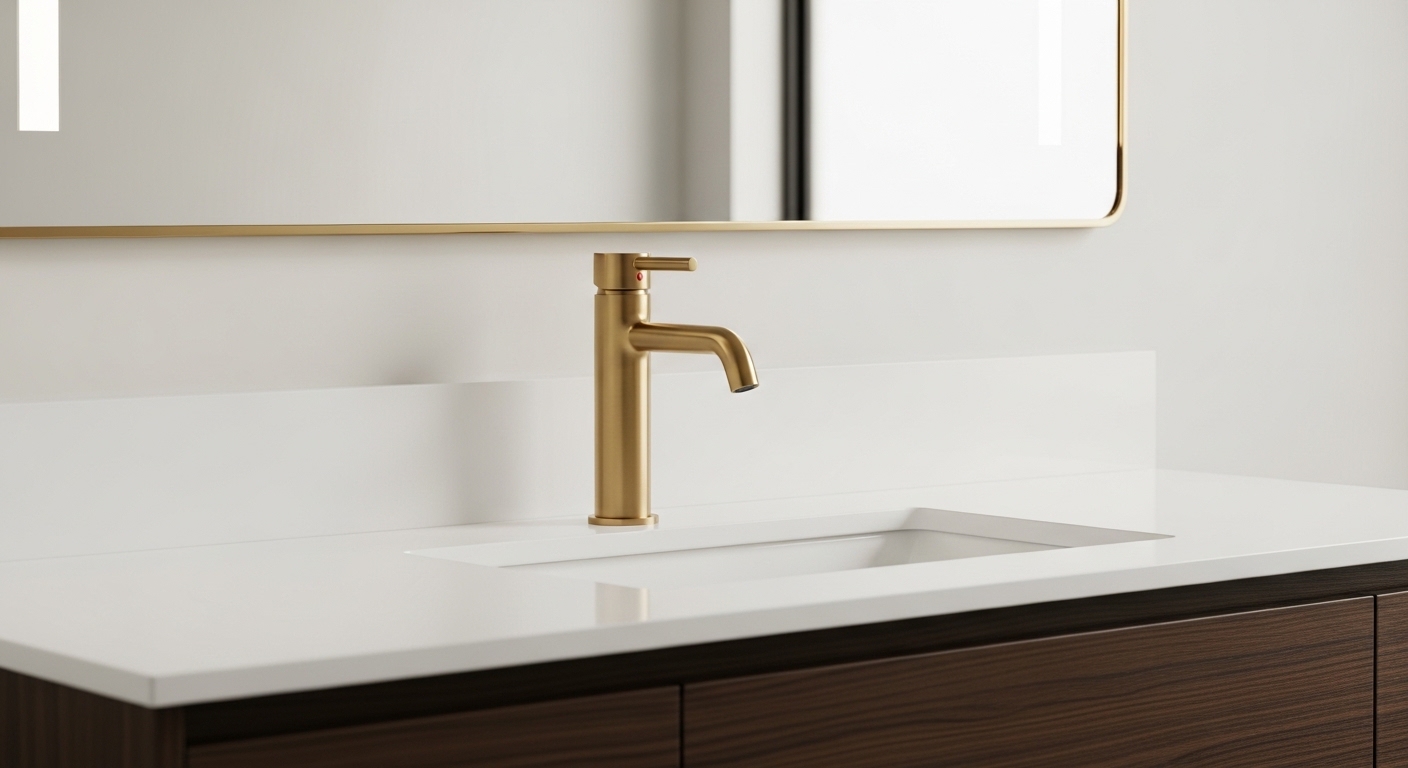
A single handle faucet gold setup is one of the easiest ways to make a bathroom or kitchen look more expensive without a full remodel — you get simple lever control that mixes hot and cold in one motion, wrapped in a finish that reads as luxury. But “gold” covers a huge range, from a mirror-bright polished brass to a soft matte champagne, and the quality gap between a $40 no-name faucet and a properly coated one is enormous. Below, I’ll walk you through exactly what to look for, which gold shade fits your space, how the coating actually holds up, and how to avoid the mistakes that make a gold faucet look dated or peeling within a year.
What exactly is a single handle faucet in gold, and why do people pick it?
A single handle faucet in gold is a mixer faucet that uses one lever to control both water flow and temperature, finished in a gold tone — most commonly brushed gold, champagne gold, or polished gold. People choose it for two reasons: the one-handle design is faster and more intuitive to use (you nudge left for warm, right for cool, up for more flow), and gold brings warmth that chrome and matte black simply can’t.
Unlike a two-handle (widespread) faucet, a single handle needs only one deck hole, so it’s cleaner to install and easier to wipe around. That’s a big deal in a busy kitchen or a small powder room where every square inch counts. The gold finish then does the decorative heavy lifting — it pairs beautifully with white marble, warm woods, deep green or navy cabinetry, and both modern and transitional styles.
Here’s the honest tradeoff: gold shows fewer water spots than polished chrome but more than matte black, and the finish quality matters more than with any other color. A poorly made gold faucet doesn’t just scratch — it changes color as the thin plating wears through. So the finish technology (covered below) is the single most important thing you’ll evaluate.
Which shade of gold should you choose — brushed, champagne, or polished?
Choose brushed gold or champagne gold for most homes in 2026 — they’re softer, hide fingerprints and spots far better, and read as current rather than flashy. Save polished (shiny) gold for traditional or glam bathrooms where you want a bold statement.
The three break down like this:
- Brushed gold: A satin, low-sheen finish with fine directional grain. The most forgiving on smudges and the most versatile — works modern, transitional, and farmhouse.
- Champagne gold (champagne bronze): A muted, slightly rosy-warm gold with a satin surface. Reads more neutral and understated than yellow gold; pairs incredibly well with white and cream.
- Polished / shiny gold (polished brass): High-shine, mirror-like, strongly yellow. Gorgeous in the right traditional or Art Deco space, but it shows every water spot and fingerprint and can look dated if the rest of the room is modern.
| Gold Finish | Sheen | Hides Spots/Fingerprints | Best Style Match | Maintenance |
|---|---|---|---|---|
| Brushed gold | Satin/matte | Excellent | Modern, transitional, farmhouse | Low |
| Champagne gold | Soft satin | Very good | Warm neutral, white/cream rooms | Low |
| Polished gold | High shine | Poor | Traditional, glam, Art Deco | High |
A quick tip on matching: gold is not one color, so if you’re adding a faucet to a room that already has gold cabinet pulls, a shower head, or a light fixture, bring a photo or, better, a physical sample. Brushed gold from one brand can lean cooler or warmer than another. When in doubt, brushed/champagne gold blends more easily across brands than polished gold does.
Will a gold faucet finish tarnish, peel, or scratch over time?
A quality gold faucet with a PVD (Physical Vapor Deposition) coating will not tarnish, peel, or noticeably scratch under normal use — PVD bonds the color to the metal at a molecular level and is far harder than the underlying brass. A cheap electroplated gold faucet, on the other hand, can discolor, spot, or flake within a year, especially in hard-water areas.
This is the make-or-break spec. When you shop, look for the words “PVD” or “PVD coated” in the finish description. PVD finishes are rated to resist corrosion and abrasion and typically hold up to years of daily cleaning without color change. Standard electroplating (often just called “gold plated” with no PVD mention) is a much thinner, softer layer that wears through at high-touch points like the handle and spout tip.
Hard water is the other factor. Gold doesn’t rust, but mineral-heavy water leaves chalky white deposits that dull any finish. If you’re seeing discoloration or orange staining around a faucet, that’s usually water chemistry or the pipes — not the gold itself failing. Our guide on why rust comes out of a faucet explains how to tell a water/plumbing issue apart from a finish problem, which matters a lot before you blame (or return) a new gold faucet.
Kitchen or bathroom — does a single handle gold faucet work for both?
Yes, single handle gold faucets are made for both kitchen and bathroom, but the body style and specs differ, so don’t buy a bathroom faucet for your kitchen sink. Kitchen versions are taller, often with a pull-down or pull-out sprayer and higher flow; bathroom versions are shorter, lower-flow, and sized for a vanity.
For the kitchen, a single handle pull-down in gold gives you spray/stream switching and a high arc for filling pots — just confirm the spout height and reach fit your sink and any window behind it. If you’re unsure about proportions, our breakdown of what size faucet a kitchen sink actually needs covers spout height, reach, and hole spacing so a tall gold faucet doesn’t overwhelm a small basin or splash outside it.
For the bathroom, the big variable is your sink type and how many holes are drilled in the deck. A single handle gold faucet usually needs a single hole (or a deck plate to cover three). If you’re doing a vanity, read our guide on choosing a single hole faucet for a bathroom vanity — it walks through hole configurations, mounting, and clearances that apply directly to single handle gold models. And if you have a vessel (above-counter) sink, you’ll want a taller model; a vessel sink faucet with a side handle is a common single-lever variation worth comparing.
How much should you spend on a single handle faucet gold in 2026?
Plan to spend $80–$180 for a genuinely good single handle faucet gold in 2026 — that’s the range where you reliably get a solid brass body, a ceramic disc cartridge, and a real PVD finish. Under about $60, you’re usually paying for zinc-alloy parts and electroplated gold that won’t age well; above $250, you’re mostly paying for a designer brand name.
Here’s what your money actually buys as you move up:
- Under $60: Often zinc-alloy body, plastic internals, electroplated gold. Fine for a rarely-used guest bath; risky for daily use.
- $80–$180: The sweet spot. Brass body, ceramic disc cartridge (drip-resistant), PVD brushed or champagne gold, real warranty. This is what most people should buy.
- $200+: Premium and designer brands. Better packaging, sometimes lifetime warranties and specialty finishes, but the core performance often matches the mid-tier.
The two internal specs that matter most are the cartridge (a ceramic disc cartridge resists dripping far better than a rubber-washer design and is what gives that smooth lever feel) and the body material (solid brass over zinc for durability and corrosion resistance). A gold finish on a great body and cartridge lasts; a gold finish on cheap guts fails no matter how pretty it looks in the photo.
What should you check before you buy and install one?
Before buying, confirm four things: the finish is PVD, the body is brass, the cartridge is ceramic disc, and the number of mounting holes matches your sink. Before installing, check your supply lines and shut-off valves so you’re not scrambling mid-swap.
Installation of a single handle faucet is one of the more DIY-friendly plumbing jobs — it’s typically a single set of holes, one lever, and two supply connections. The most common snag is a mismatch between your faucet’s supply line ends and your home’s shut-off valves. To avoid a second trip to the store, measure first using our guide on how to measure faucet supply line size the right way. It’ll tell you exactly which connectors and lengths you need so the new gold faucet threads on without adapters or leaks.
A few final pre-purchase checks:
- Reach and height: Measure the distance from your faucet holes to the wall/window and to the sink’s back edge so the spout arcs into the basin, not behind it.
- Deck plate: If your sink has three holes and the faucet is single-hole, make sure a matching gold deck plate (escutcheon) is included or available.
- Finish family: If you’re keeping existing fixtures, match the gold family (brushed vs. polished) rather than assuming all golds coordinate.
- Warranty: Look for a finish-and-function warranty, ideally lifetime for residential use.
How do you keep a gold faucet looking new?
Keep a gold faucet looking new by wiping it dry with a soft cloth after use and cleaning only with mild soap and water — never use abrasive pads, ammonia, bleach, or acidic “descaler” chemicals, which can damage even a PVD finish over time. That’s genuinely the whole routine.
For stubborn hard-water spots, a 50/50 mix of white vinegar and water on a soft cloth (not left to sit long, then rinsed and dried) usually lifts them, but if your water is very hard, drying the faucet after use is the real fix. Avoid anything gritty — magic erasers, scouring powder, steel wool — because those micro-scratch the surface and dull the shine. A gold finish rewards gentle, consistent care far more than occasional deep scrubbing.
Quick recap: is a single handle gold faucet right for you?
If you want an upscale, warm look with simple one-lever control and you’re willing to spend in the $80–$180 range for a PVD brushed or champagne gold finish on a brass body with a ceramic cartridge, then yes — it’s absolutely worth it and will look great for years. If your budget forces you below $60, you may be better off choosing a well-made faucet in a more forgiving finish than a cheap gold one that ages poorly. Gold done right is one of the best-value upgrades in a bathroom or kitchen; gold done cheap is one of the fastest to disappoint.
FAQ
Does a gold faucet go out of style?
Brushed and champagne gold have proven durable in design terms and remain popular in 2026 because they read as warm and neutral rather than trendy. High-shine polished gold is more of a statement finish that trends in and out, so if you’re worried about longevity, go brushed or champagne.
Is brushed gold the same as champagne bronze?
They’re close but not identical. Champagne bronze (champagne gold) is a muted, slightly warmer/rosier satin tone, while brushed gold is often a touch more yellow. Both are satin and both hide spots well; the difference is subtle enough that you should compare physical samples if you’re matching existing fixtures.
Are gold faucets hard to keep clean?
No — brushed and champagne gold are actually easier to keep clean than polished chrome or shiny gold because their satin surface disguises water spots and fingerprints. A quick wipe with a dry soft cloth is usually all it takes; skip abrasives and harsh chemicals.
Can I put a single handle gold faucet on a sink with three holes?
Yes. Use a single-hole faucet with a matching gold deck plate (escutcheon) that covers the two outer holes. Many single handle gold faucets include this plate or offer it as an option, so check the listing before you buy.
How do I know if a gold faucet is real PVD or just cheap plating?
Look for “PVD” explicitly stated in the product’s finish description, and check the body material (solid brass) and cartridge (ceramic disc). Reputable listings state all three. If a very low price is paired with vague terms like “gold plated” and no PVD mention, treat it as electroplated and expect a shorter finish life.
Author note: This guide was written by the wewefaucet product team, drawing on years of specifying, testing, and installing kitchen and bathroom faucets across a wide range of finishes. wewefaucet designs and manufactures faucets and fixtures with solid brass bodies, ceramic disc cartridges, and PVD finishes, and our products are built to meet recognized industry standards for finish durability and lead-free safety. Our single handle gold faucets are backed by a manufacturer warranty covering both finish and function for residential use — because a gold finish is only worth buying if it’s built to last.
您好!please sign in