 WEWE Kitchen Faucets
Is a Vintage Bidet Faucet Worth It, and How Do You Pick the Right One in 2026?
Views:118 classificationProduct
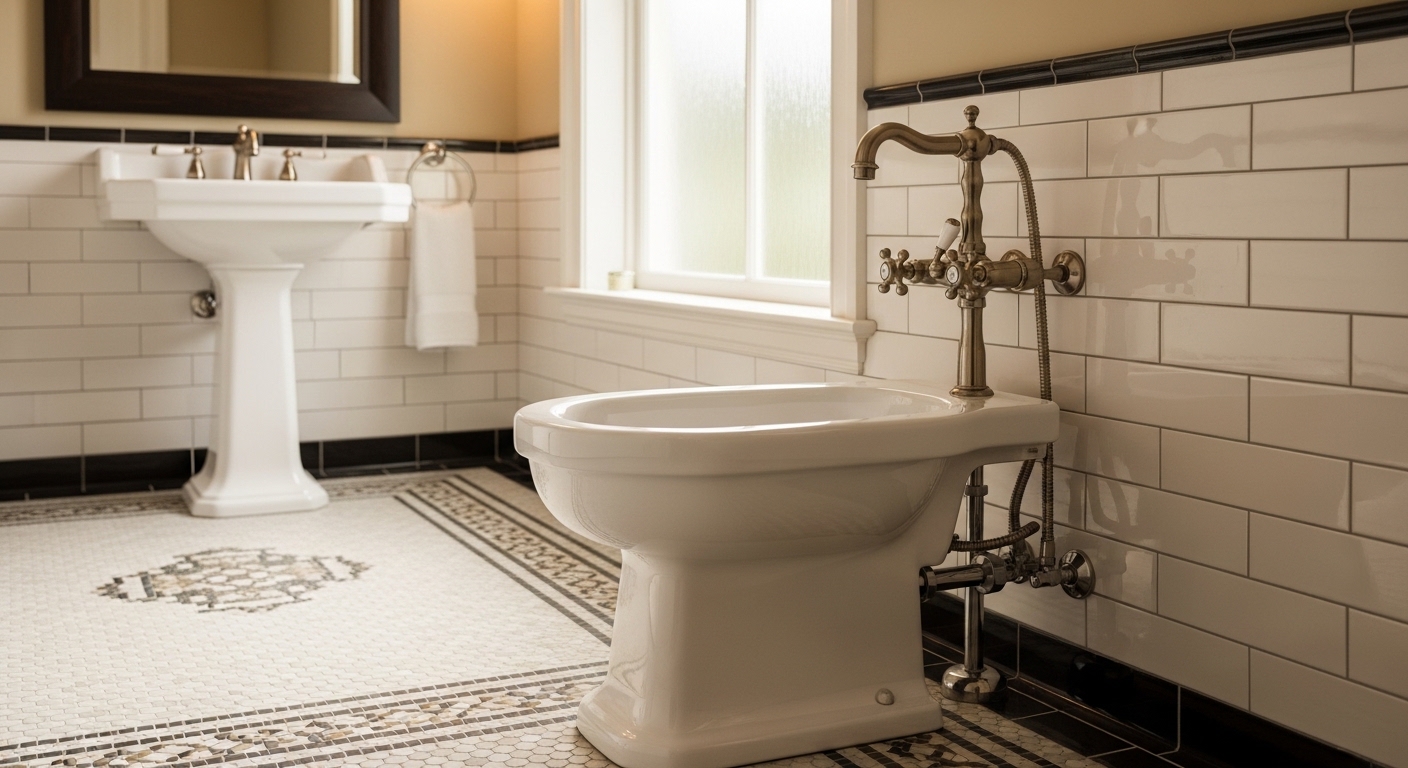
A vintage bidet faucet is a deck-mounted tap designed specifically for a bidet basin, styled to echo early- and mid-20th-century fixtures — think cross or lever handles, gooseneck or swan-neck spouts, and warm finishes like oil-rubbed bronze, antique brass, or polished nickel. It looks old, but the good ones are built with modern internals. That combination is exactly why people buy them, and also exactly where the buying mistakes happen. Below, we answer the real questions shoppers actually ask before they spend the money.
Bidets are having a genuine moment in American bathrooms again, and a lot of that revival is aesthetic — people restoring 1920s–1950s homes, or building new bathrooms that lean traditional, don’t want a chrome, hyper-modern spout on a claw-foot-era fixture. A vintage bidet faucet closes that gap. But because bidet faucets are a niche within a niche, there’s a lot of confusing product out there, and plenty of cheap zinc fixtures dressed up to look expensive. Let’s sort it out.
What exactly makes a bidet faucet “vintage” — is it just the finish?
No — a true vintage bidet faucet is defined by three things together: the handle style, the spout shape, and the finish, all backed by traditional-looking but modern engineering. The finish alone doesn’t make it vintage; a chrome faucet with lever handles is just a modern faucet in a warm coat.
Here’s what visually signals “vintage” on a bidet tap:
- Handles: Porcelain-inlaid cross handles (the classic “Hot”/”Cold” button look), metal cross handles, or slim lever handles — never chunky single-lever joysticks.
- Spout: A gooseneck, swan-neck, or low arc that curves gently rather than an angular modern bend. Many vintage bidet spouts also swivel and include an aerated, downward-angled tip so the water lands where a bidet needs it.
- Finish: Oil-rubbed bronze, antique/brushed brass, polished nickel, and satin gold read as period-correct. Bright polished chrome reads modern (though it was historically accurate for mid-century, so it’s a gray area).
- Details: Fluted bases, hexagonal escutcheons, exposed decorative nuts, and cross-hatched knurling on the handles.
Underneath, though, the faucet you actually want is thoroughly modern: a ceramic-disc cartridge (not old rubber washers), a solid brass body, and a ceramic or brass pop-up drain. Vintage on the outside, 2026 on the inside. If a finish trend is part of your decision, our breakdown of whether the oil rubbed bronze finish is out of style in 2026 is worth a two-minute read before you commit to a color.
Is a vintage bidet faucet worth it, or am I paying for looks?
It’s worth it if two things are true: you genuinely want the traditional look, and you buy solid brass with a ceramic-disc cartridge. In that case you’re paying for both style and a fixture that will realistically last 15–20+ years. It is not worth it if a seller is charging a premium for a zinc-alloy body with a decorative “antique” coating — that’s paying vintage prices for a fixture that can crack, pit, and leak within a few years.
The single biggest value question with any traditional-styled faucet is the base metal. Brass resists corrosion, holds threads, and takes plating beautifully; zinc alloy (sometimes labeled “metal” or “zamak”) is cheaper, heavier-feeling in a deceptive way, and far more failure-prone at threaded joints. This isn’t a small distinction — it’s the difference between a faucet you install once and one you replace. We go deep on exactly this in our guide to brass vs zinc faucets and which lasts longer, and the short version is: for a bidet faucet you touch with wet hands daily, buy brass.
Here’s a realistic value snapshot by price tier:
| Price tier | Typical body material | Cartridge | Realistic lifespan | Best for |
|---|---|---|---|---|
| $40–$80 | Zinc alloy or thin brass | Basic ceramic or rubber washer | 2–5 years | Rentals, short-term, low-use guest baths |
| $90–$180 | Solid brass | Quality ceramic-disc | 10–15 years | Most homeowners — the sweet spot |
| $200–$300 | Heavy solid brass, premium plating | Long-life ceramic-disc | 15–20+ years | Restorations, daily-use primary baths, high-end look |
| $350+ | Solid brass, artisan/heritage brand | Premium ceramic-disc | 20+ years | Historic home restorations, designer specs |
The takeaway: the $90–$180 tier is where value peaks. Below it, you’re gambling on zinc. Above it, you’re mostly paying for brand heritage and finish refinement — real value, but with diminishing returns unless authenticity matters to your project.
How do I know which vintage bidet faucet will actually fit my bidet?
Match three measurements before you buy: the number and spacing of the faucet holes in your bidet, the depth from the faucet holes to the wall, and the drain size. Most floor-standing bidets are drilled for either a single-hole faucet or a 4-inch centerset (three holes, handles 4 inches apart center-to-center), so identify which one you have first.
Here’s the fit checklist, in order of importance:
- Hole configuration. Flip up or look under the bidet deck. Single hole = one deck opening for a monobloc faucet. Three holes at 4 inches = centerset. Three holes at 8 inches = widespread (rarer on bidets). Buy the faucet that matches; adapters exist but they compromise the look.
- Deck thickness & reach. Vintage porcelain bidets often have thick decks. Confirm the faucet’s threaded shank is long enough to pass through and still accept the mounting nut.
- Pop-up drain thread. Bidet faucets usually come with a matching pop-up drain. Confirm it fits your bidet’s drain opening (commonly 1.25-inch / 32 mm) and that the finish matches.
- Water supply. Bidet faucets take standard 3/8-inch or 1/2-inch supply connections. Measure before you shop so you buy the right supply lines. Our guide on how to measure faucet supply line size the right way walks through this so you don’t end up at the hardware store twice.
One more thing people forget: a bidet faucet isn’t the same as a bidet sprayer. A vintage bidet faucet fills and rinses the basin from a deck-mounted spout — it’s a faucet for a dedicated bidet fixture, not a handheld hose or a toilet-mounted spray attachment. Make sure you’re shopping the right category.
Which finish holds up best in a real bathroom — bronze, brass, or nickel?
For durability in a humid, daily-use bathroom, polished nickel and quality PVD-coated finishes hold up best; oil-rubbed bronze and living/unlacquered brass are beautiful but will patina and change over time — which is either a feature or a flaw depending on your taste. The key differentiator is how the finish is applied, not just the color name.
Three application methods, from best to worst for longevity:
- PVD (Physical Vapor Deposition): The gold standard. Extremely hard, scratch- and tarnish-resistant, won’t fade. If a vintage-look faucet offers a PVD version of brass or bronze, that’s the durable choice.
- Electroplating: Common and fine for nickel and chrome; can wear at high-touch spots over many years but generally reliable on a brass base.
- Lacquered “living” finishes: Oil-rubbed bronze and unlacquered brass are meant to age. ORB can rub to brass highlights at the handles over time (many people love this look); raw brass develops a patina you either seal or embrace.
If you want the vintage look with zero maintenance and zero color change, go polished nickel with PVD or a brushed-brass PVD. If you want a fixture that develops character and tells a story, oil-rubbed bronze or unlacquered brass is the romantic choice — just know it will not look identical in five years.
Can I install a vintage bidet faucet myself, or do I need a plumber?
Most homeowners with basic tools can install a deck-mounted bidet faucet in about 45–90 minutes — it’s very similar to installing a bathroom sink faucet. You’ll need to shut off the water, mount the faucet through the deck holes, connect the supply lines, and fit the pop-up drain. Call a plumber only if you’re also relocating supply lines, cutting new holes in porcelain, or dealing with old, seized shutoff valves.
The basic sequence looks like this:
- Shut off the hot and cold supply and open the old faucet to relieve pressure.
- Disconnect and remove the old faucet and pop-up drain assembly.
- Dry-fit the new vintage faucet to confirm hole alignment and spout reach.
- Seat the faucet with the supplied gaskets or a thin bead of plumber’s putty under the base, then tighten the mounting nuts from below.
- Install the new pop-up drain with fresh plumber’s putty at the flange.
- Connect braided supply lines, hand-tighten plus a quarter turn with a wrench, then turn the water back on and check every joint for drips.
The one place people slip up is over-tightening a brass or porcelain-accented fixture and cracking it, or forgetting to check the drain seal until water is already pooling. Run the water for a full minute and feel every connection dry before you call it done. If you’re new to faucet plumbing generally, the same fundamentals apply to a standard basin faucet — our explainer on what a centerset faucet is is useful here, since many vintage bidet faucets use that exact 4-inch centerset layout.
What are the most common complaints about vintage bidet faucets?
The three most common real-world complaints are: weak or oddly-angled water flow, finish wear on cheaper models, and threaded joints that loosen or leak — and all three trace back to either buying zinc instead of brass or buying a decorative shell without a real ceramic cartridge. Buy for build quality and most of these disappear.
Breaking down each complaint:
- “The water spits or the angle is wrong.” A proper bidet spout aerator angles water down into the basin. Cheap ones use a generic straight aerator. Look for a bidet-specific angled or swivel spout.
- “The finish wore off in two years.” Almost always an electroplated coating over zinc. Solid brass with PVD doesn’t do this.
- “It started dripping.” Usually a worn rubber washer in a bargain faucet, or a cartridge that was never ceramic to begin with. A ceramic-disc cartridge is the fix and the thing to buy up front.
- “The handles feel loose.” Cross and lever handles on vintage faucets have set screws — they occasionally need a quarter-turn with an Allen key. Not a defect, just maintenance.
Notice the pattern: nearly every complaint is a build-quality problem, not a “vintage style” problem. The look isn’t the risk — the metal and the cartridge are.
Vintage bidet faucet vs. modern bidet faucet: which should you choose?
Choose vintage if your bathroom leans traditional, transitional, or is a period restoration; choose modern if your space is contemporary or minimalist. Functionally, a well-made version of either performs identically — the internals are the same ceramic-disc technology. The decision is almost entirely about the room, not the plumbing.
| Factor | Vintage bidet faucet | Modern bidet faucet |
|---|---|---|
| Best-fit décor | Traditional, farmhouse, restoration, transitional | Contemporary, minimalist, modern |
| Handles | Cross / lever, often porcelain-inlaid | Single lever or sleek dual lever |
| Typical finishes | ORB, antique brass, polished nickel, satin gold | Chrome, matte black, brushed nickel |
| Price range (quality) | $90–$300 | $70–$250 |
| Internal tech | Ceramic-disc cartridge (in good models) | Ceramic-disc cartridge |
| Resale/timelessness | Strong in period and higher-end homes | Strong in new-build and urban homes |
Bottom line: don’t overthink the performance question. A $150 solid-brass vintage bidet faucet and a $150 solid-brass modern one will spray, mix, and last about the same. Buy the one that makes your bathroom look right — then verify the brass and the cartridge.
How WEWE approaches vintage bidet faucets
At wewefaucet, we build our traditional-style bathroom fixtures around the same principle we’ve argued throughout this guide: the look is only worth buying if the build backs it up. That means solid brass bodies, ceramic-disc cartridges rated for long cycle life, and finishes applied to resist the humidity and daily handling a bidet faucet actually sees. Our fixtures are tested against standard flow and durability benchmarks and backed by warranty coverage, because a faucet you touch with wet hands every day shouldn’t be a gamble. We’d rather tell you to measure your hole spacing twice and buy brass once than sell you a fixture you’ll replace in three years.
FAQ
What’s the difference between a vintage bidet faucet and a bidet sprayer?
A vintage bidet faucet is a deck-mounted tap that fills and rinses a dedicated bidet basin from a styled spout with cross or lever handles. A bidet sprayer is a handheld hose or a toilet-mounted spray attachment. They’re completely different products — a faucet mounts into holes drilled in the bidet fixture, while a sprayer connects to a supply line and is held in your hand.
Are vintage bidet faucets always made of brass?
No, and this is the key thing to check. Many budget “vintage-look” bidet faucets are zinc alloy with a decorative coating, which can pit and leak within a few years. Quality vintage bidet faucets are solid brass, which resists corrosion and holds threads far better. Always confirm the body material before buying, and treat “solid brass” as a requirement, not an upgrade.
How much should I spend on a good vintage bidet faucet?
The value sweet spot is $90–$180 for a solid-brass model with a ceramic-disc cartridge, which realistically lasts 10–15 years. Below $80 you risk zinc construction; above $200 you’re mostly paying for premium finishes and brand heritage, which matters for restorations but offers diminishing returns for everyday use.
Will a vintage bidet faucet fit my existing bidet?
It fits if the hole configuration matches. Most bidets are drilled for a single-hole faucet or a 4-inch centerset (three holes, handles 4 inches apart). Measure your bidet’s holes, deck thickness, and drain opening before buying. If the configurations don’t match, you’ll either need a different faucet or a compromise adapter that hurts the look.
Does oil-rubbed bronze wear off a vintage bidet faucet?
Oil-rubbed bronze is a “living” finish designed to age — over years, high-touch spots like the handles may rub to brass highlights. On a solid-brass faucet this is a desirable patina, not a defect. If you want zero color change, choose a polished nickel or brushed-brass PVD finish instead, which resists tarnishing and wear.
Do vintage bidet faucets need special maintenance?
Very little. Wipe the finish with a soft damp cloth (avoid abrasive or acidic cleaners, especially on bronze and unlacquered brass), and occasionally snug the handle set screws with an Allen key if they loosen. A ceramic-disc cartridge should give years of drip-free use; if it ever drips, replacing the cartridge is a simple fix.
Author note: This guide was written by the WEWE fixtures editorial team, drawing on hands-on installation and testing of traditional-style bathroom faucets across brass and zinc constructions. wewefaucet designs and sells faucets and bathroom fixtures direct to homeowners, and our recommendations reflect what we’d install in our own bathrooms — not what carries the highest margin.
您好!please sign in