 WEWE Kitchen Faucets
Is a Freestanding Tub With End Faucet the Right Choice for Your Bathroom in 2026?
Views:9 classificationProduct
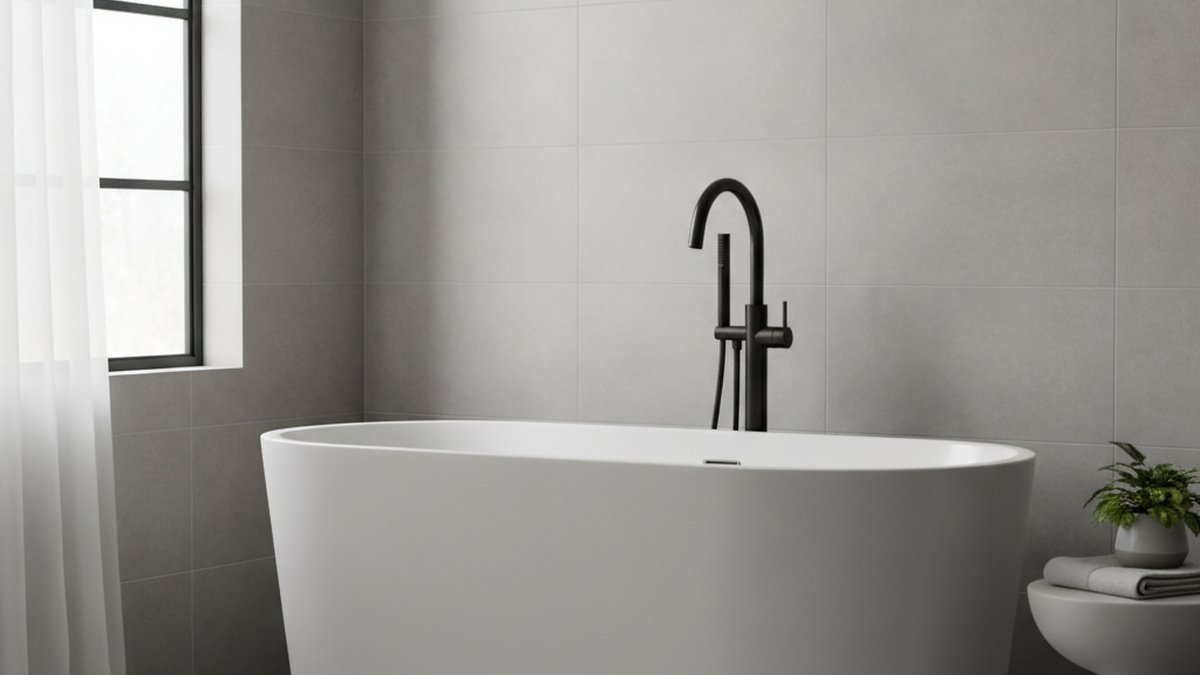
If you’re planning a bathroom remodel and keep coming back to the idea of a freestanding tub with end faucet, you’re asking the right question at the right time. This configuration — the faucet sitting at the head or foot end of the tub rather than the middle — has quietly become one of the most requested setups because it looks intentional, bathes comfortably, and often costs less to plumb than a dramatic center-of-the-room installation. But it’s not automatically the best pick for every bathroom. The tub shape, the faucet mounting style, your floor construction, and even where your existing drain sits all decide whether this is a smart buy or a source of regret.
Below, I’ll walk you through exactly what this setup is, when it beats the alternatives, how to choose the faucet, what it really costs to install, and the mistakes that trip people up — the same way I’d explain it to a friend standing in a half-gutted bathroom holding a tape measure.
What exactly is a freestanding tub with an end faucet?
A freestanding tub with an end faucet is a standalone soaking tub where the water spout and controls are positioned at one short end of the tub — usually the foot end — instead of centered on the long side or mounted to a wall. The plumbing rises through the floor next to that end (floor-mount) or through a shelf built into the tub rim (deck-mount).
The key thing to understand: “freestanding” describes the tub (it sits on the floor, finished on all sides, not built into a surround), and “end faucet” describes where the water comes out. You can combine a freestanding tub with three faucet locations:
- End / floor-mount: A tall floor-standing faucet rises from the floor at one end. This is the classic freestanding look and the most flexible if your tub sits away from the wall.
- End / deck-mount: The faucet mounts on a flat ledge or the tub’s own rim at the end. Cleaner and often cheaper, but requires a tub designed with a deck or a faucet rated for the rim thickness.
- End / wall-mount: The spout comes out of the wall behind the tub’s end. Only works when that end sits tight against a wall — but it’s the least expensive to plumb and the easiest to clean around.
The “end” placement matters for comfort. On a double-slipper tub (both ends raised) or a slipper tub (one end raised), you lean back against the taller, sloped end and stretch your legs toward the faucet — so the end faucet keeps the hardware out from behind your head and shoulders.
Is an end faucet better than a center or wall-mount faucet for a freestanding tub?
For most home bathrooms, an end faucet is the better choice when the tub sits against or near a wall, and a center or side faucet only wins in specific island-style layouts. The end position gives you symmetry, keeps the filler away from your reclining position, and usually shortens the plumbing run.
Here’s the honest trade-off. A center-of-the-room freestanding tub with a floor-mount faucet is stunning, but it demands a big room, precise drain placement, and a floor structure that can be opened up and re-plumbed. An end faucet — especially against a wall — is far more forgiving and fits normal-sized bathrooms. That’s why the majority of freestanding installs we see are end-faucet setups, not dramatic island tubs.
| Faucet placement | Best for | Typical faucet cost | Install difficulty | Bathing comfort |
|---|---|---|---|---|
| End / floor-mount | Tub near a wall, want the “freestanding” look | $250–$900 | Moderate–High | Excellent — hardware at your feet |
| End / deck-mount | Tubs with a built-in rim shelf, budget builds | $150–$500 | Moderate | Excellent |
| End / wall-mount | Tub tight against a wall, easiest plumbing | $120–$400 | Low–Moderate | Very good |
| Center / side floor-mount | True island tub, large room | $300–$1,200 | High | Good, but hardware mid-body |
Rule of thumb: if your bathroom is under about 80 square feet, or the tub will live along a wall, the end faucet is almost always the practical winner.
How do I choose the right end faucet for my freestanding tub?
Choose your end faucet by matching four things: the mount type your tub allows, the spout reach, the required water pressure, and the finish. Get those right and everything else is preference.
Walk through it in this order:
- Mount type first. Does your tub have a flat deck at the end (deck-mount), or will the faucet rise from the floor (floor-mount), or from the wall? The tub decides this — you can’t put a deck-mount faucet on a tub with a rounded rim.
- Spout reach and height. The water needs to clear the tub rim and land inside, ideally past the slope so it doesn’t splash. For floor-mount fillers, look for a spout reach of at least 4–6 inches over the rim. For deck-mount at the end, measure from the mounting hole to the inside wall of the tub.
- Flow rate and pressure. Tub fillers move a lot of water — good ones deliver 6–8 GPM at 45–60 psi so you’re not waiting 15 minutes for a bath. If your home runs low pressure, avoid high-flow fillers with narrow supply connections; check the faucet’s minimum psi spec.
- Handshower or not. Many end fillers include a pull-out handshower on the body — great for rinsing hair, cleaning the tub, and bathing kids or pets. Decide before you buy; adding it later is hard.
- Finish. Match your other fixtures. Matte black and brushed gold hide water spots better than polished chrome; polished nickel and chrome are easiest to find replacement parts for.
One spec people forget: valve and connection compatibility. A floor-mount tub filler needs a rough-in valve set in the floor before the finished floor goes down. If you’re choosing a single handle faucet in gold or another warm finish for the whole room, confirm the tub filler comes in the exact same finish family — “gold” varies wildly between brands, and mismatched golds look like a mistake.
What does it cost to install a freestanding tub with an end faucet?
Expect to spend roughly $1,500 to $6,000 all-in for a freestanding tub with an end faucet, including the tub, faucet, rough-in valve, and professional installation — with most straightforward wall-adjacent jobs landing around $2,500 to $3,500.
The big cost drivers are the plumbing location and your floor. Here’s how it breaks down:
- The tub: $600–$3,000. Acrylic is lighter and cheaper ($600–$1,500); solid-surface/stone resin and cast iron cost more and hold heat longer.
- The end faucet + valve: $150–$1,200 depending on floor-mount vs. deck-mount and finish.
- Rough-in plumbing: $500–$2,000. If the water and drain already sit near the chosen end, you save big. Moving the drain to the tub’s end location is the expensive part.
- Labor: $500–$1,500 for a plumber, more if the floor has to be opened.
Floor-mount end fillers cost more to install than wall-mount because the supply lines must run up through the subfloor exactly where the faucet stands — there’s no margin for error, and the finished floor gets cut around the valve. If you’re keeping the budget tight, an end wall-mount or deck-mount filler on a tub placed against an existing plumbing wall is the cheapest path.
Will an end faucet work if my tub sits against a wall or in a corner?
Yes — and honestly, that’s the ideal scenario for an end faucet. When the tub’s foot end sits near a wall, you can run the supply lines up inside that wall (wall-mount) or through the floor tight to the wall (floor-mount) with a short, clean plumbing run and no exposed pipe crossing the room.
A few placement notes that save headaches:
- Leave at least 4–6 inches between the tub and the wall for cleaning and for the faucet’s footprint if it’s floor-mounted.
- In a corner, put the faucet on the end that’s most accessible so you can reach the handle without climbing over the tub.
- Confirm the handheld shower (if included) can reach the whole tub from its end position — a short hose at the far end is annoying.
If you’re weighing this against a wall-mounted shower/tub combo or a full shower system instead of a dedicated filler, it’s worth reading up on which shower system brands are actually worth buying before you commit — the plumbing rough-in is different, and it’s much cheaper to decide now than to re-open a wall later.
What are the most common mistakes with freestanding tub end faucets?
The most common mistakes are buying a faucet with too little spout reach, ignoring the rough-in valve, underestimating water pressure needs, and choosing a floor-mount filler for a lightweight subfloor that can’t anchor it. Every one of these is avoidable if you check before you buy.
Watch out for these specifically:
- Spout doesn’t reach into the tub. Measure from where the faucet mounts to the inside of the tub. If the spout reach is shorter than that distance plus a couple inches, water splashes on the rim or the floor.
- Forgetting the rough-in valve. Floor-mount fillers need a valve set in the floor during rough-in. Buy the matching valve with the faucet — brands are not interchangeable.
- Low flow, long fills. A 4 GPM filler on a 60-gallon deep soaker takes forever. Match flow rate to tub volume.
- Wobbly floor-mount. Floor-standing fillers need solid blocking under the subfloor. On a bouncy floor, the faucet flexes and the connections eventually leak.
- Finish mismatch. The tub filler, the drain, and the room’s other faucets should share a finish. A chrome drain under a matte-black filler stands out immediately.
Leaks at the base of a floor-mount filler are one of the more common service calls, and they usually trace back to loose connections or floor movement. If you ever do develop a drip, the diagnostic approach is similar to what we cover in our guide on how to fix a leaky bathtub faucet Moen-style — isolate the supply, check the cartridge or connection, and reseal. And before you connect anything, it’s worth confirming your faucet supply line size so the fittings actually match and you’re not making a hardware-store run mid-install.
Freestanding tub with end faucet: quick buyer’s checklist
Before you check out, confirm all of these. If any answer is “not sure,” pause and measure.
- Tub type (slipper, double-slipper, flat-back) and where the raised end is
- Faucet mount your tub supports: floor, deck, or wall
- Spout reach clears the rim and lands inside the tub
- Flow rate (aim 6–8 GPM) suits your tub volume and home pressure
- Matching rough-in valve included or ordered
- Handheld shower — included if you want it
- Finish matches drain and other fixtures
- Subfloor can be blocked/anchored for floor-mount
- Warranty and cartridge type documented
Author’s note & why you can trust this guide
This guide was written by the wewefaucet product team, who spec, test, and sell tub fillers and freestanding tub hardware every day. We evaluate faucets for spout reach, real-world flow rate at typical residential pressures, and finish durability against hard water and daily cleaning. Our tub fillers are built to align with recognized North American plumbing standards for flow and safety (the kind referenced under ASME A112.18.1 / CSA B125.1 and low-lead requirements), and our freestanding tub faucets ship with a documented cartridge type and a manufacturer’s warranty so replacement parts are actually available years down the road — the single most overlooked factor when people buy a good-looking filler that turns out to be unserviceable. When we give a number in this article, it comes from product specs and installation experience, not guesswork.
FAQ
Can I put an end faucet on any freestanding tub?
Almost, but not quite. Any freestanding tub can pair with a floor-mount or wall-mount end faucet as long as there’s room at that end and the plumbing can reach it. Deck-mount end faucets are the exception — they require a tub with a flat rim or built-in shelf at the end thick enough to hold the faucet. Check your tub’s spec sheet for a “faucet deck” or pre-drilled holes before buying a deck-mount filler.
How much water pressure do I need for a freestanding tub end filler?
Most tub fillers perform best at 45–60 psi and deliver 6–8 GPM at that pressure. If your home runs below 40 psi, fill times get long and some high-flow fillers won’t reach their rated flow. Check the faucet’s minimum psi spec, and if your pressure is low, consider a filler with larger supply connections or add a pressure-boosting solution before installation.
Should the faucet go at the head end or the foot end of the tub?
The foot end is standard and most comfortable. On slipper and double-slipper tubs you recline against the raised end, so putting the faucet at the foot keeps the hardware away from your head and back and lets you stretch out. Put it at the head end only if the room layout or existing plumbing forces it.
Is a floor-mount or deck-mount end faucet better?
Floor-mount gives the classic freestanding look and works even when the tub sits away from the wall, but it costs more and needs solid subfloor blocking. Deck-mount is cheaper and cleaner but only works on tubs designed with a rim shelf. If your tub supports a deck-mount and you want to save money, deck-mount is the practical pick; if you want the showpiece look, go floor-mount.
Do freestanding tub end faucets come with a handheld shower?
Many do, but not all. A large share of end fillers include a pull-out or separate handheld sprayer on the faucet body, which is genuinely useful for rinsing hair and cleaning the tub. Because adding one later is difficult, decide before you buy and confirm the hose is long enough to reach the whole tub from the end position.
How do I keep an end faucet from splashing over the tub rim?
Match the spout reach to your tub. Measure from the faucet’s mounting point to the inside wall of the tub and pick a spout that extends a couple inches past the rim so water lands well inside. Aerated or laminar-flow spouts also reduce splashing compared to a wide, unrestricted gush.
您好!please sign in