 WEWE Kitchen Faucets
What Supply Line Size Does a Pfister Ladera Faucet Use? (And How Do You Get It Right?)
Views:68 classificationInstall
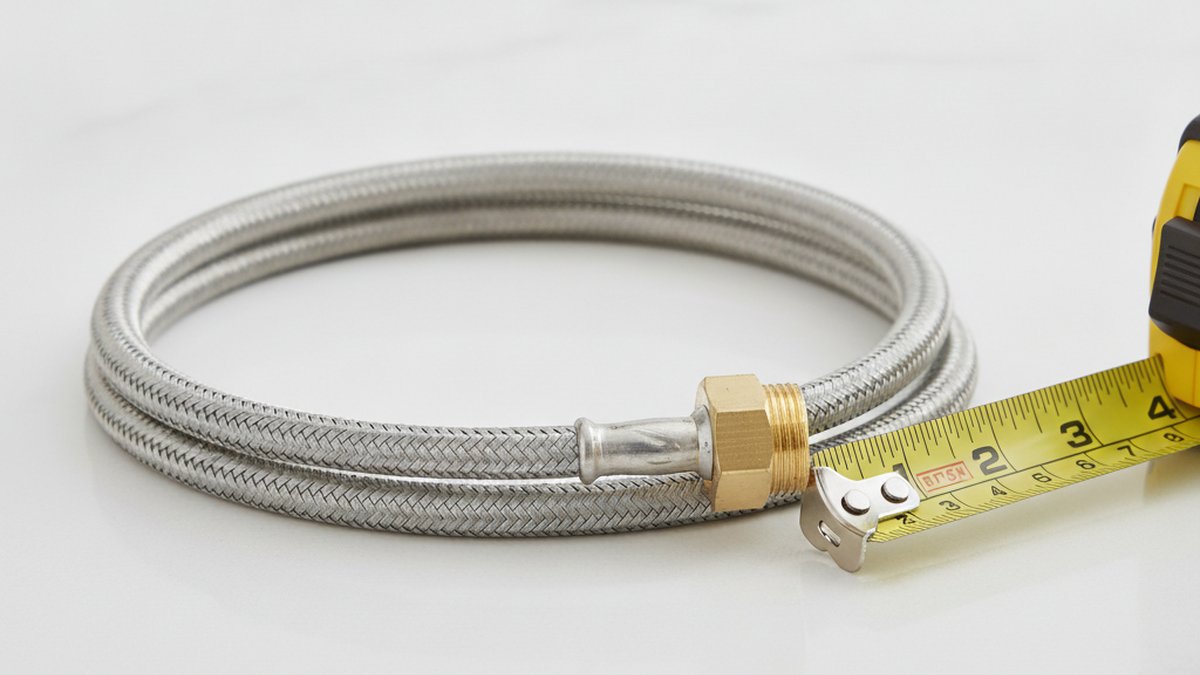
If you’re staring at your new faucet box wondering about the pfister ladera faucet supply line size, here’s the short version: Pfister ships most Ladera bath and kitchen faucets with the supply lines already attached to the faucet body, and those lines terminate in a 3/8″ compression nut that threads straight onto a standard 3/8″ angle stop. That means for a typical install you don’t buy supply lines at all — you just connect what’s in the box. The confusion usually starts when the pre-attached hoses are too short, damaged, or when someone is replacing an old faucet and assumes every faucet needs separately-purchased supply lines. Below I’ll walk through exactly what fits, how to measure, and what to buy if you do need replacements.
What size supply line comes with the Pfister Ladera faucet out of the box?
Out of the box, the Pfister Ladera comes with integrated (pre-attached) flexible supply lines that end in 3/8″ compression female nuts. You connect those nuts directly to the 3/8″ compression outlet on your shutoff valves — no adapter, no extra hose, no plumber’s tape on that joint (compression fittings seal on the ferrule, not the threads).
This is true for both the popular Ladera bathroom faucet family (the widespread and centerset LF-049 / LF-042 style models) and the Ladera pull-down kitchen faucet (F-529 style). Pfister builds the hoses onto the faucet at the factory so DIYers don’t have to guess at thread sizes. The braided lines are usually 20 to 30 inches long, which reaches almost any standard vanity or sink cabinet stop.
The key numbers to remember:
- 3/8″ — the compression size at the shutoff-valve end (this is the outer diameter of the little tube the ferrule grips, not the hose itself).
- 1/2″ — the size you’ll often see quoted for the faucet-shank end on faucets that use a separate line (a 1/2″ FIP coupling nut that threads onto the faucet’s 1/2″-14 male inlet). On the Ladera the hose is already attached here, so you rarely touch it.
- 3/8″ x 1/2″ — the way a universal replacement line is labeled when you do buy one: 3/8″ compression on one end, 1/2″ FIP on the other.
Do I even need to buy separate supply lines for a Ladera install?
In most cases, no. Because the Ladera’s hoses are permanently attached to the faucet, a standard swap only requires connecting the existing 3/8″ compression nuts to your existing shutoff valves. You buy separate supply lines only in these situations:
- The attached hoses don’t reach. Deep cabinets, low-mounted valves, or a bar/prep sink location can leave you 2–4 inches short. Fix it with a longer braided line or a short extension.
- Your shutoff valves aren’t 3/8″ compression. Some older homes have 1/2″ sweat stubs, 1/2″ MIP, or no stops at all. Then you’re really replacing/adding the valve, and the line to match it.
- A hose is kinked or damaged. If the factory line got crimped during a rough install, replace it with a quality braided stainless line rather than fight it.
- You want cleaner, serviceable connections. Some installers prefer separate braided lines they can swap in 30 seconds later, instead of an integrated hose.
If any of these apply, the good news is the Ladera plays nicely with universal parts. That’s the whole point of the 3/8″ compression standard — it’s the most common faucet-connection size in North American homes.
How do I measure my Pfister Ladera supply line so a replacement actually fits?
Measure two things: the connection size at each end, and the length you need. Getting the size wrong is what causes drips; getting the length wrong is what causes kinks and re-trips to the store.
Here’s the reliable way to do it:
- Identify the valve-end size. Look at the shutoff valve outlet. If a small nut slides over a thin tube (about 3/8″ across the tube), that’s 3/8″ compression — the Ladera match. If there are male threads about 1/2″ across, that’s 1/2″ MIP and you need a 1/2″ FIP end.
- Identify the faucet-end size. On a Ladera, this end is usually the factory hose, so you’re only replacing it if it’s damaged. A universal replacement will use a 1/2″ FIP coupling nut to thread onto the faucet’s 1/2″-14 shank inlet.
- Measure length with the valve closed. Run a tape from the valve outlet up to the faucet inlet along the natural path the hose will take — allow a gentle curve, not a tight bend. Add about 2 inches of slack. Round up to the next stocked length (12″, 16″, 20″, 24″, 30″).
If you want the full step-by-step with photos and the exact difference between compression, IPS, and FIP threads, we put together a dedicated guide on how to measure faucet supply line size the right way — it’s worth a two-minute read before you buy anything, because it saves the classic “wrong end” return trip.
Pfister Ladera supply line connections at a glance
Here’s a quick reference table so you can match your setup without decoding plumbing jargon:
| Connection point | Typical size on the Ladera | What it threads onto | Sealed with |
|---|---|---|---|
| Shutoff-valve end of supply line | 3/8″ compression (female nut) | 3/8″ compression angle stop | Brass ferrule (no tape) |
| Faucet-inlet end (integrated hose) | Pre-attached at factory | N/A — already on the faucet | Factory O-ring |
| Faucet inlet if using a separate line | 1/2″ FIP coupling nut → 1/2″-14 male shank | Faucet shank threads | Rubber gasket in nut |
| Universal replacement line (label) | 3/8″ comp x 1/2″ FIP | Both ends above | Ferrule + gasket |
The one line to remember: 3/8″ compression on the wall side is the number that matters most, because that’s what has to match your shutoff valves, and it’s what the Ladera is built around.
What’s the difference between 3/8″ compression, 1/2″ FIP, and 3/8″ OD — they all confuse me?
They describe different things, which is exactly why they get mixed up. Compression and FIP are connection *types*; the numbers are *sizes*. Here’s the plain-English version:
- 3/8″ compression: A slip-on nut and a brass ring (ferrule) that squeeze onto a 3/8″ tube to seal. This is your standard under-sink shutoff outlet. No thread sealant needed — over-tightening actually cracks it.
- 1/2″ FIP (Female Iron Pipe): Tapered internal pipe threads. The “1/2 inch” is a nominal pipe size, not a literal half-inch opening. This is the coupling nut end that grabs a faucet’s threaded shank.
- 3/8″ OD: Just “outer diameter” — describing the physical tube, common on rigid copper or poly risers. Same 3/8″ family as compression.
- 1/2″-14 NPSM: The male thread often machined into a faucet’s inlet shank; “14” is threads per inch. Ladera hoses attach here at the factory.
So when a store associate asks “compression or FIP?”, they mean *which type of connection*, and when they ask “3/8 or 1/2?”, they mean *which size*. For a Ladera you’ll answer: 3/8″ compression at the valve, and if you’re buying a separate line, a 1/2″ FIP nut at the faucet.
How do I connect Ladera supply lines without leaks?
Hand-tighten, then a quarter to half turn with a wrench — no more. The most common Ladera install leak isn’t a size mismatch; it’s an over-cranked compression nut or crossed threads. Follow this order:
- Shut off both angle stops and open the faucet to relieve pressure.
- Thread the 3/8″ compression nut on by hand until it stops. If it won’t spin freely, you’ve cross-threaded — back off and restart.
- Snug it with a wrench: about a quarter-turn past hand-tight. Compression joints seal on the ferrule, so more force just deforms metal.
- Don’t put Teflon tape on compression threads. Use it only on tapered pipe threads (MIP/FIP metal-to-metal joints), and even then sparingly.
- Open the valves slowly and watch each joint for 60 seconds. A weeping joint gets one more small nudge, not a full crank.
If you do get a drip that won’t quit after a gentle re-tighten, the culprit is usually a nicked ferrule or a tired washer — cheap parts, easy swap. Our walkthrough on the most common causes of a leaky bathroom faucet and how to fix them yourself covers exactly which washer or O-ring is failing so you’re not replacing the whole faucet over a 20-cent part.
Does the Ladera bathroom faucet use a different supply size than the kitchen version?
The valve-end size is the same — 3/8″ compression — on both. What differs is the hose count and the inlet layout, not the size you connect to your stops:
- Ladera bathroom faucet (single-handle and centerset): Two pre-attached lines (hot and cold) ending in 3/8″ compression. On the single-handle single-hole models the two hoses feed into one deck shank.
- Ladera pull-down kitchen faucet: Two pre-attached supply hoses, again 3/8″ compression at the valve, plus a separate quick-connect for the pull-down spray hose (that’s not a supply line and doesn’t connect to your water stops).
So whether you’re doing a vanity or a kitchen sink, the number that matches your shutoff valves is 3/8″ compression. If you’re choosing a bathroom model and want to be sure it fits a single-hole deck, our guide to picking a single hole faucet for your bathroom vanity explains deck-hole sizing so the faucet body and the supply routing both work in your space.
What should I actually buy if I need replacement or longer lines?
Buy braided stainless steel lines labeled “3/8″ comp x 1/2″ FIP” in a length 2 inches longer than your measured run. That combination fits the Ladera and virtually every standard American faucet. A few buying tips:
- Braided stainless over plastic/PVC. Braided lines resist bursting and last far longer; the price difference is a few dollars.
- Get the right length, not the longest. Excess hose coils and kinks in tight cabinets. Kinks restrict flow and eventually crack.
- Look for a lead-free / NSF-certified line if it carries drinking water (kitchen and bath both qualify). NSF/ANSI 61 and 372 are the marks to look for.
- Buy in pairs and replace hot and cold together — if one is aging, the other is too.
Length aside, don’t overthink the brand of the hose. A quality universal braided line is a quality braided line. Spend your attention on the faucet itself — that’s where durability lives. If you’re weighing your options on a budget, our roundup of the best bathroom faucets under $100 that actually last is a useful sanity check on what “good value” looks like in this category.
Quick spec recap for the Pfister Ladera supply line size
Here’s everything condensed into one answer you can act on:
- Factory hoses are pre-attached and end in 3/8″ compression.
- They connect to standard 3/8″ compression angle stops — no adapter for most homes.
- If replacing, buy braided stainless, 3/8″ comp x 1/2″ FIP, sized to your run plus 2 inches.
- Seal compression joints by ferrule, not tape; snug, don’t crank.
- Bathroom and kitchen Ladera models share the same 3/8″ valve-end size.
A note on trust, testing, and warranty
Author note: This guide was written by the wewefaucet fixtures team — the same people who spec, install, and pressure-test faucets and supply lines day in and day out. We’ve connected enough Ladera faucets to know that the size question almost always ends the same way: 3/8″ compression at the valve, factory hoses at the faucet. We test connections at typical U.S. residential supply pressure (around 40–80 psi) and stand behind fit guidance grounded in the actual hardware, not spec-sheet guesswork.
On standards and warranty: Pfister backs the Ladera line with its Pforever limited lifetime warranty on function and finish for the original homeowner — but note that warranty covers the faucet, not consumable supply lines, so using a quality NSF/ANSI 61-certified braided line protects both your water quality and your fixture. Faucets and connectors sold for U.S. potable water should meet lead-free requirements under NSF/ANSI 372 and the federal Safe Drinking Water Act. When in doubt about your specific model’s inlet, always confirm against the printed installation sheet in your box or Pfister’s official spec for your model number — model revisions can change hose length even when the connection size stays put.
FAQ
What size supply line does a Pfister Ladera faucet use?
The Pfister Ladera uses pre-attached flexible supply hoses that end in a 3/8″ compression connection, which matches standard 3/8″ shutoff valves. If you buy a separate replacement line, choose one labeled 3/8″ compression by 1/2″ FIP.
Do I need to buy supply lines for a Pfister Ladera, or are they included?
They’re included and already attached to the faucet. You only buy separate lines if the factory hoses are too short to reach your shutoff valves, are damaged, or if your existing valves aren’t the standard 3/8″ compression type.
Are the Ladera bathroom and kitchen faucet supply sizes the same?
Yes at the connection you care about. Both terminate in 3/8″ compression at the shutoff-valve end. The kitchen model also has a separate spray-hose quick-connect, but that isn’t a water supply line and doesn’t connect to your stops.
Should I use plumber’s tape on the Ladera supply line connections?
Not on the 3/8″ compression joints — they seal on a brass ferrule, and tape does nothing there. Reserve Teflon tape for tapered pipe threads (like a metal MIP/FIP joint), and use only two or three wraps. Over-tightening any compression nut is the top cause of leaks.
What length supply line should I buy for a Pfister Ladera?
Measure from the shutoff-valve outlet up to the faucet inlet along the hose’s natural path, then add about 2 inches of slack and round up to the next stocked length (commonly 12″, 16″, 20″, 24″, or 30″). Avoid buying extra-long lines that will coil and kink inside the cabinet.
Can I use a universal braided supply line instead of Pfister’s hose?
Yes. A quality braided stainless line labeled 3/8″ comp x 1/2″ FIP fits the Ladera and most American faucets. Choose NSF/ANSI 61-certified braided stainless over plastic for burst resistance and longevity, and replace hot and cold together.
您好!please sign in