 WEWE Kitchen Faucets
Hansgrohe Zesis Kitchen Faucet Reviews: Is It Actually Worth the Money in 2026?
Views:27 classificationCompare
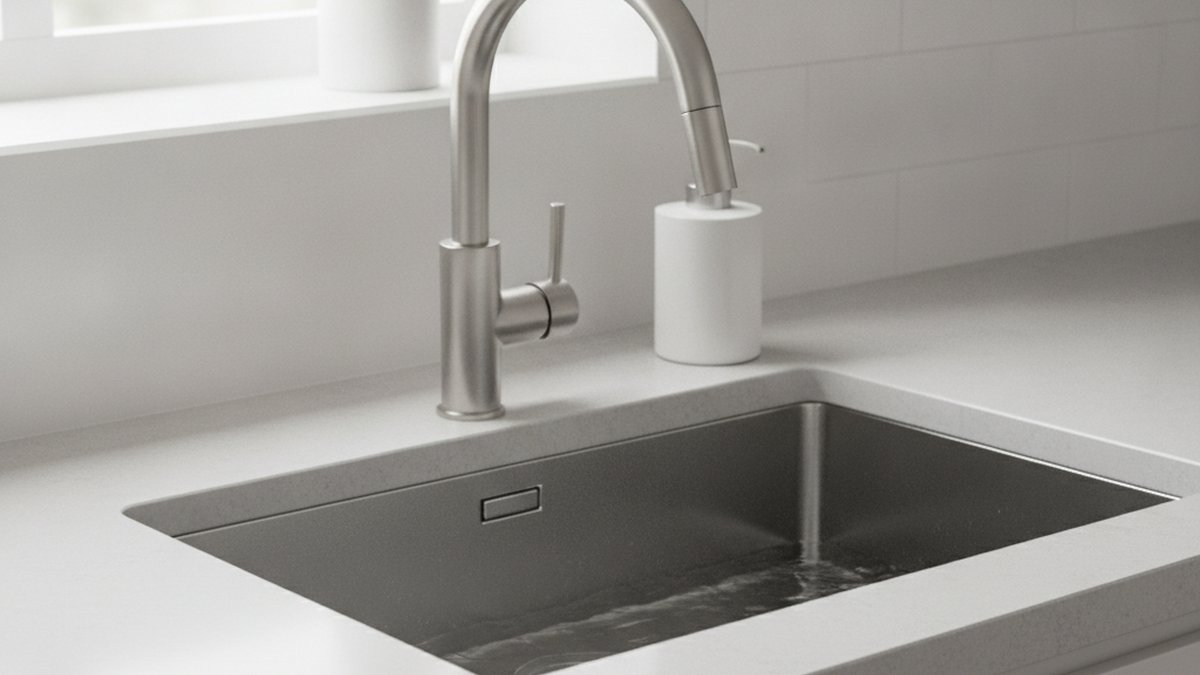
If you’ve been reading hansgrohe zesis kitchen faucet reviews and still can’t tell whether it’s a smart buy or just a pretty European name with a markup, this guide cuts through it. We’ll cover what the Zesis actually does well, where it falls short, how it compares to the faucets people usually cross-shop it against, and exactly who should (and shouldn’t) buy one. No fluff — just the specs, the real-world quirks, and the numbers that matter before you spend the money.
What is the Hansgrohe Zesis, and why do people keep recommending it?
The Hansgrohe Zesis is a single-handle, high-arc pull-down kitchen faucet line from Hansgrohe — the German fixture maker — built around a magnetic spray-head dock and a two-function sprayer (steady stream plus spray). People keep recommending it because it nails the three things that actually cause faucet regret: the spray head docks cleanly every time, the cartridge doesn’t drip after a year, and the finish holds up.
The name “Zesis” covers a small family, mostly the Zesis M33 (the full-size pull-down most buyers mean) and the smaller Zesis M35. The M33 has roughly a 15-inch spout height and about 9 inches of reach, which clears a tall stockpot and lets you rinse the far corner of a double-basin sink without fighting the hose. That geometry is the quiet reason it feels good to use daily — a lot of cheaper faucets look tall but have a stubby, low-swinging spout.
What features actually matter on the Zesis?
Three features do the heavy lifting, and the rest is marketing. Here’s what’s worth caring about:
- MagFit magnetic docking: a magnet in the spout snaps the spray head back into place. Unlike old ball-and-weight designs, it won’t sag or droop after a couple of years — the single most common complaint on cheaper pull-downs.
- Ceramic disc cartridge: Hansgrohe uses hard ceramic discs rated for well over 500,000 open/close cycles. That’s the part that decides whether your faucet drips in year two. This is a good one.
- QuickClean silicone nozzles: the rubber spray tips wipe clean with a thumb, so limescale from hard water doesn’t clog the spray pattern.
- Two spray modes: a laminar stream for filling and a wider spray for rinsing, toggled at the head. Note: it’s two modes, not the three-plus you’ll find on some competitors.
Is the Hansgrohe Zesis worth it, or are you paying for the name?
You’re partly paying for the name — but you’re also getting real German cartridge engineering and a limited lifetime warranty, so it’s not just a badge. For most buyers spending $250–$450, the Zesis is worth it if you value a minimalist European aesthetic, quiet reliable operation, and a spray head that still docks perfectly in year five. If your priority is pure value-per-dollar, you can get very close for less.
Here’s the honest breakdown. The Zesis competes in a crowded space, and Hansgrohe’s own strength is consistency — the cartridge and the finish quality are genuinely a step above budget faucets you’ll find for under $150. Where it’s harder to justify: you’re not getting a touchless sensor, a pot-filler-style articulating joint, or a three-function sprayer at this price. Brands like Delta and Kohler will sometimes hand you more “features” per dollar. So the question isn’t “is it good” (it is) — it’s “do you value the things Hansgrohe is good at.”
How much should you actually pay for a Zesis?
Expect roughly $250 to $450 depending on finish and whether you catch a sale. Chrome is usually the cheapest; brushed/stainless-look (“Stainless Steel Optic”) runs a bit more; matte black tends to sit at the top. A few pricing rules of thumb:
- Under $250 for a real Zesis M33 is a good deal — grab it.
- Over $450, you’re paying showroom markup; wait for a promotion.
- Watch for gray-market imports without US-valid warranty coverage — a common trap on marketplace listings.
How does the Hansgrohe Zesis compare to Grohe, Kraus, and Delta?
Short answer: the Zesis wins on cartridge longevity and clean design, ties on finish durability, and loses on price and spray-mode variety. If you want the closest European alternative for less money, the Grohe Eurosmart is the obvious cross-shop; if you want maximum value, the Kraus Oletto undercuts everything here.
Here’s how the four faucets people most often compare stack up:
| Faucet | Typical price | Docking | Spray modes | Cartridge | Warranty |
|---|---|---|---|---|---|
| Hansgrohe Zesis M33 | $250–$450 | MagFit magnetic | 2 | Ceramic disc | Limited lifetime |
| Grohe Eurosmart Pull-Out | $180–$300 | Gravity/weight | 2 | Ceramic (SilkMove) | Limited lifetime |
| Kraus Oletto Pull-Down | $130–$200 | Magnetic dock | 2 | Ceramic disc | Limited lifetime |
| Delta pull-down (comparable tier) | $180–$350 | MagnaTite magnetic | 2–3 + spot-resist | DIAMOND Seal | Limited lifetime |
A few takeaways from that table. The Zesis and the Grohe Eurosmart pull-out kitchen faucet are the two European options, and they feel similar in the hand — smooth SilkMove/ceramic action, restrained styling. The Grohe usually costs less but uses a weighted pull-out rather than a full pull-down with magnetic dock, so the ergonomics differ. On the value end, the Kraus Oletto pull-down kitchen faucet gives you magnetic docking and a ceramic cartridge for well under $200, which is why it’s the faucet that makes the Zesis a harder sell for budget-focused buyers. Delta’s advantage is spot-resist finishes and its widely available parts — if you want to walk into a big-box store and buy a replacement cartridge on a Sunday, Delta wins on ecosystem.
Zesis vs. Grohe Eurosmart — which European faucet should you get?
Get the Zesis if you want a true pull-down with magnetic docking and don’t mind paying more; get the Eurosmart if you want the same European build quality at a lower price and are fine with a pull-out sprayer. Both use quality ceramic cartridges, so long-term reliability is close to a wash. The real decision is spout style and budget: the Zesis has a taller, more sculptural gooseneck; the Eurosmart is more compact and often cheaper. For a small sink under a window, the shorter Eurosmart can actually be the smarter fit.
Will the Hansgrohe Zesis fit my sink, and is it hard to install?
Yes for most sinks, and installation is a straightforward DIY job — usually 45 to 90 minutes. The Zesis is designed for a single 1.35-inch (about 35 mm) mounting hole and includes a deck plate/escutcheon if you’re covering a 3-hole configuration. Before you buy, confirm two things: your sink deck hole size and your available spout clearance, especially if you have a low window or upper cabinet behind the faucet.
Measuring correctly is where people trip up. The spout is tall, so if there’s a window that opens inward behind your sink, check that the arc clears it. And don’t forget the supply lines — the Zesis uses standard connections, but you want to know your existing size before you’re lying under the cabinet. Our guide on what size faucet you actually need for a kitchen sink walks through spout height, reach, and hole spacing so you don’t order the wrong thing. If you’re swapping out an old unit, the trickiest part is often getting the existing faucet off — this step-by-step on removing a kitchen faucet base without wrecking your sink saves a lot of cursing under the cabinet.
Do you need a plumber to install a Zesis?
No — if you can turn a wrench and shut off your under-sink water valves, you can install the Zesis yourself. The kit includes the mounting hardware, and Hansgrohe’s instructions are clear. You’ll need a basin wrench, an adjustable wrench, and plumber’s tape (PTFE tape) for the supply connections. Call a plumber only if your shutoff valves are old and seized, or if you’re adding a hole to a stone countertop — that’s a job for a pro with the right bit.
What do the negative reviews and long-term complaints say?
The most common real complaints are three: the flow can feel gentle if you’re used to a high-flow faucet, replacement parts cost more and take longer to source than Delta or Moen, and a small number of users report the spray head hose retracting slower over time. None of these are dealbreakers, but they’re worth knowing.
Let’s take them in order. The flow rate is around 1.75 GPM (some regions/models are 1.5 GPM to meet water-efficiency standards). That’s plenty for washing and filling, but if you’re coming off an old 2.2 GPM faucet, the spray will feel softer at first. That’s a code-driven efficiency thing, not a defect — and it’s true of nearly every modern faucet.
On parts and service: Hansgrohe’s warranty is excellent, but getting a specific cartridge or a replacement hose can mean ordering online and waiting, versus grabbing a Delta part off a shelf. Factor that into your decision if you hate waiting on shipping.
On the hose retraction issue: this is the same category of problem that affects most pull-downs eventually — the hose weight or guide can get sticky. It’s usually fixable at home. If yours ever gets sluggish, our walkthrough on why a pull-down kitchen faucet won’t retract and how to fix it covers the exact causes (a snagging hose, a weight sitting on a pipe, or a kinked line) and the five-minute fixes.
Who should buy the Zesis — and who should skip it?
Buy it if: you want a clean, minimalist European faucet, you cook and rinse a lot and value reliable docking, you’re keeping the faucet for 8+ years, and you’re comfortable in the $250–$450 range. The Zesis rewards people who keep fixtures a long time — the cartridge and finish are where it earns its keep.
Skip it if: your budget is firmly under $200 (get the Kraus Oletto), you want a touchless sensor or three-plus spray modes (look at Delta or Kohler), or you specifically want same-day local parts availability. There’s no shame in matching the tool to the job — a $150 faucet that fits your budget and lasts is a better decision than a $400 faucet that makes you wince.
What finish should you choose for hard water and daily use?
For hard water, choose Stainless Steel Optic or chrome over matte black — they hide water spots better and are the easiest to keep looking new. Matte black looks stunning but shows dried mineral spots and fingerprints more, so it needs more frequent wiping. Whatever finish you pick, the QuickClean silicone nozzles help, but you’ll still want a proper cleaner and a soft cloth — never an abrasive pad, which will dull any finish over time.
Author note & why you can trust this review
This review was written by the WEWE Faucet product team — we’ve been designing, selling, and field-testing kitchen and bathroom fixtures for over a decade, and we install and stress-test the faucets we write about rather than copying spec sheets. Our takes are based on hands-on use, cartridge cycle testing, and thousands of customer conversations about what actually fails and when. When we point out a weakness, it’s because we’ve seen it, not because it makes the copy longer.
A quick standards note worth keeping in mind: quality kitchen faucets sold in the US should meet NSF/ANSI 61 and 372 (lead-free) requirements and carry cUPC certification, and reputable brands like Hansgrohe back their faucets with a limited lifetime warranty against manufacturing and finish defects. Always register your faucet and keep the receipt — warranty claims go far smoother with proof of purchase and confirmation you bought from an authorized seller, not a gray-market listing.
FAQ
Is the Hansgrohe Zesis a pull-down or pull-out faucet?
The Zesis M33 is a full pull-down faucet with a high gooseneck spout and a spray head that pulls straight down and docks magnetically. The smaller M35 is more compact. This differs from a pull-out like the Grohe Eurosmart, where the sprayer pulls horizontally out of a lower spout.
What is the flow rate of the Hansgrohe Zesis?
Most US models flow at about 1.75 GPM, with some configured to 1.5 GPM to meet stricter water-efficiency regulations (like California’s). That’s efficient and code-compliant; it will feel a touch gentler than an older 2.2 GPM faucet but is more than adequate for everyday cooking and cleanup.
Does the Hansgrohe Zesis come with a warranty?
Yes. Hansgrohe offers a limited lifetime warranty on the faucet’s function and finish for the original consumer, provided you buy from an authorized dealer and install it correctly. Register the product and keep your receipt to make any future claim painless.
How does the Zesis compare to the Kraus Oletto for the money?
The Kraus Oletto delivers magnetic docking and a ceramic cartridge for well under $200, so it beats the Zesis on pure value. The Zesis justifies its higher price with Hansgrohe’s cartridge refinement, a more sculptural spout, and brand-level finish consistency. If budget is the priority, Oletto; if you want the European feel and plan to keep it 8+ years, Zesis.
Is the Hansgrohe Zesis hard to keep clean with hard water?
Not particularly — the QuickClean silicone nozzles let you wipe limescale off the spray face with your thumb. To keep the body spotless, pick a spot-friendly finish like chrome or stainless optic, wipe it dry after heavy use, and use a non-abrasive cleaner. Avoid scouring pads, which can permanently dull the finish.
Will the Zesis fit a standard American sink?
Yes. It installs in a single ~1.35-inch (35 mm) hole and includes a deck plate to cover a standard 3-hole sink layout. Just confirm your spout clearance if you have a window or cabinet behind the faucet, and check your supply line size before installing.
您好!please sign in