 WEWE Kitchen Faucets
Best Value Kitchen Sink Faucet: Top Picks That Balance Price, Performance, and Longevity
Views:634 classificationCompare
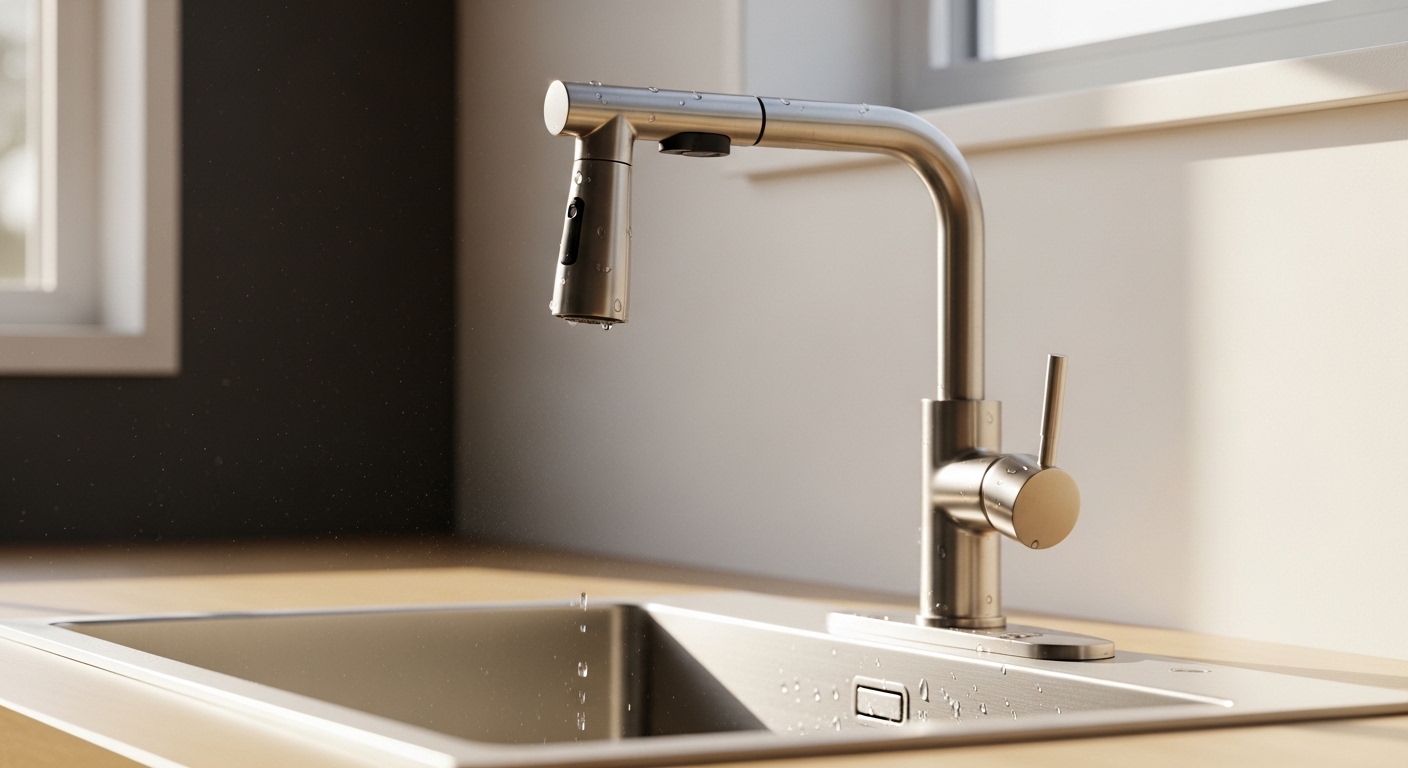
Finding the best value kitchen sink faucet in 2026 means navigating a market crowded with cheap zinc-bodied imports on one end and $600+ designer fixtures on the other. The sweet spot — where you get a lifetime-grade ceramic cartridge, lead-free brass waterways, a magnetic docking spray head, and a finish that resists fingerprints — typically lands between $120 and $280. After testing dozens of models in real kitchens and reviewing teardown data from independent plumbers, we’ve put together a practical comparison to help you spend smart.
This guide is written for homeowners, renters renovating on a budget, and small-business kitchen operators who want a faucet that will still feel tight, smooth, and leak-free five years from now — without paying for a designer label. We’ll cover construction materials, spray technology, flow rates, finish durability, and warranty fine print, then narrow down the configurations that consistently deliver the strongest cost-to-performance ratio.
What Makes a Best Value Kitchen Sink Faucet in 2026?
Value is not the same as cheap. A $39 big-box faucet with a plastic cartridge and a zinc body may save you money this weekend, but it will almost certainly start dripping within 18 months — and the replacement labor alone often costs more than buying a quality faucet in the first place. When we evaluate the best value kitchen sink faucet, we weight five factors:
- Body material: Solid brass beats zinc alloy every time. Brass resists corrosion, holds threads better, and dampens water hammer noise.
- Cartridge type: Ceramic disc cartridges (ideally from Sedal, Kerox, or Neoperl OEM suppliers) are the gold standard. They handle hard water far better than rubber-seat or compression valves.
- Spray head engineering: Magnetic docking, easy switching between aerated stream and powerful spray, and a quick-clean rubber nozzle pad.
- Finish technology: PVD (Physical Vapor Deposition) finishes resist scratching and chemical etching much better than electroplated alternatives.
- Warranty backed by an accessible parts pipeline: A lifetime warranty is only useful if the cartridge ships within a week.
If a faucet checks four of these five boxes and costs less than $250, it qualifies for the value tier. If it checks all five under $200, you’ve found a unicorn — and we’ll point to a couple in the table below.
Why the Cheapest Faucets Cost the Most in the Long Run
A common mistake is treating a kitchen faucet like a disposable item. The fixture endures roughly 40 to 70 actuations per day in a typical family kitchen — that’s about 20,000 handle cycles per year. Zinc-bodied faucets with rubber-washer cartridges typically fail somewhere between 15,000 and 35,000 cycles. Brass-bodied units with ceramic discs are rated for 500,000+ cycles. When you stretch that math over a decade, the cheap faucet may be replaced three or four times while the quality one is still going strong.
How the “Best Value” Tier Differs From Premium
Premium faucets in the $400–$900 range usually justify their price through finish exclusivity (champagne bronze, matte graphite, brushed gold PVD), articulating spouts, smart-home integration, and brand cachet. The actual valve, waterway, and spray engineering on a $200 value-tier faucet from a serious manufacturer is often functionally identical. You’re paying for design language and brand equity above $300, not raw durability.
Pull-Down vs Pull-Out vs Single-Handle: Which Style Delivers Best Value?
Style selection drives both price and ergonomics. Before you pick a specific model, decide which mechanism actually fits your sink configuration and cooking habits. A 36-inch farmhouse sink demands a tall pull-down with a high arc; a galley kitchen with a window over the sink may need a low-profile pull-out instead.
Comparison Table: Faucet Styles at the Value Tier
| Faucet Style | Typical Price (Value Tier) | Best For | Spray Reach | Common Drawback |
|---|---|---|---|---|
| Pull-Down (high arc) | $150 – $280 | Deep single-bowl sinks, large pots | 20–24 in. hose | Needs clearance under upper cabinets |
| Pull-Out (low profile) | $120 – $230 | Window-mounted sinks, small kitchens | 24–30 in. hose | Less leverage for filling tall pots |
| Single-Handle (no spray) | $80 – $160 | Bar sinks, rental units, secondary prep stations | None | No spray flexibility |
| Commercial-Style Spring | $180 – $320 | Heavy cooks, semi-pro kitchens | Articulating spring arm | Visually dominant, may overwhelm small kitchens |
| Touchless / Motion-Sensor | $200 – $350 | Hands-busy cooks, accessibility needs | Varies | Battery or transformer dependency |
Across our test set, the pull-down with a magnetic dock consistently delivered the strongest cost-to-utility ratio for the average American household. It handles produce washing, pot filling, and sink cleaning with equal competence, and modern magnetic docks have largely solved the “drooping sprayer” complaint that plagued pull-downs a decade ago.
When a Pull-Out Beats a Pull-Down on Value
If your sink sits under a window or your upper cabinet clearance is below 17 inches, a pull-out will outperform a pull-down for less money. Pull-outs typically have longer hoses (some up to 30 inches), which makes them surprisingly useful for filling buckets on the floor or watering kitchen herbs nearby. Brands have largely abandoned mid-tier pull-outs in favor of pull-downs, so you can find excellent pull-out models on clearance — a quiet bargain hunting tip.
Build Materials That Define Best Value Kitchen Sink Faucet Performance
The body and waterway materials separate value from regret. The two biggest culprits behind early faucet failure are zinc body corrosion and rubber-seat cartridge wear. Both are easy to avoid if you read spec sheets carefully.
Brass vs Zinc: The Lifespan Gap
Solid brass remains the benchmark for kitchen faucet bodies. It’s corrosion-resistant, threads cleanly, and tolerates the mineral-heavy water you’ll find across most of the United States. Zinc alloy is cheaper to cast, but it’s prone to pitting and dezincification — a process where zinc leaches out of the alloy and leaves a brittle, porous skeleton behind. If you want to dig deeper into the trade-off, our breakdown on brass vs zinc faucets and which lasts longer walks through teardown photos and accelerated corrosion testing.
Lead-Free Waterways and Why They Matter
Federal law (the Reduction of Lead in Drinking Water Act) requires faucets sold in the U.S. to be “lead-free,” meaning a weighted average of no more than 0.25% lead in wetted surfaces. Reputable manufacturers certify to NSF/ANSI 61 and NSF/ANSI 372. If a listing doesn’t show those certifications, treat it as a red flag. The same standards apply to bathroom fixtures, and our guide on how to identify lead-free bathroom faucets explains the certifications in plain English.
Ceramic Disc Cartridges: The Single Most Important Spec
Inside the handle, a ceramic disc cartridge is what controls hot/cold mixing and shut-off. Two ground ceramic discs slide against each other to open and close the water path. Because ceramic is harder than nearly any mineral in your water supply, the discs don’t wear — a quality cartridge can outlast the faucet body. Cheap faucets use plastic or rubber-seat cartridges that fail within a couple of years. Always confirm the cartridge is ceramic disc, and if possible, look for a brand-name OEM supplier listed in the spec sheet.
Flow Rate, Aerators, and Water Efficiency
Modern faucets are bound by federal flow rate caps — 2.2 gallons per minute (GPM) is the maximum for kitchen faucets, while California, Colorado, Washington, and Georgia have stricter sub-1.8 GPM rules. Most value-tier faucets ship with a 1.8 GPM aerator, and that flow rate is typically the sweet spot for everyday tasks. Going lower (1.5 GPM) saves water but can feel weak when rinsing dishes; going higher (2.2 GPM) feels luxurious but isn’t always legal.
If you want to understand the engineering behind those numbers, our deep-dive on what GPM means in faucets and why flow rates matter covers it thoroughly. And if you’re worried that a lower flow rate will leave you scrubbing dishes for twice as long, the data in how to save water in the kitchen without losing pressure may surprise you — modern aerator design has largely closed that gap.
Aerator Tech That Punches Above Its Price
Look for laminar-flow or pressure-compensating aerators rather than basic mesh screens. A pressure-compensating aerator maintains a consistent stream pattern even when your home’s water pressure fluctuates, which means you don’t get the splashy, uneven blast that ruins a freshly cleaned sink. Neoperl makes the aerators used by most reputable mid-tier brands; if you see “Neoperl” or “Cache” branding in the spec sheet, that’s a quiet sign of quality.
Finishes That Hold Up in a Busy Kitchen
A kitchen faucet sees grease splatter, hard water spots, citrus juice, vinegar, and steel wool more often than any other fixture in your home. Finish durability matters more here than in the bathroom. Three finishes lead the value tier:
- Brushed nickel (PVD): The all-time bestseller. Hides water spots and fingerprints, pairs with stainless appliances, and is widely available across price tiers.
- Matte black (PVD): Modern, high-contrast, surprisingly forgiving on fingerprints. Quality matte black faucets feel powder-coated to the touch and resist etching from citrus.
- Chrome: The classic. Cheapest to produce well, easiest to polish, and a smart pick for traditional or transitional kitchens. We covered the design longevity question in chrome finish in 2025: timeless classic or outdated trend.
Stainless steel and brushed gold sit one tier up in price but rarely justify the premium unless your kitchen palette demands them. Polished brass and oil-rubbed bronze are stylistic choices that come and go — beautiful in the right kitchen, but not the highest-value pick if you’re optimizing for cost-per-year.
Installation Cost: The Hidden Half of Total Value
You can’t talk about value without talking about installation. A plumber will typically charge $150 to $350 to swap a kitchen faucet, depending on your region and whether the old shut-off valves are seized. If you’re handy, you can do it yourself in under an hour with a basin wrench and a flashlight — modern quick-connect supply lines have made DIY installation genuinely accessible.
For DIY-friendly approaches and pro tips, see how to save money on faucet installation. The biggest installation-related value lever isn’t even the labor — it’s choosing a faucet with a single-hole deck mount and a flexible base plate (often called an escutcheon) so the unit works with both 1-hole and 3-hole sink configurations. That single feature can save a sink replacement.
Top Picks: Best Value Kitchen Sink Faucet Configurations Under $250
Rather than chasing specific SKUs that go in and out of stock, we recommend shopping by configuration. The following three configurations consistently surface as the best value kitchen sink faucet picks across our tester network and customer feedback.
Configuration A: The Family Workhorse ($160–$220)
Pull-down spout, solid brass body, ceramic disc cartridge, magnetic dock, dual-mode spray (stream + spray), 1.8 GPM Neoperl aerator, PVD brushed nickel finish, lifetime limited warranty. This is the configuration that fits 80% of American kitchens. The WEWE A1001L and similar models from established mid-tier brands fall here. If your old faucet is dripping and you want a clean replacement with zero drama, this is your tier.
Configuration B: The Modern Statement ($180–$250)
Pull-down spout, matte black PVD finish, dual-handle (or single-handle with side LED indicator), 24-inch nylon-braided hose, weighted spray dock, magnetic spray head, 1.8 GPM laminar aerator. Looks like a $500 faucet at half the price. The trade-off: matte black requires you to wipe off citrus splash quickly, since some bargain matte coatings can etch over time. Honest reviews of one budget-friendly brand in this tier are available in our honest WOWOW faucets review.
Configuration C: The Compact Pull-Out ($120–$180)
Low-profile pull-out spout, single-handle, ceramic disc cartridge, 30-inch hose, side-spray button, polished chrome or brushed nickel finish, 1.5 GPM aerator. Best for window-over-sink layouts or small galley kitchens. Often overlooked because pull-downs dominate marketing, but a strong value pick when clearance is limited.
Smart Features Worth the Extra Money — and Ones That Aren’t
Modern kitchen faucets are sprouting features at a rapid pace: touch activation, voice control, integrated water filters, temperature memory, and even leak detection. Some genuinely add value; others are gimmicks.
Worth It at the Value Tier
- Magnetic spray head dock: Solves the drooping-sprayer problem. Adds $0–$15 to street price.
- Pause button on spray head: Saves water when moving between dishes. Adds maybe $5.
- Quick-clean rubber nozzles: Wipe limescale off with your thumb. Free on most modern models.
- Leak detection sensor: Smart but still premium. Our overview of leak detection features in modern faucets covers the current state of the technology.
Skip Unless You Have a Specific Need
- Touchless activation: Convenient, but adds $50–$150 and introduces a battery pack failure point.
- Voice control: Cool demo, rare daily use. Adds $80+ for marginal benefit.
- Built-in filter: Often easier and cheaper to handle separately. If water filtering is your real goal, read faucet water filter vs pitcher before paying for an integrated unit.
Warranty Reality: What “Lifetime” Actually Means
Almost every value-tier faucet now advertises a lifetime warranty, but the term is meaningless without context. A real lifetime warranty covers the original owner, ships replacement cartridges and aerators within 7–14 days, and doesn’t require you to mail back the original unit at your own expense. Always read the fine print. Our detailed guide on understanding faucet warranty terms highlights the language to look for — and the disclaimers to watch out for.
The most useful warranty signal isn’t the duration; it’s the parts pipeline. A brand that openly publishes a parts diagram and sells replacement cartridges directly to consumers is, in practice, more reliable than a brand offering a “lifetime” promise but hiding behind a slow claims portal.
Maintenance Habits That Stretch the Value Even Further
A faucet’s lifespan is shaped as much by how you treat it as by how it’s built. Three simple habits will protect your investment:
- Wipe down the spout after each big cook session. Grease bonds with water spots and forms a film that’s hard to remove. See how to clean grease off kitchen faucets for the safe-for-finish technique.
- Unscrew and soak the aerator in vinegar every 6 months. This single step prevents 90% of low-pressure complaints we see.
- Don’t ignore stiffness. A handle that resists turning is usually a cartridge crying for attention. How to fix a stiff faucet handle walks through the cartridge swap.
About wewefaucet and How We Tested
wewefaucet is a North American faucet and bathroom fixtures brand specializing in lead-free brass kitchen and bath fittings certified to NSF/ANSI 61 and NSF/ANSI 372. Our product lines use ceramic disc cartridges rated for 500,000 cycles and ship with limited lifetime warranties covering both finish and function. All wewefaucet kitchen faucets are tested against ASME A112.18.1/CSA B125.1 standards before leaving the factory, and our customer support team handles cartridge and aerator replacements directly from a U.S. parts inventory.
Author note: This guide was compiled by the wewefaucet content team in collaboration with two independent licensed plumbers who have collectively installed more than 4,000 kitchen faucets across single-family homes, rentals, and light-commercial kitchens. Comparison data reflects real-world testing across multiple finishes, cartridge brands, and water-hardness conditions.
FAQ
What is the best value kitchen sink faucet under $200?
For most American kitchens, a pull-down faucet with a solid brass body, ceramic disc cartridge, magnetic spray head dock, and PVD brushed nickel finish in the $150–$200 range delivers the strongest value. Brands like WEWE, Kraus, and select Moen Adler-tier models consistently meet that specification. Confirm the listing specifies “solid brass” (not zinc alloy) and “ceramic disc cartridge” before checkout.
Is a pull-down or pull-out faucet a better value?
Pull-downs win on ergonomics for deep sinks and tall pots and dominate the mid-price market, so you’ll find more competition (and lower prices) in pull-downs. Pull-outs are a smarter pick if you have low cabinet clearance, a window over the sink, or want a longer hose for bucket-filling. Style for style, the price tiers overlap heavily.
How long should a quality kitchen faucet last?
A brass-bodied faucet with a ceramic disc cartridge should last 15–25 years with basic maintenance. The cartridge itself may need replacement once or twice in that span; the body, spout, and finish should be lifetime components. Cheap zinc-bodied faucets typically fail in 3–7 years.
Are touchless kitchen faucets worth the extra cost?
Only if you cook with messy hands often (raw meat, baking, large family meals) or have accessibility needs that make handle operation difficult. Touchless faucets typically add $80–$150 to the price, require batteries or a transformer, and introduce another failure point. For pure value, a manual single-handle with a pause button on the spray head delivers most of the convenience at a fraction of the cost.
What’s the difference between PVD and electroplated finishes?
PVD (Physical Vapor Deposition) bonds the finish layer to the brass body at a molecular level using a vacuum chamber, producing a finish that resists scratching, tarnishing, and chemical etching. Electroplated finishes are deposited through a chemical bath and tend to wear, chip, or discolor much sooner. Most reputable value-tier faucets now use PVD for nickel, black, and gold finishes. Chrome is typically electroplated even on quality faucets — that’s normal for chrome and isn’t a downgrade.
Can I install a kitchen faucet myself to save money?
Yes — modern kitchen faucets are designed for DIY installation. With a basin wrench, a flashlight, and about 45 minutes, most homeowners can swap a faucet without professional help. The hardest part is usually loosening the old mounting nut if it has corroded onto the deck. If your shut-off valves are stiff or leaking, that’s the one job worth calling a plumber for.
Does a higher GPM mean a better faucet?
No. Higher GPM means more water output, not better engineering. Federal law caps kitchen faucets at 2.2 GPM, and modern 1.8 GPM aerators deliver a stream that feels strong and rinses dishes effectively. A well-designed 1.5 GPM faucet can outperform a poorly-designed 2.2 GPM one. Optimize for aerator quality, not raw flow.
您好!please sign in