 WEWE Kitchen Faucets
Do Low-Flow Faucets Really Save Water? The Truth Explained
Views:417 classificationBlog
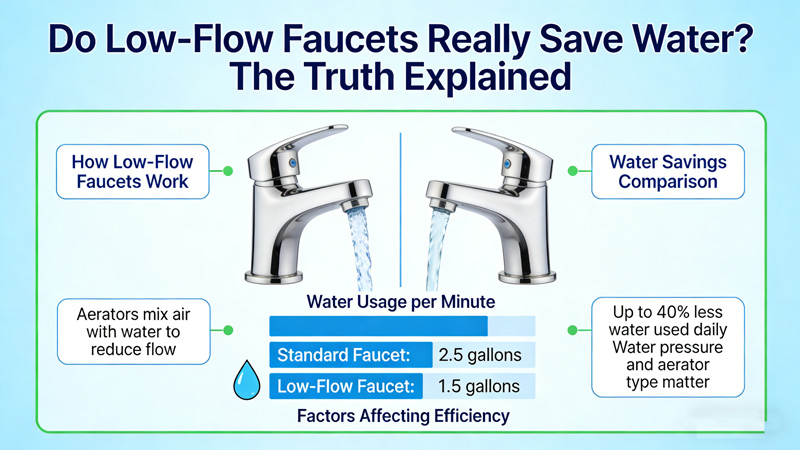
As water conservation becomes more important in modern homes, many homeowners are turning to low-flow faucets as a simple way to reduce water usage. These fixtures are widely promoted as eco-friendly, cost-effective, and efficient. But a common question remains: do low-flow faucets really save water, or are the benefits overstated? The short answer is yes—they do save water. However, understanding how they work and what to expect can help you decide if they are the right choice for your home.
What Is a Low-Flow Faucet?
A low-flow faucet is designed to use less water than a standard faucet without significantly reducing performance. Traditional faucets typically use around 2.2 gallons per minute (GPM), while low-flow models reduce that to 1.5 GPM or less, with some ultra-efficient models going as low as 1.0 GPM.
These faucets achieve water savings through components like aerators, which mix air with water to maintain pressure while reducing overall flow. The result is a steady stream that feels strong but uses less water.
How Much Water Can You Actually Save?
The water savings from low-flow faucets are real and measurable. By reducing flow from 2.2 GPM to 1.5 GPM, a faucet can cut water usage by approximately 30%. Over time, this adds up significantly.
For example, consider a household where the faucet runs for a total of 30 minutes per day:
- Standard faucet: 2.2 GPM × 30 minutes = 66 gallons per day
- Low-flow faucet: 1.5 GPM × 30 minutes = 45 gallons per day
That’s a savings of 21 gallons per day, or more than 7,500 gallons per year for just one faucet. Multiply that across multiple faucets in a home, and the impact becomes even greater.
Lower Utility Bills
Saving water doesn’t just help the environment—it also reduces your utility bills. Less water usage means lower water bills, and if you’re using hot water, you’ll also save on energy costs for heating.
Over the course of a year, the savings may seem modest, but over several years, they can offset the initial cost of upgrading to low-flow fixtures. For homeowners focused on long-term savings, this is a practical benefit.
Environmental Benefits
Water conservation is becoming increasingly important, especially in regions that experience drought or water shortages. Low-flow faucets help reduce the strain on local water supplies by lowering overall consumption.
In addition, using less hot water reduces energy demand, which can lower your household’s carbon footprint. This makes low-flow faucets a smart choice for eco-conscious homeowners.
Do Low-Flow Faucets Affect Performance?
One of the biggest concerns people have is whether low-flow faucets sacrifice performance. Older models sometimes had weak water pressure, which gave low-flow fixtures a bad reputation. However, modern designs have improved significantly.
Today’s low-flow faucets are engineered to maintain a strong, consistent stream by using advanced aeration and flow control technology. In most cases, users won’t notice a major difference in everyday tasks such as washing hands, rinsing dishes, or brushing teeth.
That said, there are some situations where reduced flow can be noticeable. For example, filling large pots or containers may take slightly longer compared to a standard faucet.
Situations Where Low-Flow Faucets Work Best
Low-flow faucets are ideal for most residential applications, particularly in:
- Bathrooms, where water usage is typically light and short-term
- Guest bathrooms, where efficiency is more important than speed
- Eco-friendly homes focused on sustainability
- Apartments or rental properties looking to reduce utility costs
In these settings, the benefits of water savings far outweigh any minor inconvenience.
Potential Drawbacks
While low-flow faucets are generally beneficial, they are not perfect for every situation.
One potential downside is slower water output. In kitchens where large amounts of water are needed quickly, some users may find low-flow faucets less convenient. However, many modern kitchen faucets balance efficiency with higher flow options for tasks that require more water.
Another issue can arise in homes with very low water pressure. In these cases, a low-flow faucet may further reduce the perceived strength of the stream. Choosing a high-quality model designed for low-pressure systems can help address this problem.
Finally, some users may need time to adjust. The difference in flow may feel unusual at first, especially if you are used to high-pressure faucets.
Are Low-Flow Faucets Worth It in 2026?
In 2026, low-flow faucets are no longer considered a niche product—they are becoming the standard in many new homes and renovations. Advances in technology have made them more efficient and user-friendly than ever before.
For most households, the benefits clearly outweigh the drawbacks. They provide:
- Significant water savings
- Lower utility bills
- Reduced environmental impact
- Reliable everyday performance
While they may not be perfect for every situation, especially in high-demand kitchen tasks, they are a practical and responsible choice for the majority of homes.
Final Verdict
So, do low-flow faucets really save water? Yes, they absolutely do. The savings are measurable, consistent, and beneficial both financially and environmentally.
Although there may be minor trade-offs in certain situations, modern low-flow faucets have largely overcome the performance issues of earlier designs. With proper selection and installation, they can deliver a balance of efficiency and usability.
For homeowners looking to reduce water consumption without sacrificing comfort, low-flow faucets are a smart and worthwhile investment. In a world where sustainability is becoming increasingly important, upgrading to low-flow fixtures is a small change that can make a big difference over time.
您好!please sign in