 WEWE Kitchen Faucets
Outdoor faucets—also known as hose bibs or spigots—play a critical role in everyday home maintenance, from watering gardens to washing cars and filling outdoor equipment. Because they are constantly exposed to sun, rain, temperature swings, and water pressure, outdoor faucets tend to wear out faster than indoor fixtures. Fortunately, with proper installation, routine care, and a few smart upgrades, you can significantly extend the lifespan of your outdoor faucet and avoid premature leaks, corrosion, or replacement.
This guide explains the most effective ways to protect outdoor faucets, reduce wear, and keep them functioning smoothly for many years.
Why Outdoor Faucets Fail Prematurely
Outdoor faucets face challenges that indoor plumbing never encounters. Direct exposure to weather, fluctuating temperatures, and debris all accelerate deterioration. Common causes of early failure include:
- UV damage that fades finishes and weakens plastic components
- Freeze-thaw cycles that crack faucet bodies and internal seals
- High water pressure stressing valves and washers
- Mineral buildup from hard water
- Corrosion caused by moisture and soil contact
Understanding these risks helps you take proactive steps to minimize damage before problems appear.
Choose High-Quality, Weather-Resistant Materials
The lifespan of an outdoor faucet begins with the materials it’s made from. Investing in quality upfront saves money and frustration long-term.
- Solid brass faucets resist corrosion, UV damage, and temperature changes better than cheaper alloys.
- Stainless steel faucets offer excellent rust resistance, especially in coastal or humid environments.
- Powder-coated or PVD finishes provide additional protection against fading and oxidation.
- Avoid low-grade plastic bodies or handles, which become brittle and crack under sun exposure.
A well-constructed faucet can last decades when properly maintained.
Install a Frost-Free or Anti-Freeze Faucet
In regions with cold winters, freezing is the number-one cause of outdoor faucet failure. Standard faucets trap water inside the valve body, which expands when frozen and causes cracks.
A frost-free outdoor faucet places the shut-off valve inside the heated portion of the home, preventing standing water in exposed sections. Benefits include:
- Reduced risk of burst pipes
- Longer valve and washer life
- Lower maintenance requirements
Even in moderate climates, frost-free models add an extra layer of protection.
Control Water Pressure
Excessive water pressure silently shortens faucet lifespan by forcing water through seals and cartridges at high velocity. Most outdoor faucets perform best when household pressure stays between 40–60 PSI.
To protect your faucet:
- Test water pressure using a hose bib pressure gauge
- Install or adjust a pressure-reducing valve (PRV) if pressure is too high
- Avoid using pressure-boosting devices unnecessarily
Lower pressure reduces stress on internal components and prevents leaks.
Use Hose Accessories Correctly
Improper use of hoses and attachments can place constant strain on outdoor faucets.
- Remove hoses after use, especially before freezing temperatures
- Avoid leaving spray nozzles in the closed position while the faucet is open
- Use lightweight, flexible hoses instead of stiff or kinked models
- Install a vacuum breaker to prevent backflow damage
Relieving unnecessary stress helps internal seals last longer.
Protect Against UV and Weather Exposure
Sunlight and weather slowly degrade finishes, seals, and handles. Simple protection measures make a big difference.
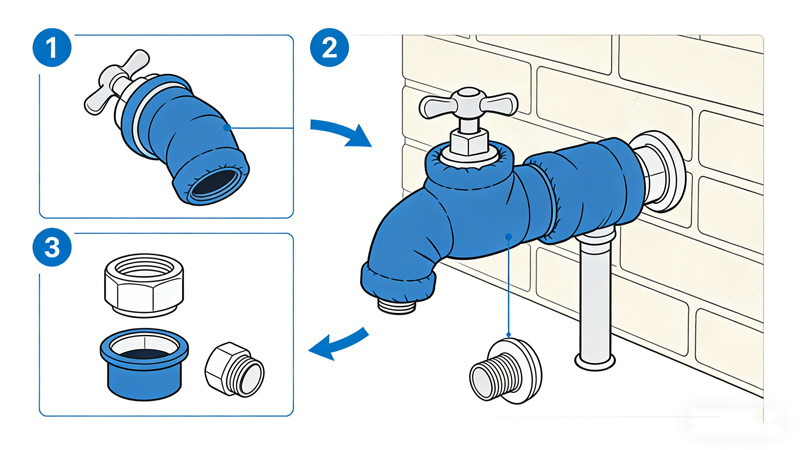
- Install UV-resistant faucet covers or insulated spigot covers
- Apply protective metal wax or sealant once or twice a year
- Provide shade using awnings, overhangs, or nearby structures
- Ensure the faucet is not in constant contact with wet soil or mulch
Limiting direct exposure slows fading, cracking, and corrosion.
Perform Regular Cleaning and Maintenance
Dirt and mineral buildup increase wear by creating friction and restricting water flow.
- Clean faucet exteriors with mild soap and water
- Remove and rinse aerators periodically
- Check washers, O-rings, and cartridges annually
- Tighten loose fittings before they cause leaks
A few minutes of maintenance each season can add years to your faucet’s life.
Winterize Outdoor Faucets Properly
Even frost-free faucets benefit from winter preparation.
- Disconnect and drain all hoses
- Shut off the interior supply valve if available
- Open the faucet to drain remaining water
- Install insulated faucet covers in cold climates
Proper winterization prevents freeze damage, the most common cause of sudden faucet failure.
Replace Worn Parts Early
Ignoring minor issues leads to major damage. Replace small components as soon as problems appear.
- Dripping after shutoff indicates worn washers or cartridges
- Stiff handles suggest mineral buildup or seal deterioration
- Surface corrosion signals compromised protective finishes
Early replacement prevents internal erosion and structural damage.
When to Upgrade Instead of Repair
If your outdoor faucet is more than 10–15 years old, frequent repairs may no longer be cost-effective. Upgrading to a modern, frost-free, pressure-balanced model improves reliability and efficiency.
Newer faucets offer:
- Improved sealing technology
- Enhanced corrosion resistance
- Better compatibility with modern plumbing systems
An upgrade can ultimately extend lifespan while reducing maintenance.
Conclusion
Extending the lifespan of your outdoor faucet comes down to smart choices and consistent care. By selecting durable materials, controlling water pressure, protecting against weather, performing routine maintenance, and addressing small issues early, you can prevent premature failure and costly repairs.
Outdoor faucets may seem simple, but they work hard year-round. Treating them with the same attention as other exterior components ensures reliable performance, water efficiency, and long-term durability—season after season.
您好!please sign in