 WEWE Kitchen Faucets
How Faucet Aerators Reduce Splash and Waste
Views:167 classificationBlog classificationFaucet Knowledge
Water may seem simple, but anyone who has ever dealt with a splashing faucet, messy countertop, or rising utility bills knows that how water flows matters just as much as the amount. This is where faucet aerators come in—small, inexpensive devices that sit at the tip of the faucet but play a huge role in shaping water performance.
Whether you’re a homeowner looking to improve your bathroom sink, a property manager trying to reduce water bills, or a plumbing professional educating clients, understanding how aerators work sheds light on why they’re a standard feature in nearly every modern faucet. This guide explains how faucet aerators reduce splash, minimize waste, improve comfort, and enhance overall water efficiency.
What Is a Faucet Aerator?
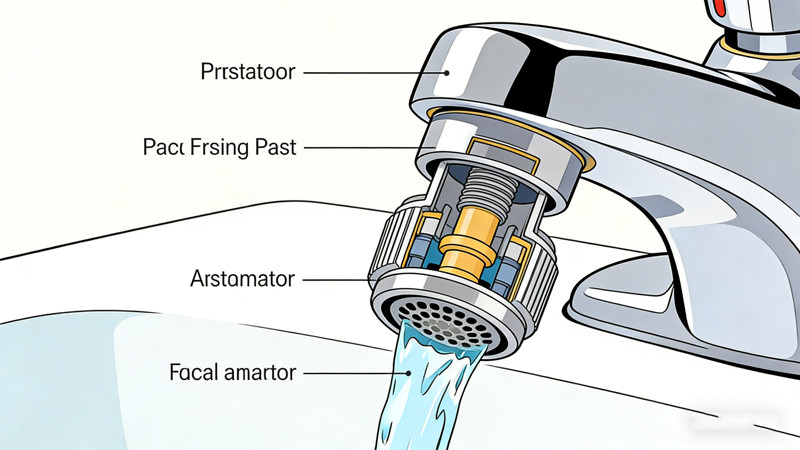
A faucet aerator is a small attachment screwed onto the end of most kitchen and bathroom faucets. Inside this tiny device are several key components:
-
A screen or mesh
-
A flow restrictor
-
A mixing chamber
-
One or more rubber washers
-
A series of holes that smooth the water stream
Together, these pieces mix air with water to create a controlled, smooth, splash-reducing stream that uses far less water.
Despite their simple design, aerators have a powerful impact on water performance and user comfort.
How Faucet Aerators Reduce Splash
One of the most noticeable benefits of faucet aerators is how effectively they reduce water splashing in the sink. Here’s why they work so well:
1. They Create a More Uniform, Gentle Water Stream
Without an aerator, water exits the faucet in a single, heavy, unrestricted flow. This force makes the water hit the sink basin abruptly, causing splashing and messy overspray.
Aerators divide the water into many smaller streams and introduce air, transforming the flow into a softer, foam-like stream that lands quietly.
2. They Even Out Turbulence
Water traveling through pipes doesn’t always flow evenly—pressure changes, pipe angles, and mineral buildup can create turbulence. Aerators disperse and stabilize this turbulence before the water exits the faucet, resulting in a smooth, splash-free stream.
3. They Direct Water Precisely Downward
Many aerators are designed with internal alignment guides that straighten the water stream. This ensures the water falls exactly where it should—straight down—helping reduce side-splash on shallow or narrow sinks.
4. They Reduce Flow Velocity Without Sacrificing Performance
Splashing often comes from water hitting surfaces too quickly. Aerators slow the velocity by regulating flow, but because they add air, the stream still feels strong and full—without the mess.
5. They Improve Compatibility With Modern Sink Designs
Contemporary bathroom sinks often feature:
-
Shallow basins
-
Wide rectangular shapes
-
Vessel sink installations
These modern designs splash easily with a traditional high-pressure flow. Aerators make them more manageable by softening the water and guiding it where it needs to go.
How Faucet Aerators Reduce Water Waste
Aerators are tiny water-saving powerhouses. In fact, the EPA considers them one of the most effective and affordable tools for reducing residential water use. Here’s how they cut down waste:
1. They Limit Maximum Flow Rate
Instead of letting unrestricted water rush out at 2–3 gallons per minute, aerators reduce output to:
-
1.5 GPM
-
1.2 GPM
-
1.0 GPM
-
Even as low as 0.5 GPM for commercial restrooms
This dramatically reduces water use without impacting usability.
2. They Maintain Perceived Pressure
A common misconception is that less water means weaker flow. But aerators maintain a strong-feeling stream by injecting air into the flow. This mixture increases volume and softness while using a fraction of the water.
You get the same cleaning or rinsing power with far less waste.
3. They Improve Efficiency in High-Flow Tasks
When washing hands, brushing teeth, or rinsing items, unrestricted water often goes unused. Aerators reduce unnecessary flow, so every gallon is used more efficiently.
4. They Help Homes Comply With Water Regulations
Many regions now require faucet flow restriction for conservation. Installing an aerator is the easiest way to ensure compliance and prevent waste.
5. They Reduce Hot Water Use
Because aerators reduce total water volume, they also reduce the amount of water you need to heat. This leads to:
-
Lower energy bills
-
Less tank strain
-
Reduced carbon footprint
Hot water savings alone make aerators valuable.
Other Benefits of Faucet Aerators
While splash reduction and water conservation are the stars, aerators also contribute in several other ways.
1. Better Pressure Control
Aerators smooth out pressure fluctuations, making the faucet more predictable and comfortable to use.
2. Improved Hygiene
A smoother, softer stream means less water bouncing back from dirty surfaces, keeping hands and sink areas cleaner.
3. Noise Reduction
Unrestricted water can be noisy. Aerators significantly reduce faucet noise by softening the stream.
4. Reduced Wear and Tear
Uncontrolled flow can stress internal faucet components. Aerators regulate the flow, extending cartridge and valve life.
5. Easy Maintenance and Replacement
Aerators can be cleaned or replaced in minutes. If you experience poor flow, cloudy streams, or side-spray issues, cleaning an aerator often fixes the problem instantly.
When You Should Replace or Upgrade an Aerator
Despite their durability, aerators do wear down or clog over time. You should consider replacing your aerator if:
-
Water sprays in odd directions
-
Flow is weak
-
The stream is uneven or noisy
-
Sediment or mineral buildup is visible
-
The aerator is older than 1–2 years
Upgrading to a water-saving or splash-proof aerator can also improve faucet performance and reduce utility costs.
Conclusion
Faucet aerators may be small, but their impact is huge. By mixing air into the water, regulating flow, smoothing turbulence, and guiding the stream downward, they drastically reduce splash while minimizing water waste. They’re essential for efficient, comfortable sink use and contribute to significant long-term savings in both water and energy.
Whether you’re maintaining a home, outfitting multiple units in a commercial property, or advising customers as a plumbing professional, understanding the benefits of aerators helps ensure cleaner sinks, lower bills, and a more sustainable water system.
您好!please sign in